


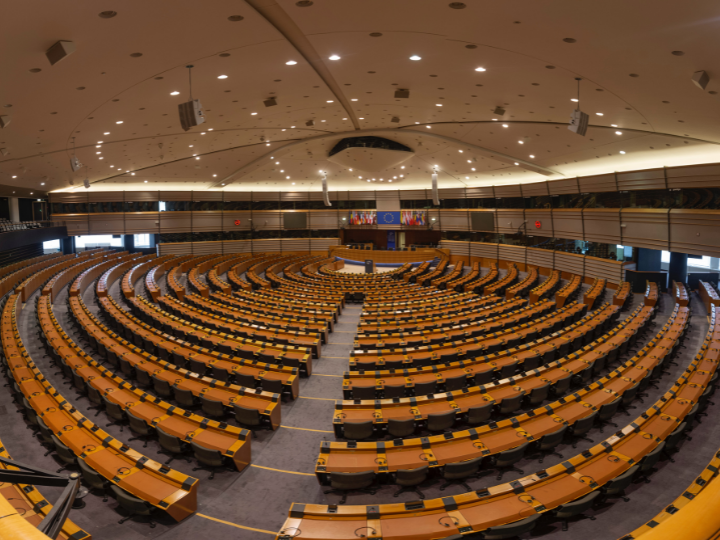
On Tuesday, the Legal Affairs Committee adopted its position on the Corporate Sustainability Reporting Directive (CSRD) with 22 votes in favour and one against. If agreed with EU governments, the bill will make businesses more accountable for their impact on people and the planet, while giving investors and the public access to comparable, reliable and easily accessible information on sustainability.
EU sustainability standards
The text clarifies reporting rules for companies by introducing more detailed reporting requirements into the revamped Non-Financial Reporting Directive, in accordance with the European Green Deal. Disclosed information should be audited, more easily accessible, reliable and comparable, MEPs agreed.
The European Financial Reporting Advisory Group (EFRAG) would be tasked with developing the mandatory EU sustainability-reporting standards, covering environmental matters, social affairs, including gender equality and diversity, and governance, including anti-corruption and bribery, which the Commission would then adopt by delegated acts. To achieve this, EFRAG’s funding should be increased and annual discussions held with Parliament, urge MEPs.
Scope, high-risk sectors
The new CSRD rules should cover all large companies (as defined in the Accounting directive), whether listed or not, MEPs agreed. They also voted to include non-EU companies operating in the internal market. At this stage, MEPs believe that small and medium-sized undertakings should be able to adhere to reporting standards on a voluntary basis.
The text also asks the Commission to establish additional reporting criteria for companies with relevant activities in high-risk sectors (textile, agriculture, mining, minerals). MEP further propose to give companies an additional year to adapt to the new rules, with the first public reports due in 2025.
Quote
The rapporteur Pascal Durand (Renew, FR) said: “Long awaited by business and investment leaders, the Corporate Sustainability Reporting Directive (CSRD) is a further step in the evolution of our business model and investment practices. The balanced compromise supported by a large majority of political groups should ensure the EU is well equipped to maintain our legal, competitive, environmental and social standards and values, and to negotiate at international level so that they do not disappear or get absorbed into global systems of lower standards”.
Next steps
The Council agreed its general approach on 24 February 2022. Talks with member states can start once the Parliament as a whole approves its negotiating position.
Background
The information that companies are currently obliged to report is largely insufficient for investors and other stakeholders. Reported data can be hard to compare from one company to the next. Investors need to know about the impact that companies have on people and the environment to meet their own disclosure requirements and be better informed on sustainability risks. Such information allows money to be channelled towards environmentally-friendly activities. Problems in the quality of reporting also create a public accountability gap.
*Source: European Parliament
 By: N. Peter Kramer
