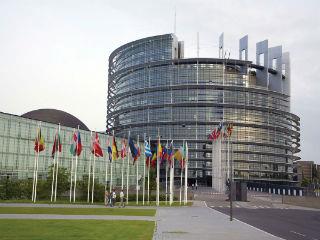
The swing by voters to fringe and protest parties will have little impact on the balance of power in the new parliament, which will continue to operate under an centre-right EPP (European People Party) majority. Even the break out of the UK Conservatives will not hinder this. The losers, the Socialists, remain as the second largest group in the EP and will be readier then ever to deal with the EPP to keep their positions. But a new majority will perhaps sideline the Socialists.
Voter turnout for the European Parliament elections hit a record low, coming down from 63% in 1979 to 42,9 % this year. Especially in several former communist EU member states including Slovakia (19,6%), Lithuania (20,9%) and Poland (24,5%) the turnout was disastrous. EU wide issues rarely figured high in the national campaigns ahead of the EU polls. ‘These elections are like a European football championship played in each national league with aggregated results’, a commentator on German TV said.
National politics dominated the EP elections. In some countries, Greece, Spain, Hungary, Portugal and the UK, the governing parties, left or right, faltered. In others, Germany, France, Italy and Poland, they were able to keep or to strengthen their position. But socialists and social-democrat parties have fared poorly everywhere, regardless of whether they were in power or in the opposition. In the past, at a time of crisis, people typically moved to the left when there was the prospect of higher unemployment. But this time voters are looking for shelter in centre-right direction.
For the reason for this change, some analysts pointed to the policies of centre-right leaders like Sarkozy in France and Merkel in Germany, who have moved to more socialist-like territory by pledging tighter regulation and more state. Other analysts say that socialists and social democrats are stuck in an incomplete transition between the post-ideological centrism of Blair and Schrφder and a new approach more in line with the Zeitgeist.
The EPP, emerged from elections with 263 seats, the largest haul of any group in the EP, is looking for partners to require an absolute majority in the 736-seat parliament. ‘There is enough room for us to do lots of things without the socialists’, an EPP spokesman said; a blow for the socialists and a fundamental change of the traditional coalition since thirty years among the two biggest groups in the parliament.
‘We will have to see where the new majority lies’, according to Josef Daul, the EPP chairman. On paper the majority for the EPP appeared within reach with the Liberals and the new group formed by the British Conservatives and allies. The first testcase will be the election of Josι Manuel Barroso for a second term as European Commission President in the first session of the new elected EP on July 14. For the June summit of the 27 member states leaders Barroso was the one and only candidate, but in the parliament are not only many socialists against him but also in the ranks of the liberals and the French UMP, partner in the EPP, you can find doubts. But these attacks are unlikely to stop Barroso, for the reason that there will not be much choice. The European socialists lack the ability to field a candidate against Barroso…