by Victoria Masterson*
Burnout and stress for women at work have reached “alarming levels”, a new report warns. Women @ Work 2022: A Global Outlook is a survey of 5,000 working women across 10 countries by professional services firm Deloitte Global.
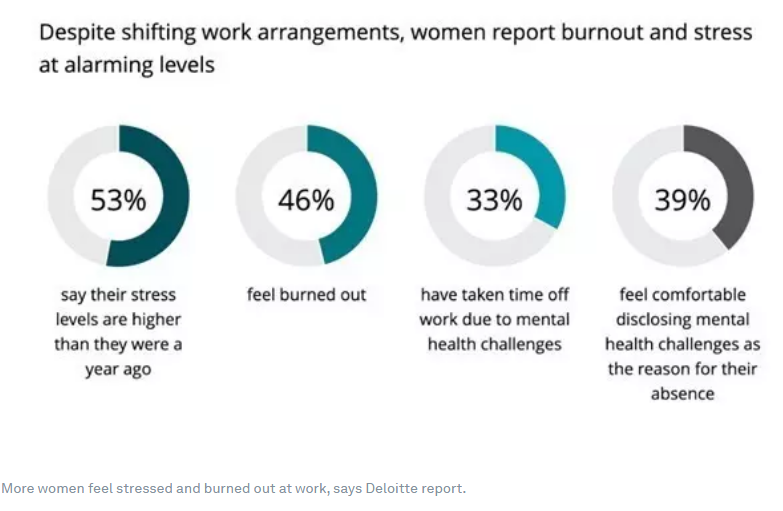
It finds 53% of women reporting higher stress levels than a year ago, while 46% of women say they feel burned out. This is the top driving factor behind the four in 10 women currently looking for a new job, Deloitte says.
Women off work
A third of women have taken time off work because of mental health challenges – with only around four in 10 feeling they can discuss these in the workplace.
COVID-19 and changes to the world of work have motivated “career and life decisions” for many women. “For some, this has meant seeking new, more flexible working patterns,” the authors say.
Others have left jobs or the workforce entirely.
Only 10% of women say they plan to stay with their current employer for more than five years.
Hybrid working challenges
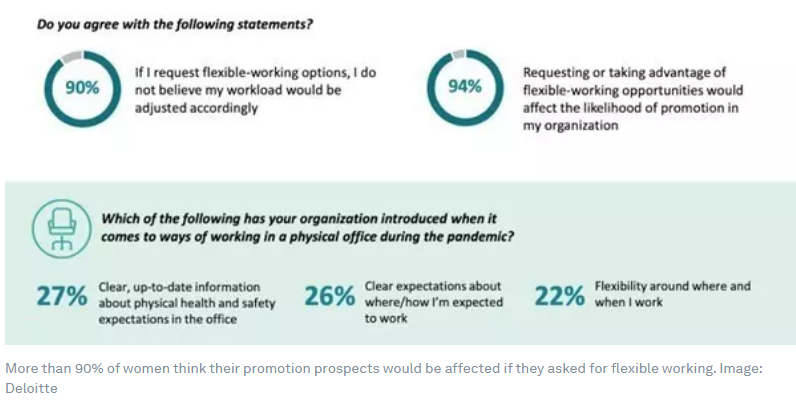
Just a third of women (33%) report that their employer offers flexible working policies. More than 90% fear that asking for this would affect their promotion prospects. This is “worrisome”, the authors say.
Supporting women at work
In the race for talent, inclusive employers that support women will be the winners, Deloitte says. “Women who work for these companies report far higher levels of engagement, trust, and career satisfaction, and they also plan to stay with their employers longer.”
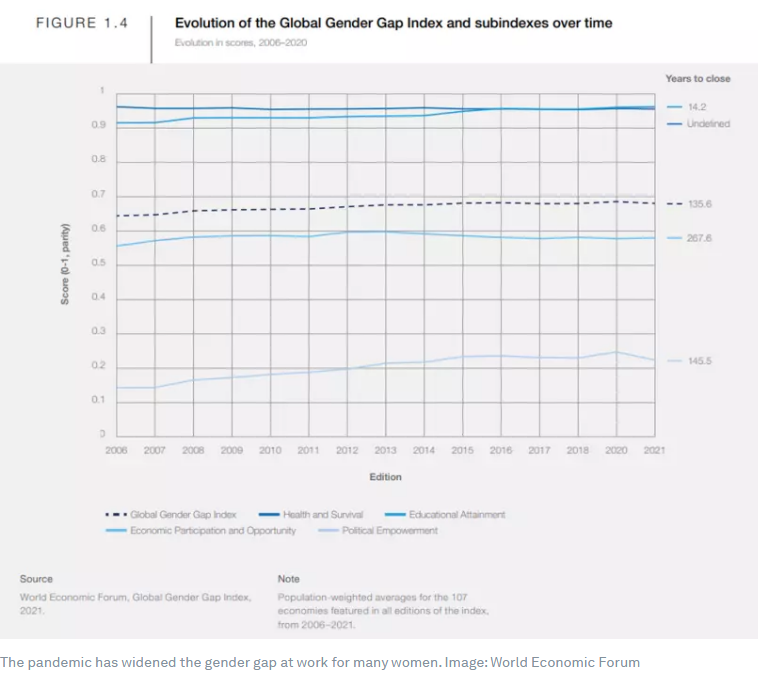
In its Gender Gap Report 2021, the World Economic Forum estimates it will take more than 267 years to close the gender gap in the category of Economic Participation and Opportunity, which includes jobs and pay.
“Overall income disparities are still only part-way towards being bridged and there is a persistent lack of women in leadership positions, with women representing just 27% of all manager positions,” the Forum says.
The pandemic has also widened the gender gap in certain countries for women’s participation in the workforce.
*Senior Writer, Formative Content
**first published in: www.weforum.org
 By: N. Peter Kramer