The President, the Belgian former prime-minister Herman van Rompuy, is not very well known outside his country! That’s right, but does that mean he is not capable of chairing the leaders of the EU member states? Van Rompuy succeeded quite well in keeping together the two parts of Belgium, where the rich Dutch speaking north, Flanders, ‘feeds’ the French speaking part, Wallonia in the south and the capital Brussels. Who, outside the UK of course, was really in favour of Tony Blair? A former prime minister of a country without the Euro; not a part of the Schengen territory; with countless opt-outs from, especially social, EU agreements; refusing to sign the Charter of Fundamental Rights as a part of the Lisbon Treaty….. Let’s not forget, with an EU-President from a small member state, there will be less chance for ‘entre-nous’-deals between the big players.
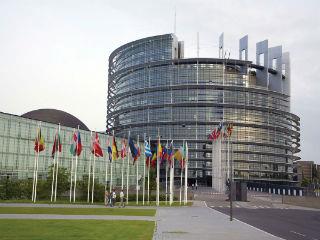
‘Lisbon’ gives the European Parliament a much greater say in the EU’s decision-making process. Among many other areas, the Parliament will have legislative powers in farm policy (which counts for 40% of the total EU budget!), structural funds and ‘home affairs’ (police, justice, human rights). This strong effect is probably underestimated by member states. ‘There will be a moment of ‘My God, what the hell have we done?’ predicted a leading EU watcher. Already before 1 December, the day the Lisbon Treaty entered in force, the Parliament adopted a progressive five-year agenda for fundamental rights, justice and home affairs; ‘the draft programme of the Council (read: the member states) lacked real ambition. Our vote is a clear message that under the Lisbon Treaty the European Parliament will use its increased powers’. Let’s hope that the effect of these increased powers centrally in human rights will be, for instance, fundamental rights for homosexuals in Poland and other former communist member states.
The European Parliament outlined its criteria for EU membership of candidates from Croatia, FYROM (= Macedonia), Turkey and Western Balkans. Interesting to read the tough parliament’s stance about freedom of expression, treatment of ethnic minorities and the fight against corruption and organised crime. It would also be very interesting to check existing memberstates, say for instance Bulgaria, Romania, Slovakia, against the mentioned criteria.
It appears that as soon as you are in the EU, criteria are changed. This may be something about to remind the current President of the European Parliament, Jerzy Buzek from Poland, who said in an interview that he has the idea that MEPs from the former communist countries are more wary of Russia than their colleagues: ‘Questions of democracy and human rights should never be omitted when talking to Moscow’… Maybe he can ask his MEPs to give the right example, in their own country, and not only in their speeches in the hemicycles in Strasbourg and Brussels.
Let me end with some other embarrassing information: while many workers including national civil servants in a lot of EU countries, have to work for less money and do not have even a compensation for inflation, the highly overpaid EU civil servants will receive an inflation-busting 3.7 percent pay rise in 2010!