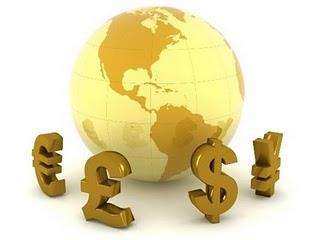
The recession and climate change are truly global crises and therefore international challenges that raise important questions: How to create a sustainable system that can reconcile the regulation of global finance with protection of the weaker segments in our societies and at the same time produce a sustained effort to combat climate change.
It is increasingly clear that half measures will not be enough. Yet, if the right ideas prevail, our world could become a better, fairer and more sustainable place where rights and obligations are properly matched. We know that we need the comprehensive reform of policies, attitudes and institutions and we also know that this can only be achieved through international agreements.
 The EU’s ability to play the leading role within this sort of framework is hampered by its own inadequate institutional structure, weak decision-making, an absence of effective leadership and a political balance that at present favors the more conservative approaches. Europe is at a crossroads where it must decide whether it will evolve into an increasingly political entity of the willing-and-able, or regressing into being no more than a collection agreed-upon in broader economic policies. The regulation of a new global financial architecture, the protection of the weaker elements in our economies and societies and a sustained effort to combat climate change all strike me as better served by the former rather than the latter.
The EU’s reactions since the outset of the current economic turmoil can best be summarized as coordinated rather than unitary. But this need not necessarily have been the case. The EU has a reliable institutional instrument in the European Central Bank and the relative stability of the eurozone. It also has a well-balanced competition policy, even though that is now being eroded, with unpredictable consequences. What it lacks, though, are the institutional strengths to put into effect a successfully European-level policy mix. Monetary policy within the eurozone may be unitary in its design and implementation, but economic policy is too limited and the budget too narrow for it to be effective. In truth, an EU budget does not really exist, because the EU’s inability to raise taxes makes its budget more of a fund and a rather small one at that.
These institutional weaknesses are in fact political weaknesses and when in a crisis intervention an public investment is called for, political weaknesses turn into economic weaknesses. The result is a Europe with neither the institutional ability, nor the political will to design and implement a collective political response: A Europe whose national governments are perhaps understandably reticent to transfer more powers to the European level ultimately means a weaker Europe.
What we need is a more political Europe which will emphasize growth, employment, provision of public goods and the redistribution of wealth. A strong Europe, capable of designing a new growth cycle through policies aimed at the real economy within a global implementation framework; an inspiring Europe that is capable of having a positive effect on global developments. To achieve this, policymakers in Europe need to consider the following points:
*Monetary Union is no longer enough. We need to significantly improve the coordination of Europe’s national economies. A necessary first step concerns tax systems, for how can we continue to accept tax competition between EU countries when the first victim is social policy? If an EU country sets a zero rate of investment it will attract mobile foreign investment but it will of course lose on tax receipts. Tax revenues elsewhere will also be reduced because investments will be withdrawn. And lower tax receipts mean less social spending all around. Tax rate competition is a downward spiral which inevitably leads to further spending cuts and it’s not something the EU can afford.
*A financial supervisory and regulatory framework at EU level is urgently needed, because national authorities throughout Europe are clearly no longer capable of effective oversight when banks operate not only across the EU, but globally.
*The EU’s Stability and Growth Pact (SGP) must focus on growth, even though this may mean a re-interpretation o what “growth” actually means. Just as we now focus on obligations regarding such indicators as national debt, deficits and so on, and maintain a good idea of wishful thinking over the Lisbon Agenda’s targets, I believe we should also place obligations, and strict ones at that, on the growth aspects of the SGP. That would mean binding national budget commitments as a percentage of GDP for research, innovation and education, because they are key parameters for a globally competitive economy.
The SGP cannot continue to view deficits based solely on dogmatic opposition to them; short-term deficits can have positive effects, particularly during a recession, which the long-term consequences are largely the result of how the money is spent. Borrowing for productive investments does not make us poorer because it can head-off expensive future problems. So we shouldn’t just be focusing on eradicating deficits, but rather on ensuring that these deficits will have a positive economic impact. Deficits should:
i) Promote investment, not consumption;
ii) Be based on a long-term investment strategy and payment plan;
iii) Be matched by reliable political guarantees;
iv) Increase productive capacity so that their cost as a percentage of GDP is reduced and
v) Increase future tax receipts through an overall increase of wealth.
*A European Investment Plan must be a priority. European funding of national investment plans is no longer enough, so we need an EU investment plan for transport, telecommunications and energy networks, for higher education and the promotion of inter-university cooperation and for scientific exchanges and research. A truly united Europe needs not just physical infrastructures but also a common intellectual, scientific and innovation base.
*A genuine implementation of “flexicurity”. Combining flexibility and security has really been successfully implemented only in Scandinavia, and has been a failure elsewhere. Employers have focused on flexibility and largely ignored security. In much the same way lack of public enthusiasm for the EU has stemmed from the way people have been asked to make much greater sacrifices than has business. The Party for European Socialists’ proposals for a new Employment Pact in conjunction with a Pact for Social Progress could form the basis for a new agreement that is productive, socially just and economically viable.
*Stronger European leadership. It is no secret that the EU project’s progress reflects the quality, persistence and vision of its leadership and that right now truly pro-European politicians are in short supply. The European Commission’s current weakness is also illustrated by the way it has become a follower of choices, made by EU heads of government, without an agenda of its own. There is too a general mood of “euro-reluctance” in European politics that has been hampering the EU’s responses to pressing global problems.
*A global grid for growth and social justice. We need to move towards a new global governance architecture that is not limited either to general principles or the oversight of financial mechanisms. Global institutions must be strengthened through a network of new rules and responsibilities. Political actors must start to promote the importance of much greater cooperation between the ILO, WTO, World Bank, IMF and the UN’s environmental agency. Membership of these bodies must be accompanied by globally binding standards and material consequences for countries failing to fulfill them. We need a comprehensive linkage of rights and obligations for full participation in the global community and this mechanism would also coordinate efforts to meet overseas aid targets, provide funding in poorer regions to tackle climate change and help with liquidity for emerging economies.
Membership must be rule-based to promote the positive forces of globalization, with well-regulated free markets and quality public goods. We need a new strategic and long-term regulatory framework for financial services which includes transparency and a balancing of risk and accountability. I would also propose o 0.1% Tobin Tax on all capital transactions, to support the world’s poor along the lines put forward back in 2001 by the Belgian EU presidency and more recently by Lord Turner, chairman of the UK’s Financial Services Authority.
These global rules must also promote social justice and agreed minimum standards. The ILO’s standards could provide a good starting point for eliminating forced labor and the harshest forms of child labor, finally ending workplace discrimination and promoting worldwide the right for workers to be represented. At the same time, global environmental rules must be based on the highest possible levels of protection and a “Copenhagen Protocol” based on the EU’s position in the international climate change conference would show a political willingness to meet the challenges.
What we need, in short, is a global institutional grid for growth and social justice encompassing three main parameters: the economy, social justice and environmental progress. The points I’ve touched on here could form the basis for a new approach to global politics in the 21st century. If it were to do so, future historians might identify today’s economic crisis as the point at which different policies and approaches began to strengthen humanity’s capacity for improvement and to herald a new and more equitable period of growth. The real opportunity behind the crisis lies in politicians’ ability to begin changing things for the better, combining vision with concrete steps to produce growth and social justice, and by presenting these in ways that will inspire the people of Europe.
* Mrs. Anna Diamantopoulou is the Greek Minister of Education, former EU social affairs Commissioner
 By: N. Peter Kramer