


by Rajnish Singh, European Policy Centre
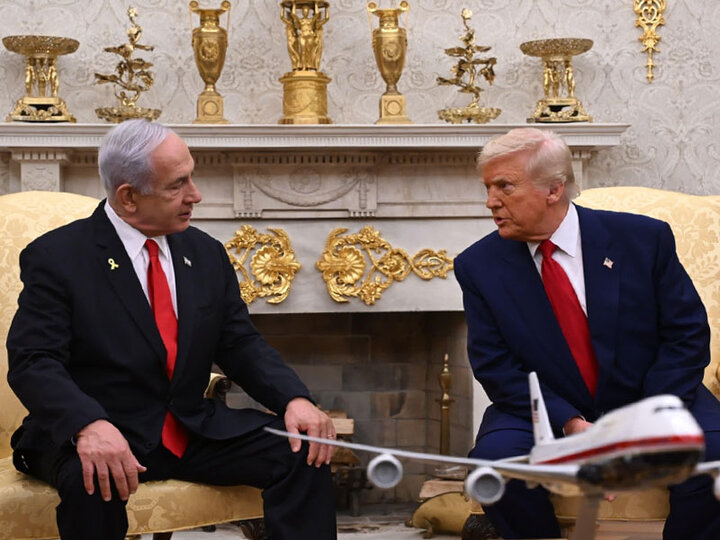
For years, Israeli Prime Minister Benjamin Netanyahu and US President Donald Trump appeared to enjoy one of the closest relationships in modern international politics. Netanyahu hailed Trump’s withdrawal from the Iran nuclear deal in 2018, while Trump repeatedly cast himself as Israel’s most reliable ally in the White House. Their political fortunes often seemed intertwined.
But after Sunday’s surprise US-Iran peace agreement, officially a memorandum of understanding, the question suddenly being asked in diplomatic circles is whether Netanyahu has gone from strategic partner to political liability.
The signs are difficult to ignore.
At this week’s G7 summit in France, Trump delivered what amounted to his sharpest public rebuke of Netanyahu since returning to office. Frustrated by Israel’s continuing military operations in southern Lebanon, Trump reportedly accused the Israeli leader of acting irresponsibly and undermining efforts to secure a broader regional settlement with Iran. In comments that would have been almost unthinkable just a few months ago, the US president suggested that Israel’s actions were hindering his peace initiative and damaging the prospects for long-term stability in the Middle East. According to multiple reports, Trump even suggested Syria could do a better job of containing Hezbollah than Israel’s current strategy. Such language marks a remarkable departure from the unquestioning support that has traditionally characterised the Trump-Netanyahu relationship.
The timing is significant.
Trump is attempting to sell the Iran agreement as a major foreign policy achievement, one that ends a costly confrontation while preventing Tehran from acquiring nuclear weapons. Whether the deal ultimately succeeds remains uncertain, but politically, Trump has invested heavily in presenting himself as the dealmaker who succeeded where others failed.
From that perspective, Netanyahu’s priorities increasingly appear to clash with Trump’s.
The Israeli prime minister has spent much of his political career warning against negotiations with Iran and arguing that military pressure remains the only reliable means of containing Tehran. While Netanyahu has stopped short of directly attacking the new agreement, reports suggest he remains deeply sceptical about its long-term effectiveness. Yet Trump’s priorities have shifted. Rather than escalating confrontation, the US president now wants to demonstrate that diplomacy can deliver security and stability.
This divergence creates a potentially uncomfortable reality for both leaders.
For Netanyahu, the danger is strategic isolation. Israel increasingly finds itself on the sidelines of a diplomatic process being driven by Washington, Gulf states and other regional actors. A leader who only months ago appeared to exert enormous influence over American policy now risks being seen as an obstacle to it.
For Trump, meanwhile, Netanyahu presents a different problem. The president’s political brand has always rested on projecting strength and control. If Israel continues military operations that threaten to derail the Iran agreement, it raises uncomfortable questions about how much influence Trump actually has over one of America’s closest allies. Every Israeli strike that complicates the peace process risks overshadowing the diplomatic victory Trump is trying to claim.
That does not mean the relationship is finished.
The strategic bonds between the United States and Israel remain exceptionally strong, and Trump has repeatedly demonstrated that personal frustrations do not necessarily translate into lasting political breaks. The two men also share deep ideological sympathies and a long history of mutual political support.
Yet relationships in politics are ultimately transactional. Trump’s public criticism suggests that he increasingly views events through the prism of his Iran deal. If Netanyahu is perceived as jeopardising what Trump sees as a signature foreign policy achievement, loyalty may become secondary to political self-interest.
The real test will come during the next 60 days when a deal needs to be made on Iran’s nuclear programme. If the agreement with Iran holds and regional tensions ease, Trump may conclude that diplomacy, not confrontation, is delivering results. In that scenario, Netanyahu’s hawkish instincts could become a source of friction rather than an asset.
For the first time in years, the question no longer sounds far-fetched.
The Bibi-Trump bromance may not be over. But it is looking increasingly fragile.
 By: N. Peter Kramer
