by Rajnish Singh Media Outreach Executive, European Policy Centre
Football may be a simple game, but it has never been a simple business.
It can be tribal, combustible, even an excuse for violence between rival supporters. Yet at its best, it remains what millions insist it is: the beautiful game. Liverpool manager Bill Shankly captured its intensity with his famous line: "Some people believe football is a matter of life and death; it is much more important than that." Former England striker Gary Lineker offered a drier assessment: "Football is a simple game: 22 men (or women) chase a ball for 90 minutes and at the end, the Germans always win."
Together, they capture a sport that inspires devotion, drama and, every four years, a global festival.
The FIFA World Cup, watched by billions, is also the world’s most lucrative sporting spectacle. Broadcasting rights and sponsorship deals generate staggering sums, and under former president Sepp Blatter, the organisation became synonymous with corruption allegations, even though Blatter himself was ultimately cleared.
The tournament has long faced accusations of helping authoritarian hosts burnish their reputations. Russia used the 2018 World Cup to project soft power as Vladimir Putin basked in global attention. Qatar’s 2022 tournament was overshadowed by allegations of exploitative labour practices and concerns over migrant worker deaths.
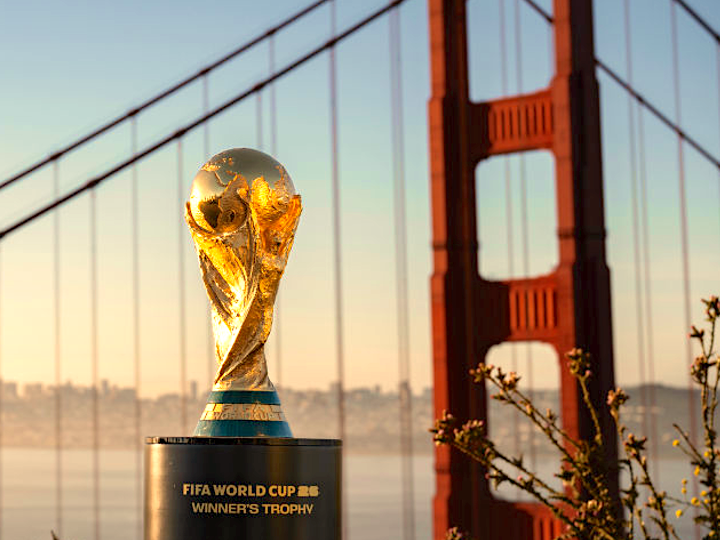
The 2026 World Cup, hosted across Canada, Mexico and the United States, arrived pre-loaded with controversy.
FIFA’s expansion from 32 to 48 teams triggered predictable outrage from traditionalists. Ticket prices caused even greater anger, with some seats reportedly listed at more than US$11,000, prompting accusations of elitism and price gouging.
Strict US immigration and visa restrictions prevented ordinary supporters from countries including Iran, Haiti, Senegal and Ivory Coast from travelling to support their teams. Concerns over extreme heat led FIFA to introduce hydration breaks, a sensible move that nevertheless sparked accusations the organisation was creating additional opportunities for commercial advertising. Spectators were also barred from bringing reusable water bottles into stadiums, a decision critics argued was designed to boost concession sales.
But the controversy that truly came to define the tournament centred on politics.
After US striker Folarin Balogun received a straight red card against Bosnia and Herzegovina, FIFA overturned his automatic one-match suspension following a direct phone call from US President Donald Trump to FIFA president Gianni Infantino. Invoking a broad "probationary" loophole, FIFA cleared Balogun to play in the last 16 against Belgium.
UEFA accused FIFA of having "crossed a red line" and undermined the integrity of the competition.
The backlash was swift. Belgium dismantled the US 4-1, a result greeted with cheers from many neutrals who viewed it as a rebuke to political interference. Some analysts attempted to frame the episode as a reflection of wider transatlantic tensions. That may have been a stretch, but politics and football have rarely been far apart.
George Orwell famously described sport as "war minus the shooting". The World Cup often proves him right.
Footballing success and failure are routinely interpreted as political metaphors. When four-time champions Germany were eliminated by Paraguay on penalties, commentators quickly portrayed the defeat as symbolic of the country’s wider political and economic malaise.
The intersection between football and politics is hardly new. Ahead of Euro 2020, England manager Gareth Southgate published his famous "Dear England" open letter, defending his players’ decision to take the knee and reflecting on identity, belonging and national cohesion during the height of the Black Lives Matter debate.
This World Cup has not escaped questions of race either. Following Paraguay’s defeat to France, Kylian Mbappé publicly condemned Paraguayan senator Celeste Amarilla, calling her a "despicable woman" after a racist attack directed at him. Fortunately, racist taunts from fans in the stadiums have been negligible.
Yet despite everything, the football has succeeded
Fans have continued to travel, sing and forge friendships across borders. The matches themselves have often been thrilling and dramatic. England’s late-night clash with Mexico at the Azteca became an instant classic. Reduced to 10 men, England held on for a famous victory, becoming only the third visiting side ever to win there. Supporters watched English players throw themselves into last-ditch tackles that would have made legendary England and World Cup winner Nobby Stiles proud.
That is the enduring lesson of this World Cup.
The political rows, the pricing scandals and even the presidential interventions will eventually fade. What will remain are the matches, the moments and the memories.
Despite all attempts to politicise, commercialise, or manipulate the tournament, football once again proved bigger than the controversies surrounding it.
As UK commentator Kenneth Wolstenholme’s famous commentary from the 1966 World Cup final put it, when the spectators ran on to the ground in celebration: "They think it’s all over. It is now.”
 By: N. Peter Kramer