by Rajnish Singh, European Policy Centre
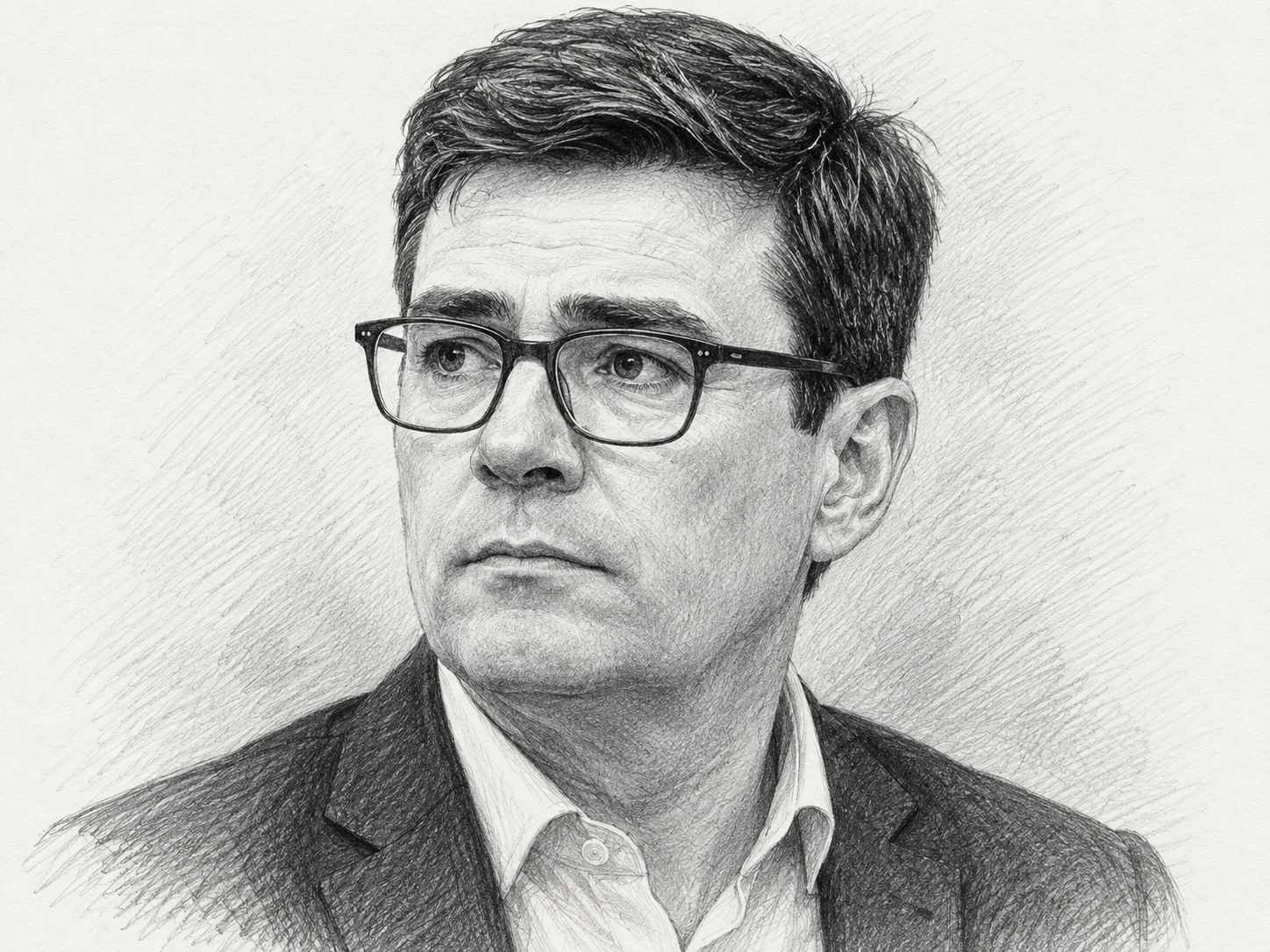
When Andy Burnham walked into the House of Commons to be sworn in as the new member of parliament (MP) for Makerfield, an opposition MP shouted: "He’s not the Messiah!" Burnham instantly replied with the famous line from Monty Python’s Life of Brian: "He’s a very naughty boy!"
It was a light-hearted exchange, but an apt one. Burnham’s journey from winning the Makerfield by-election to standing on the threshold of Downing Street is one of the most remarkable political revivals in recent British history. It also reflects the enormous expectations now resting on his shoulders to revive both Labour’s fortunes and the country’s.
After years building his reputation as Mayor of Greater Manchester, Burnham has returned to Westminster and appears poised to become Prime Minister following Keir Starmer’s announcement on 22 June that he will step down.
Burnham has qualities that make him an attractive contender. He communicates with an authenticity that feels refreshingly free of managerial jargon. His record in Greater Manchester gave him executive experience that few Westminster politicians possess, while his return to Parliament has restored his national profile. Yet before Labour crowns its latest standard-bearer, it should resist the temptation to believe that changing the leader will solve problems that have defeated successive governments.
Britain has become the Italy of northern Europe, churning through prime ministers with alarming regularity. David Cameron, Theresa May, Boris Johnson, Liz Truss, Rishi Sunak and now Starmer have all been overwhelmed, not simply by political mistakes, but by structural pressures that leave little room for easy victories.
Those pressures have only intensified. Economic growth remains weak, productivity has stagnated, and the Treasury has little fiscal headroom after years of sluggish investment, rising public spending and the continuing fallout from Brexit. Meanwhile, the NHS, local government, the courts, transport and defence all face mounting pressures, leaving any incoming prime minister with limited political capital before difficult decisions become unavoidable.
Alongside these domestic challenges lie widening regional inequalities and an increasingly volatile international environment, including the need to manage relations with the mercurial US President Donald Trump.
Europe will also pose political headaches both within Labour and nationally. There will be pressure from the party’s right, London, young voters, and parts of the business lobby to move more quickly towards closer relations with the EU. At the same time, Burnham’s northern constituents, many of whom backed Brexit and are now voting for Nigel Farage’s Reform UK, would see any significant reversal as a betrayal of the referendum result.
Above all, modern British politics is now defined by impatience. Voters expect rapid improvements, yet meaningful reform takes years, creating a cycle in which leaders are judged long before their policies can bear fruit.
Burnham understands these constraints. In a speech in Manchester on 29 June, he set out an ambitious programme centred on devolving power from Westminster, expanding public control over essential services and using the state more actively to rebalance the economy. His proposal for a "No. 10 North" in Manchester would create a second executive hub focused on reindustrialisation, regeneration and what he described as the largest council housebuilding programme in half a century.
The vision is politically compelling. Burnham wants mayors and local authorities to take greater responsibility for housing, transport, skills and aspects of welfare, thereby reducing Whitehall’s grip on economic decision-making. He has also argued for improving living conditions across Britain, drawing inspiration from Germany’s constitutional model, while backing stronger domestic manufacturing, procurement reform and greater parity between technical and academic education.
Whether that agenda can survive fiscal reality is another question. Burnham has promised economic stability while signalling greater support for households, yet has not explained how these ambitions would be funded. Nor has he fully addressed the political obstacles to transferring significant powers from Westminster to the North, without making London and the south feel left out.
That matters because Labour has a habit of placing almost mythical expectations on its leaders. Burnham risks becoming the latest vessel for the party’s hopes of stability, competence and renewal. But politicians are not miracle workers. Even the most capable prime minister cannot transform Britain’s economy, rebuild public services and reshape the state within a single Parliament.
If Labour allows expectations to outrun reality, disappointment will follow. And disappointment has become one of the defining features of British politics.
The MP who shouted that Burnham was "not the Messiah" may have intended nothing more than a Monty Python joke. Yet it also offers a timely warning. Labour should welcome Burnham’s rise without convincing itself that any leader can perform political miracles. Burnham is not the Messiah. He is the politician who must confront Britain’s toughest inheritance in a generation, and that challenge is formidable enough.
 By: N. Peter Kramer