by Thomas de Waal
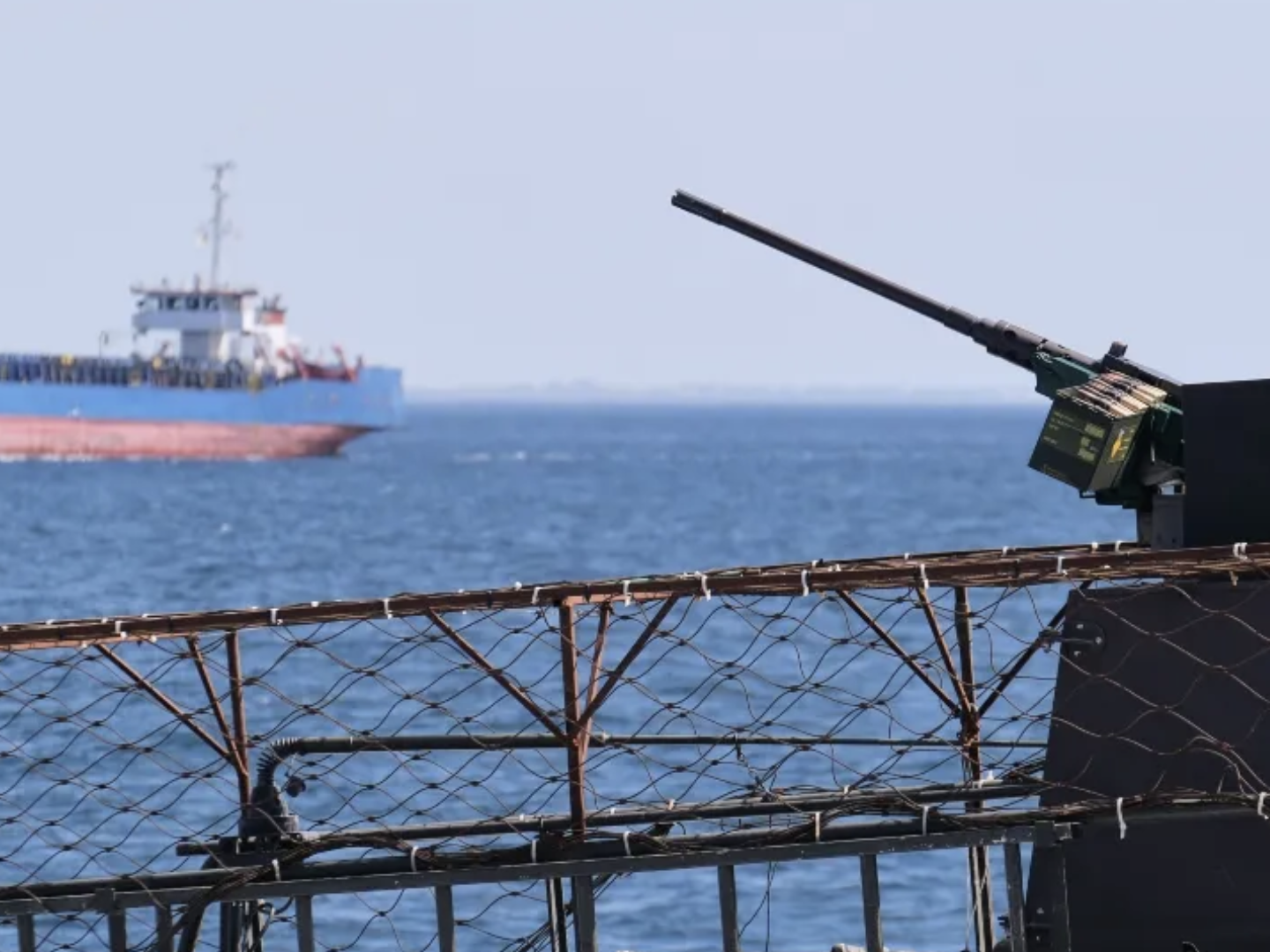
It has been a long, hot, and dangerous summer in the Black Sea, where long-range missiles have delivered destruction to ships as well as Russian and Ukrainian towns and cities. And the longer it goes on, the more global food security is in the line of fire, too.
The sea was “shipping’s deadliest theatre” in July—more dangerous than the Strait of Hormuz—according to Lloyds List, the global shipping news service. Twenty-three sailors were killed that month.
In recent years, Russia and Ukraine together accounted for about 30 percent of the world’s exports of wheat and 12 percent of corn exports, almost all of it shipped through the Black Sea at low cost by bulk carrier. In August, the aerial war cut the grain and agricultural exports of both Russia and Ukraine by two-thirds. The lack of that grain in world markets puts several African countries at risk of famine, while world cereal prices, already pushed up by the closure of the Strait of Hormuz, could rise even higher.
These risks amplify the need for a truce in the Black Sea. Ukrainian President Volodymyr Zelensky has offered a ceasefire, but Russian President Vladimir Putin has so far rejected the idea.
For Europeans, the conclusion must be that a new path to supporting Ukraine’s economic resilience, now under heavy strain, lies in resetting Europe’s relations with African and Middle Eastern countries—the same countries that both face the worst global food insecurity and can make the case to Putin that he must agree to a truce.
So far, Putin has dug in. The Russians have been heavily hit all summer by Ukrainian missiles in the Sea of Azov and in and around the port of Novorossiysk. Yet, Putin evidently believes that Russia has greater strategic depth and a more compliant population and can endure this pain competition better than Ukraine.
Russia’s strategy is plain. It wants to fatally weaken Ukraine this fall and winter by decimating its port and energy infrastructure. At the same time, it wants to weaken Europe’s will to fund Ukraine, especially in countries such as France and Poland, where far-right, Ukraine-skeptical parties may do well in elections next year.
The Russians first tried to choke Odesa, Ukraine’s economic lifeline, in 2022. After suffering heavy damage to its Black Sea Fleet, Russia then agreed to the UN-brokered Black Sea Grain Initiative, which enabled free trade for both sides. When the Russians pulled out of the deal in 2023, Ukraine kept its maritime trade moving with assistance from Bulgaria, Romania, and Turkey.
Russia never let up on its air war on Odesa. But both sides mostly observed a de facto moratorium on targeting commercial shipping and the grain trade.
That changed in late June, when Kyiv launched a forty-day campaign against Russia, massively broadening its range of targets. The campaign achieved major successes, but intensified Russian air strikes more or less shut down Odesa’s ports just before an unusually rich grain harvest.
Harvested Ukrainian grain is now being shipped out by truck or train, at much greater expense. The Danube River could not handle exports, as water levels were at a historic low this summer. And Russian attacks have destroyed up to 40 percent of Ukraine’s storage facilities, according to an Odesa-based businessman.
What can Europeans do? In the long run, Odesa needs proper air defense—as, of course, does all of Ukraine. The country’s farmers need sustained support: As they struggle to get this year’s harvest to market, there are already bad consequences for next year.
Ukrainian farmers also need a better source of fertilizer than countries such as Jordan and Morocco, which are currently two main suppliers but whose products are expensive to buy and hazardous to transport. Eventually, that will mean a deal with Ukraine’s northern neighbor Belarus, one of the three major producers of potash fertilizer worldwide—but such a deal is probably politically impossible at the moment with a regime that is too close to Moscow.
Disturbingly, the crisis also makes other conflict-wracked countries, such as the Democratic Republic of the Congo, Somalia, Sudan, and Yemen, vulnerable to famine. The closure of the Strait of Hormuz was one blow; next year’s severe El Niño will be another.
Reopening Odesa’s ports will contribute to alleviating these countries’ food insecurity. But they need more than that. European governments have only exacerbated the situation with cuts to aid budgets that have further hollowed out the international humanitarian assistance system weakened by the 2025 closure of the U.S. Agency for International Development.
Russia, meanwhile, stokes the suggestion of double standards—that Europeans care only about the suffering of white people—weakening the international coalition for Ukraine.
If and when Putin does commit to a ceasefire, Europe will not be the main actor. Neither Russia nor Ukraine wants to go back to the complicated Black Sea Grain Initiative. The UN Office for Project Services, the organization’s operational arm, together with Turkey, stands ready to implement a truce.
Putin will get to that ceasefire only when the leaders of countries such as Algeria, Egypt, and India pick up the phone to tell him that their food security is at risk. This week’s high-level meetings at the UN General Assembly will be the venue for urgent conversations on how to make that happen. Europeans can do their part, but they need to reframe their own strategic thinking first.
*Published on Carnegie - Strategic Europe
 By: N. Peter Kramer