by Rajnish Singh, European Policy Centre
If there is one question centrist and progressive parties are grappling with across Europe and the United States, it is this: why does public frustration with the status quo so often benefit the right?
From France to the US, parties face a growing paradox. Economic inequality remains high, trust in institutions is declining and voters are increasingly anxious about the future. Yet many progressive movements continue to struggle at the ballot box. Two recent political stories from outside the transatlantic bubble suggest an answer. In Brazil, Luiz Inácio Lula da Silva returned to power by defeating Jair Bolsonaro through an unusual broad democratic coalition. In Serbia, a student-led Student-List party transformed public anger into a campaign centred on accountability, transparency and institutional renewal.
At first glance, Lula’s electoral comeback and Serbia’s student protests appear to have little in common. One was led by a veteran politician and former president. The other emerged from a generation with little faith in political parties. Yet both succeeded because they shifted the debate away from ideological identity and towards democratic credibility, competent governance and the promise of a better future.
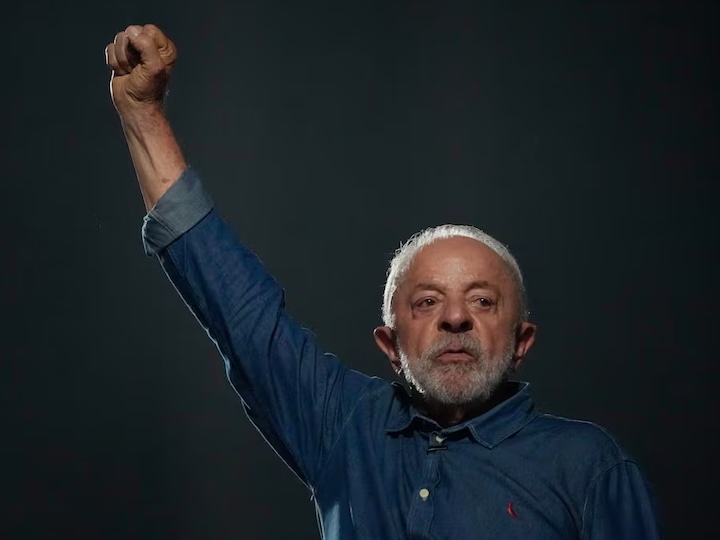
Lula’s return was remarkable because it was not a conventional victory for the left. After years of economic turbulence, corruption scandals and deep political polarisation, Brazil appeared trapped in a bitter culture war. Rather than appealing exclusively to his traditional union base, Lula reached out to centrists, moderates and even former political rivals.
The strategy mattered. Lula defeated Bolsonaro by just 1.8 percentage points, winning 50.9 per cent of the vote against Bolsonaro’s 49.1 per cent in one of the closest presidential contests in Brazil’s democratic history. Such a narrow margin underlined the importance of attracting voters beyond the traditional left.
Nor was the campaign solely about democracy. Lula successfully linked democratic renewal with economic security. During the election campaign, more than 33 million Brazilians were estimated to be experiencing food insecurity, making the cost of living and social protection as important to many voters as concerns about institutions and democratic norms. The message was neither radical nor technocratic. It was reassuring. Lula presented himself as an experienced leader capable of lowering the political temperature while delivering tangible improvements in people’s lives.
This is where the lesson for Europe begins.
France illustrates the dilemma particularly clearly. After years of fragmentation, the left still struggles to reconcile the social-democratic tradition with the more confrontational politics associated with Jean-Luc Mélenchon and his La France Insoumise (LFi) . As the race to succeed Emmanuel Macron gathers pace, progressive forces face a choice: continue competing for ideological purity within a limited electoral base, or build the wider alliances needed to challenge both the far right and a fractured political centre.
The scale of that challenge is significant. Marine Le Pen won more than 13 million votes in the second round of the 2022 presidential election, the strongest result ever achieved by the French far right. For a divided left, the arithmetic is unforgiving.
Lula’s experience suggests a simple truth: political purity may energise activists, but broad coalitions win elections.
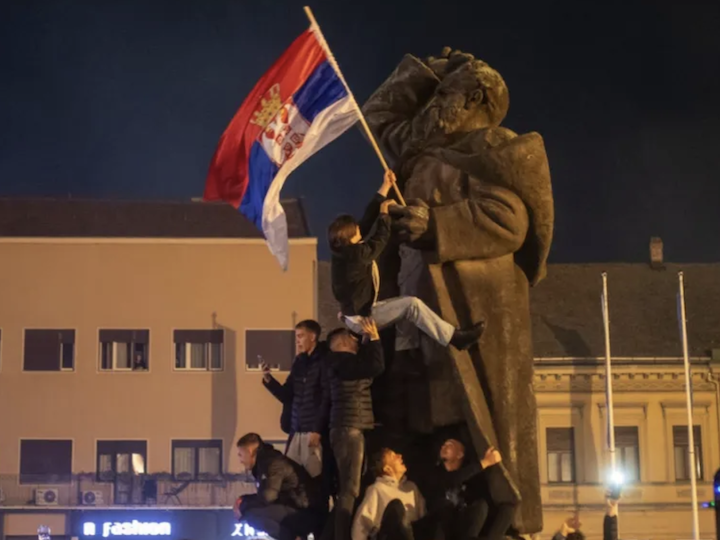
The Serbian example offers a complementary lesson. The country’s Student-List movement gained momentum not because it promoted a detailed ideological programme but because it spoke directly to concerns about corruption, state capture and failing institutions. Rather than framing their arguments through the traditional language of the left or right, activists focused on transparency, accountability and competent governance.
Their strength lay in their credibility. They were seen not as politicians seeking office but as citizens demanding that public institutions serve the public once again. In an era of declining trust in political parties, that distinction matters.
Critics will argue that Lula benefited from Bolsonaro’s polarising presidency, while Serbia’s students have yet to prove they can govern. Both points are valid. Yet they do not undermine the broader lesson. Successful movements must persuade voters beyond their core supporters if they hope to build durable majorities.
Nor does either case offer a simple blueprint. Lula continues to govern a deeply divided Brazil, where Bolsonaro’s political movement remains influential and economic constraints limit room for manoeuvre. Serbia’s student movement faces a different challenge: transforming protest energy into lasting institutional change without losing its independence or unity.
That may be the most important lesson of all. Winning elections and mobilising protests are only the beginning. The real test is whether broad democratic coalitions can govern effectively without fracturing under the weight of their own diversity.
For Europe’s embattled centre-left and for Democrats in the United States, the message from Brazil and Serbia is clear. Voters are not necessarily looking for ideological crusades. They are looking for competence, stability and leaders who can defend democratic institutions while improving everyday life.
The greatest threat to progressive politics may not be the strength of the right. It may be the belief that elections can be won by speaking only to those who already agree. Lula’s victory and Serbia’s student movement suggest otherwise. In an age of polarisation, the most radical political act may be building a coalition large enough to govern.
 By: N. Peter Kramer