The EU accession process could yet be the strongest bond that Turkey has to the west. But Ankara's other links in that direction seem to be slackening. Turkey’s relations with the United States have improved since Barack Obama replaced George W Bush in the White House – but not as much as many people had expected. Turkish soldiers are serving alongside Nato allies in Afghanistan, but their country's role in the alliance remains awkward. Turkey’s previously solid bond with Israel came under severe strain in 2009.
A number of recent statements from Recep Tayyip Erdogan, Turkey's usually pragmatic prime minister, have puzzled western allies: Erdogan called Mahmoud Ahmedinejad "a friend", dismissed worries about Iran's nuclear programme as "gossip", and seemed to exonerate Sudan's leader Omar al-Bashir by saying that "Muslims don’t commit genocide".
Some commentators conclude that Turkey is turning away from the west and towards the east. Ankara's priority, they say, is no longer European Union accession and working alongside Nato allies; rather it is to pursue a "neo-Ottoman" foreign policy designed to restore Turkey’s regional predominance, give it "soft power" among Muslim nations and turn it into an independent player in a multipolar world.
This perceived shift in Turkish foreign policy worries many Europeans and Americans, for two reasons. First, Turkey’s growing ties with regimes or movements shunned by the west – those of Syria, Iran, Sudan, as well as Hamas – could undermine western foreign-policy objectives. Turkey may help such regimes to overcome their sense of international isolation and shield them from western pressure. Turkey, in other words, may no longer be a reliable ally of the west.
Second, some observers suspect that Turkey's stronger ties with the middle east and the former Soviet Union are the outward manifestation of worrisome trends within Turkey. The Kemalist opposition in Ankara accuses the ruling Adalet ve Kalkinma Partisi (Justice & Development Party / AKP) of pursuing a creeping Islamisation of Turkish politics and society; more liberal types detect a rollback of democratic freedoms and civil rights. Many critics of the AKP say the party no longer aspires to modernise the country and therefore prefers stronger ties with autocratic and Islamist regimes.
Europe’s new test
Such views are simplistic. Turkey does not face a clear-cut choice between west and east. The country should be able to combine its growing regional role with its EU aspirations and its allegiance to NATO – provided that it continues its internal modernisation and dares to stand up for values such as democracy and tolerance when dealing with less liberal neighbours.
If Turkey has gained new respect in the middle east and beyond, this is not because of its mediation skills (its peace-making efforts, for example, have produced few results). The real reason why people across the wider region - from central Asia to northern Africa and across the Arab world - are paying attention to Turkey is because it is a rare success in a region beset by problems: a predominantly Muslim country with a secular order, functioning democracy, fast-growing, open and diversified economy, increasingly well-educated people (and that includes most girls) and rising living-standards. To continue on its path towards modernisation, Turkey needs the EU anchor.
But that anchor can only be firm if European Union governments withdraw the vetoes that hold up the accession talks and stop questioning Turkey’s right to negotiate for full membership, which Recep Tayyip Erdogan reaffirmed during his official visit to France on April 2010. The Europeans should also acknowledge that Turkey is different from other, smaller would-be members such as Iceland and Serbia.
The EU must find a way of working with Turkey in areas of common interest – foreign policy, security, energy – in ways that go beyond the narrow, bureaucratic confines of the accession process. For the EU, treating Turkey more as an equal partner in some questions while keeping the accession talks on track will be tricky. But an EU that wants to be a big foreign policy player must at least try.
Turkey and Europe: a shifting access
Turkey’s new regional confidence appears to make the problems in its accession to the European Union less significant. But the linkage is more complicated, says Katinka Barysch, deputy director of the Centre for European Reform.
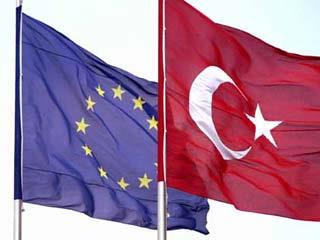
The EU must find a way of working with Turkey in areas of common interest – foreign policy, security, energy – in ways that go beyond the narrow, bureaucratic confines of the accession process.
 By: N. Peter Kramer