


by Rajnish Singh, European Policy Centre
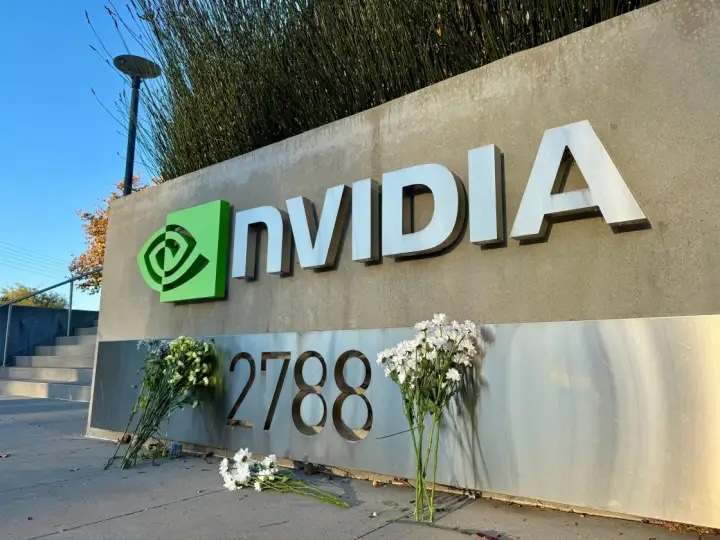
Eleven days after resigning amid allegations involving a relationship with a woman reported to have links to Chinese intelligence. Jensen Huang was back in charge of Nvidia. The company board unanimously reinstated its co-founder after receiving assurances from senior levels of the US administration, with President Trump later publicly taking credit for helping secure the deal. Nvidia’s share price subsequently surged by around 31%, restoring close to $1 trillion in market value.
The scandal itself is not the real story.
The real story is that the global economy appears to have decided Nvidia is too important to function without one man.
When a single executive’s return can move markets on that scale, something far more significant is happening. The AI revolution is creating a dangerous concentration of economic and political power in the hands of a small number of companies and individuals. The Nvidia affair should be a wake-up call.
Over the past decade, a handful of firms have come to dominate every layer of the digital economy. Nvidia controls the advanced chips powering artificial intelligence. Microsoft provides much of the world’s enterprise software and cloud infrastructure. Amazon dominates cloud computing through AWS. Alphabet controls the overwhelming majority of internet search. Meta commands social media networks used by billions of people every month.
Combined, these companies are worth well over $20 trillion, more than the annual economic output of almost every country on earth outside the United States and China. Their influence extends far beyond financial markets. They shape how citizens communicate, access information, consume news, shop, work and increasingly how decisions are made.
That concentration of economic power inevitably becomes political power.
The response to Huang’s resignation illustrated exactly how this works. Investors feared instability. Markets panicked. Politicians intervened. Government officials reportedly reassured the board. The White House welcomed the outcome. What is striking is not simply that Huang returned, but how many powerful actors mobilised to make it happen.
The backlash has been unusually bipartisan. Republican Senator Tom Cotton used the episode to renew calls for stronger safeguards on advanced chip exports, while Democratic Senator Elizabeth Warren criticised Nvidia’s decision and demanded further scrutiny of the company’s compliance with export-control rules. At a time when Washington agrees on very little, concern about the growing power of AI companies is becoming one of the few issues that cuts across party lines.
We’ve been here before.
At the start of the twentieth century, President Theodore (Teddy) Roosevelt confronted industrial monopolies that many believed were untouchable. Standard Oil, Northern Securities and other trusts accumulated such dominance that they threatened both market competition and democratic accountability. Roosevelt understood that excessive concentration of power eventually undermines capitalism itself. His answer was not heavier regulation alone. It was competition enforced through trust-busting.
The parallels with today’s AI giants are becoming increasingly difficult to ignore.
Indeed, modern technology conglomerates may be even more powerful than their industrial predecessors. Standard Oil controlled petroleum production. Today’s AI giants control data, cloud infrastructure, semiconductor supply chains, advertising markets, digital communications and, increasingly, the systems that generate knowledge and influence public debate.
Europe should draw the obvious lesson.
The Digital Markets Act and Digital Services Act were important first steps, but they will not be enough if market concentration continues unchecked. Brussels should go further. The European Commission should prohibit dominant cloud providers from discriminating against rivals’ AI models, require greater interoperability between major digital platforms, strengthen scrutiny of acquisitions of emerging AI firms and consider structural separation where companies control multiple critical layers of the digital ecosystem.
The EU should also establish mandatory transparency requirements for frontier AI models, create a European AI competition review mechanism and use public procurement rules to support home-grown European alternatives. Consumers deserve genuine choice, not permanent dependence on a small number of American technology conglomerates.
The Nvidia affair is ultimately not about personal misconduct. It is about power.
When governments intervene, markets convulse and nearly a trillion dollars in value hangs on the fate of a single executive, the problem is not the individual. The problem is a system that has allowed a handful of companies to become so central to economic life that they are effectively beyond challenge.
Teddy Roosevelt from the last century recognised that monopolies rarely remain benign. Today’s policymakers should rediscover that lesson before the AI age produces private concentrations of power so vast that even democratically elected governments struggle to restrain them.
 By: N. Peter Kramer
