EU High Representative and VP of the Commission Catherine Ashton came last on the list with an ‘E’. Nobody will be surprised by that having seen her poor performance during the outbreak of revolutions in the Arab world.
The EU spoke only sotto voce, wrote Timothy Garton Ash. Ms Ashton is also critisised for selecting a weak team of officials to support her, but her double function as Commission VP and being EU’s top diplomat is seen as impossible.
Ashton’s female colleagues Viviane Reding (justice), Neelie Kroes (digital agenda) and Kristalina Georgieva (humanitarian aid) performed well with a ‘B’ as economy commissioner Olli Rehn, internal market commissioner Michel Barnier and competition commissioner Joaquin Almunia did. The rest of the colleagues largely received a ‘C’. And what ‘grade’ for the President of the European Commission, Jose Manuel Barroso? A ‘C’ for his overall performance and a ‘D’ for achievement of commitments.
It shows that 25% of the critical respondents identified themselves as EU officials, often attacked for their comfortable work conditions but always strongly defend by the Commission President. A recent publication tells that 2000 of these EU officials, earning €124.000 to €185.000 a year, were entitled to three months off work on full pay last year, on top of 24 days annual holidays, seven days off for public holidays plus in 2010 eleven ‘non-working’ days when the EU institutions are closed in summer and at Christmas.
Despite painful austerity measures in many EU member states, often for their national civil service, all EU staff have been awarded a 3.7 % pay rise. Responding to criticism of this and the general pay and perks enjoyed by EU staff, Barroso said ‘the European civil service is often attacked for its apparent privileges when this is not the case and I am always defending this’.
EU administration commissioner Maros Sefcovic reported that new recruits from the EU 10 member states which joined in 2004 (plus a few years later Romania and Bulgaria) have provided the EU institutions with badly needed pro-Europeanism. Recruitment rules were eased for candidates from the new member states and promotions of present staff were stopped to give a chance to new comers. The commissioner said that 4004 officials were recruited during a transitional period that ended on 31 December 2010, well above the target of 3.508.
Memories of the Communist regimes which dominated central and eastern Europe before the fall of the iron curtain in 1989 meant the new officials were strong supporters of the EU project, said Mr. Sefcovic.
Last month, in a debate in the European Parliament, the French philosopher Jean-Marc Ferry mentioned that many European citizens no longer understood what the purpose of the EU is …..
From the Heart of Europe …
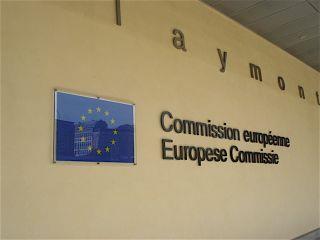
A recent survey conducted by multinational lobby firm Burson-Marsteller rated the European Commission’s overall performance as average or below! Individual commissioners were rated according to their ‘overall performance’ and ‘achievement of commitments’.

Despite painful austerity measures in many EU member states, often for their national civil service, all EU staff have been awarded a 3.7 % pay rise. Responding to criticism of this and the general pay and perks enjoyed by EU staff, Barroso said ‘the European civil service is often attacked for its apparent privileges when this is not the case and I am always defending this’.