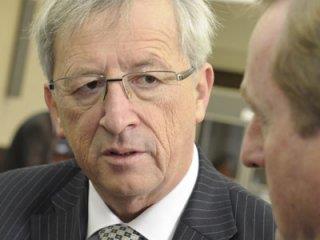
by JEAN - CLAUDE JUNCKER*
They say that too many cooks spoil the broth, and quite a few observers of eurozone policymaking over the last year and a half may have been tempted to apply the saying to Europe’s economic and monetary union.
Policymaking in the European Union in general, and the euro area in particular, is difficult, complex and at times tiresome. But even the harshest critics of the EU’s functioning would have to acknowledge that the often-decried “democratic deficit” is an absurdity. To take the eurozone, there are 17 member states run by 17 democratically elected governments composed of more than 40 political parties. It’s a reality people too often tend to ignore when criticising the alleged slowness of eurozone decisionmaking.
In fact, the euro area’s 13-year history is a success story. The euro is a strong and stable currency, and it’s certainly more stable than any of Europe’s former national currencies. In its first 10 years, the euro has provided price stability, contributed significantly to the EU’s economic development and been a support for job creation. And ever since the economic and financial crisis first hit the European continent in 2008, the euro has played a decisive role in protecting Europe’s economy. It doesn’t take an enormous effort of imagination to see that without the euro the EU’s member states would have drifted apart and ended up in unspeakable monetary, economic and social chaos.
At the same time, the eurozone’s members have undertaken major structural reforms, and are still doing so; not always at a satisfactory pace, but the direction in which they are moving is the right one.
Until September 2008, the economic and fiscal outlook for the euro area was bright, to the point where in April 2007 eurozone finance ministers were even in a position to commit to delivering balanced budgets by 2010.
But then, across the Atlantic, Lehman Brothers failed and the sub-prime bubble exploded. Within just a few weeks we were faced with the biggest financial and economic crisis since 1929.
Was the eurozone prepared for this? Of course not. Nobody was. More important though was the fact that the eurozone lacked the one decisive feature it needed to deal with the situation in a more timely and efficient manner: a central decision making body or, to put it more bluntly, a central government. Where the United States could very rapidly take the necessary steps to stabilise the financial system and deploy huge financial packages to keep up investments and internal demand, European countries responded individually, and co-ordination was sometimes haphazard. So it was unavoidable that the initial actions taken in individual countries gave the impression of a somewhat chaotic European response.
Most observers agree that the “original sin” of European economic and monetary union has been the absence of a “central government” that could have lifted economic policymaking onto the same level of integration as the creation of the European Central Bank did with monetary policy. Speaking as one who was personally involved in negotiating the Maastricht Treaty, my impression has always been that the concept of evolving from an economic and monetary union to a political union was never a project. Instead, it was a hope that political union might one day become a reality. But if the likes of Helmut Kohl, François Mitterrand, Felipe Gonzalez or Jacques Delors were unable to get things moving in this direction, should we really expect of today’s political decision-makers that they can rekindle the flame?
The past months have confirmed the old wisdom that for the EU crises are always an opportunity to advance along the path of closer integration – not voluntarily, of course, but strictly out of necessity. And I for one believe we have made progress that is frankly impressive and that we have obtained results that were unthinkable only a few years ago.
In mid-October of 2008, less than a month after “Black Monday”, the leaders of the then 15 eurozone members met in Paris and decided on measures to stabilise financial sectors. These measures were formally adopted by all 27 EU member states three days later at a European Council meeting in Brussels. The same EU leaders then decided in December to create a common framework of measures to support economic activity to be implemented by member states according to their individual situation. These were the first steps on a long path of decisions that have been taken ever since to secure Europe’s economy at a time of hardship and prepare the future with new and more stringent rules to avoid possible future crises that could again shake the Union and the eurozone especially to its foundations.
The decisions taken in late 2008 on spending programmes and stabilisation of the financial sector – which I still believe were absolutely necessary – uncovered very serious problems in some countries, notably in Greece and Ireland.
The “Greek tragedy” as it is now called is a perfect example of the shortcomings of economic and monetary union, as well as of the euro area’s ability to overcome unforeseeable events and use them to move towards closer integration.
The fact that the Greek economy had been steadily losing ground in terms of competitiveness, and that Greek public finances were deteriorating at an alarming pace, had been known to the eurozone members since 2006. As President of the eurozone finance ministers who make up the Eurogroup, I can remember many discussions with the Greek Prime Minister and the finance minister in which I repeatedly warned them that their situation was by no means sustainable. And although by mid-2007 Greece no longer came under the Growth and Stability Pact’s excessive deficit procedure, we the eurozone finance ministers again and again expressed our worries that the state of Greece’s public finances was unsatisfactory. The Council’s opinions on successive updates of the Greek stability programme are a matter of record, as are press conferences I myself held at that time after every meeting of the Eurogroup. What we didn’t and couldn’t know then was that the Greek authorities were submitting false figures to the European Commission, whose recommendations are the basis for decisions to be taken by the Council. Nor were we aware of the real dimensions of European banks’ exposure on the Greek sovereign debt market, and nor did we have access to information on Greece’s military spending.
By the end of 2009, Greece was in dire straits, and combined with the often irrational but regrettably always decisive behaviour of financial markets, this led to a boost in the economic, financial and fiscal integration of eurozone countries that under normal circumstances would have taken years, perhaps even decades.
The Greek facility, the European Financial Stability Fund (EFSF) and the future European Stability Mechanism (ESM) mean we now have a strong, co-ordinated and structured response to sovereign debt crises in the eurozone. These are instruments of solidarity between member countries in difficult times, and of solidity for the area as a whole since their ultimate goal is to rapidly enable members to stabilise their financial situation and regain access to financial markets. The message is clear; the stability of the eurozone is guaranteed once and for all. Market players should stand warned not to underestimate this.
The limited treaty change and the global response formulated by the euro area, and later adopted by the EU as a whole, means that the strengthening of the Stability and Growth Pact and fiscal co-ordination through the European semester now represents a quantum leap forward. It is the first time that the eurozone has instruments at its disposal not only to watch over and co-ordinate economic and financial policies, but also to enforce them at an early stage when possibly excessive imbalances are first observed.
But we have to go further still. The euro area is not the simple arithmetic of 17 states today and more tomorrow. In monetary, economic and financial affairs it is a single entity with regional variations. This has already been acknowledged by eurozone national leaders, and it was a good start that they themselves want to guide the process in essential areas of economic and financial governance. More has to be done. Italy’s finance minister and I have launched the idea of eurobonds that would be issued by a European debt agency, and while I realise that this idea doesn’t yet command unanimous support, I’m confident that its time will come. The eurozone’s teething troubles are long gone, and its turbulent teenage years are behind it too. Adulthood beckons, so now it should begin to behave like an adult – with maturity.
*Jean-Claude Juncker is Prime Minister of Luxembourg and President of the Eurogroup
 By: N. Peter Kramer