by
Daniel Guéguen, Professor at the College of Europe on comitology
The Lisbon Treaty is not the best of treaties. In appearance, the treaty simplifies the legal framework and decision-making processes. In practice, however, post-Lisbon procedures have become more complex, opaque and increasingly ad-hoc. To put it bluntly, one gets the impression that European decision-makers are easing/ simplifying procedures and bending them as it suits.
Since the beginning of 2010, when my book “Comitology: hijacking European power?” was published, a number of cases showing procedural flaws, have been brought to my attention. This made me question the Community method, the balance of power and in general the EU legal order.
Based on these cases and reflections, I have written a 10 page dissertation which you can download at: www.pacteurope.eu. A summary is provided here.
First of all, what is a legal order?
A good definition for this - in appearance - very clear concept is hard to find. After searching, the most compelling reflection comes ... from Canada. Guy Rocher, full Professor at Harvard and Laval University defines it as “a set of binding rules whose adoption is based on legitimacy. The rules and agents or bodies must demonstrate stability over time, relative permanence.”
It is clear that the institutional instability that the EU has known over the last 10 years is in itself a source of legal instability. Just as a reminder of the long list of reforms the EU has undergone: the draft Constitutional Treaty, the comitology reform of 2006, the Treaty of Lisbon end 2009, a new comitology reform in 2011.
The top of EU Institutions sets the bad example
"Free interpretations" of the European legal order are probably linked to some extent to the institutional, economic and monetary upheavals affecting the European Union since 2008, as if the urgency or gravity of the situation constitutes sufficient ground to adapt the law to the circumstances.
Three examples are particularly illuminating: the adoption of the energy and climate change package in December 2008, de facto side-lining the European Parliament and the Council of Ministers to the benefit of the European Council of Heads of State or Government, at the time not even an EU Institution.
The dismantling of the Community method by Merkel- Sarkozy to the benefit of the intergovernmental approach is a second striking example. The third example is linked to the struggle for power between the Commission-Council-Parliament when dividing implementing measures in delegated acts and implementing acts.
This bad example contaminates the overall EU decision-making process
Three cases in particular show the trend towards bad procedural practices: legal window-dressing, short-cut procedures, approximations, interpretations of the rules,… and overall a lack of respect for the spirit of the Treaties.
The first case: the Fuel Quality Directive. In this file, the letter of the rules is respected but in spirit they are violated. Whether it concerns the Impact Assessment, the consultation process, the publication in the Comitology register, alternate compromise proposals by Member states, inter-service consultation, it all amounts to a stop-and-go process, U-turns and opacity.
The second case: the revision of the pharmacovigilance legislation in which we find delegated acts co-existing with the Regulatory Procedure with Scrutiny. These two procedures can in principle not feature together in one and the same piece of legislation, as one applies to legal acts pre-Lisbon and the other to acts post-Lisbon. Legal experts at the Commission justify this anomaly by indicating that the rules can be adapted if they facilitate a political compromise.
The third case: ORPHACOL, disavowing implementing measures! Orphacol is a medicine used for the treatment of two extremely rare and serious child liver diseases, and is an alternative to liver transplantation. The medicine was approved twice unanimously by the European Medicines Agency.
Nevertheless the Commission opposes to it and drafts a proposed regulation refusing market authorisation. In the Examination and Appeal Committee Member states oppose the Commission’s refusal at qualified majority. The Commission however persists in its refusal. The file is taken to the Court of Justice which accepts an accelerated procedure and schedules a hearing on 24th April 2012. Barely one week after this hearing, the Commission re-introduces its proposal for refusal of market authorisation to the Examination committee on the 8th May (a public holiday in a number of EU member states). The same proposal the Examination Committee voted on and rejected at QMV on 13th October 2011! Member states come short of a few votes to reject the Commission’s proposal at qualified majority. The Commission now has the free hand to adopt its proposal. The Court’s ruling is expected with impatience.
Urgent action is needed. The “Community procedures” are dispersed among various texts that are sometimes referred to as « rules of procedure », then as mere « guidelines » or « guidances ». It seems indispensable to consolidate all these texts – and to clarify their content – creating one single clear, coherent, uniform and mandatory Community Code, with national codes of procedure serving as models.
To answer, please contact the author:
Daniel Guéguen
[email protected]
Tel : +32 (0)2 230 38 68
GSM : +32 (0)474 37 74 42
Web : http://www.pacteurope.eu
Concerns over the EU legal order
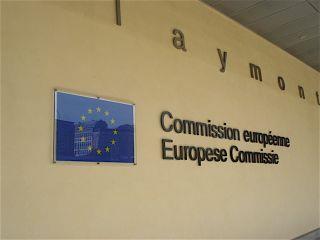
How far can the European Commission go in interpreting procedural rules? Several recent cases fuel this discomfort
It is clear that the institutional instability that the EU has known over the last 10 years is in itself a source of legal instability. Just as a reminder of the long list of reforms the EU has undergone: the draft Constitutional Treaty, the comitology reform of 2006, the Treaty of Lisbon end 2009, a new comitology reform in 2011.
 By: N. Peter Kramer