Edition: International | Greek
MENU

Home » Europe

Acknowledging the gaps in the protection of the European external borders, we put in place a European Border and Coast Guard which is now fully operational and other projects for a stronger border management of our external borders. We also ensured a more efficient security policy while on migration we did not only respond to the immediate needs but also we proposed a long term strategy. In order for this strategy to be successful, implementation is needed. And this is where we are lacking behind. Many governments of the European Union are still reluctant to comply with their responsibilities and commitments. Yesterday I have sent very clear and strong messages form Brussels, that all Member States need fulfil their commitments and on time! No more excuses and pretexts. It is the moment to show responsibility.

The responsibility to defend Europe

By: EBR | Friday, March 3, 2017

A brief flash-back to the relatively recent historic period would remind us of the tragedies of the two World Wars, of our divided continent, of more than 70 million lost lives, as well as of a landscape of human and natural destruction and devastation

uncker, Merkel and Mogherini are right. Security and development are inextricably linked: there can be no sustainable development without peace and security, while development and poverty eradication are crucial to a viable peace. That is why implementing the Sustainable Development Goals is important.

Security is about more than just military spending

By: EBR | Wednesday, March 1, 2017

Security is not just about strong armies, aircraft carriers and boots-on-the-ground. Peace and stability in the 21st century demand that we tackle so-called ‘soft’ or non-traditional security challenges including development, governance, and environmental degradation
Populist parties and distrust of traditional news media outlets have been growing in Spain, like other cash-strapped European countries. Such movements have spurred an explosion of fake or misleading news, aimed at either promoting certain political views or undermining others’ credibility.

Europe combats a new foe of political stability: fake news

By: EBR | Tuesday, February 28, 2017

BRUSSELS — They scan websites and pore over social media, combing through hundreds of reports a day. But the bogus claims just keep coming
The Agreement will massively benefit European wholesalers and retailers, who depend on global value chains. It is also a good day for developing countries, whose exports will be able to pass customs more quickly and cheaply, making trade work for economic growth and social wellbeing.

WTO Trade Facilitation Agreement: a welcome boost for the World Economy

By: EBR | Tuesday, February 28, 2017

EuroCommerce* is very pleased that the number of ratifications needed for the WTO Agreement on Trade Facilitation (TFA) to enter into force was reached today
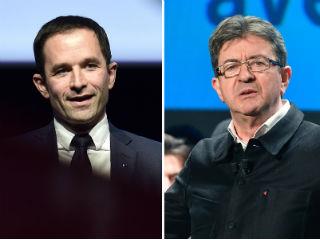
Europe’s budgetary rules, which both candidates have targeted in their election campaigns, are another area of divergence. Hamon supports the suspension of the Stability and Growth Pact until such a time as it can be acceptably reformed. The Socialist candidate also wants to exclude investment spending from deficit calculations. Mélenchon, on the other hand, wants to end austerity by dropping the treaties altogether.

Mélenchon and Hamon unable to overcome differences on Europe

By: EBR | Thursday, February 23, 2017

Discussions on a possible coalition between the two left-wing candidates for France’s presidential election appear to have broken down. Their fundamentally different views on the future of Europe make any partnership unworkable
The EU’s efforts to reduce the burden of managing failed banks on taxpayers (the Banking Union, for instance) are positive. However, the centralisation of supervision and decision-making in the European Central Bank has institutionalised the idea that failed banks should be rescued with taxpayer money. Furthermore, the ECB has relied on the firms of the bailout business to execute its supervisory mandate – for instance with stress tests – leading to further market concentration and greater dependency on a small group of firms.

The bailout business in the EU

By: EBR | Thursday, February 23, 2017

Since the 2008 financial crisis broke out, more than €1.5 trillion in taxpayer money has been used to rescue ailing banks in Europe, according to the European Commission. Citizens shouldn’t grow accustomed to this
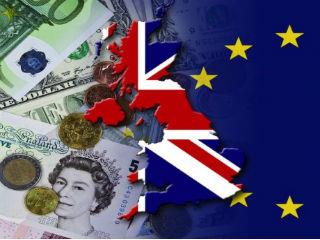
It’s possible that the die-hards in Theresa May’s government who demand a hard Brexit will win the day, causing a degree of havoc in the UK economy that some analysts put at £100bn in costs and lost growth. But perhaps cooler heads will prevail, with their warnings that by value half of all Britain’s exports go to the EU, and that leaving the single market threatens the UK’s position as the leading recipient of foreign direct investment in Europe.

Don’t start Brexit talks with a clash on cash

By: EBR | Wednesday, February 22, 2017

The eyes of the world will soon be on the Brexit negotiations, amid widespread fears that they may end in a ‘train crash’, not least because of a cash clash. Here’s a suggestion for averting that – or at least making it much less likely
The process of comitology already underwent severe changes when the Lisbon Treaty was signed. Commission involvement was increased and so-called trilogues, attended by representatives of the three main institutions, have been used more and more. The lack of transparency of the latter has been routinely called into question.

Commission fluffs lines on decision-making reform

By: EBR | Thursday, February 16, 2017

The European Commission has revealed its long-awaited reform of the so-called comitology decision-making process
 Next week might come too soon for every ‘i’ to be dotted and every ’t’ to be crossed. I would be very happy if significant progress with the Greek government is made by that point. It might be the case that the agreement is ready by the meeting after, in March.

Eurogroup deputy: ‘Grexit is a non-issue’

By: EBR | Thursday, February 16, 2017

Thomas Wieser has been president of the Eurogroup Working Group since 2012. It is an advisory body made up of representatives from the Economic and Financial Committee, the European Commission and the European Central Bank
In a recent speech, Mogherini, the High Representative of the European Union for Foreign Affairs and Security Policy , said that the EU will continue support Ukraine by various means. Mogherini also added that the EU will continue support Ukraine with a special focus on the delivery of services to the population, the service which are aimed at the improvement of living conditions for the people.

EU urged to intensify sanctions against Moscow

By: EBR | Wednesday, February 15, 2017

The EU has been urged by an EP commission to intensify sanctions against Russia or risk a repeat of the Ukraine crisis in neighbouring Belarus. The warning comes amid a recent big upsurge in fighting in Donbass between Russian-backed separatists and Ukrainian forces
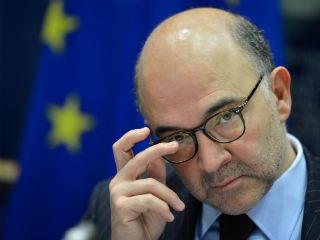
So let us mobilise. Let us ensure that 2017 is the year in which we stand up and fight for the united Europe that we continue to believe in and that more than ever, we need. A Europe that is not only dynamic and competitive but also inclusive, social, fair. A Europe that stands tall and strong on the international stage, proud of its values of openness and tolerance. In that sense, we must see the Trump administration not only as a challenge, but as an opportunity.

Pierre Moscovici: A response to the populist tsunami

By: EBR | Wednesday, February 15, 2017

I have long had a deep affection for Greece and its people, with their unparalleled history
What is left today of this asset-rich, wage-poor model is widespread inequality, a disenfranchised generation of young people with no jobs and no assets, and rising populism. Both the US and the UK rank among the top Western countries for inequality, according to OECD data. Against this backdrop, Europe’s social safety net and its inclusive welfare policies could turn into strengths, giving it more social and political stability than investors expect; in a historical twist of events, state leaders in Germany and France have recently reminded the US of the importance of civil rights.

Don’t give up on Europe

By: EBR | Friday, February 10, 2017

“Europe is uninvestable,” a fund manager declares, while carving a slice of roast lamb over dinner in Mayfair, London. “With Marine Le Pen in France, Brexit and populists all over the place, we prefer to avoid any Eurozone risk.” The other fund managers in the room nod, in silence
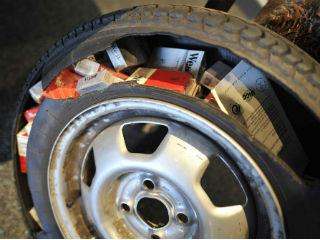
OLAF is always trying to stay ahead of the game. For example, our specialists have developed new IT tools that record the physical movements of containers transported on maritime vessels and that gather information on the goods entering, transiting and leaving the EU. This will allow OLAF and member states to better track and trace suspicious shipments and thus better detect customs fraud, which should also prove helpful in the fight against tobacco smuggling.

EU anti-fraud official: Tobacco smuggling is ‘major source’ of organised crime

By: EBR | Friday, February 10, 2017

Margarete Hofmann is director of policy at the European Anti-Fraud Office (OLAF)
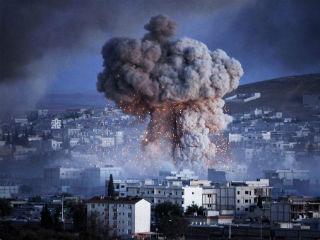
Any discussion about events in Syria runs the risk of becoming stifled. People argue that the situation in the region is too complex; that there are too many players with incomprehensible interests. Of course, much remains hidden. But the fact that war crimes are taking place, that more than 90% of the deaths of doctors, journalists and civilians are the result of actions of the Syrian regime and its allies − this is not propaganda.

Why is Europe so silent on Syria?

By: EBR | Friday, February 10, 2017

Why did nearly six years have to pass? Why did hundreds of thousands of people in Syria have to die and many millions have to flee? Why did it take so long for Europe to feel even a little disgust at the tragedy of Aleppo, one of the biggest worldwide humanitarian catastrophes of recent years?
The Commission has so far been hugging the white paper’s text to its chest. Some EU ambassadors believe that they may not catch sight of it until early March, by when there will be little time to do more than fine-tune a fait accompli. It is generally acknowledged that the timing is made tricky for the Brussels executive by elections this year in France and Germany. If the white paper inflames controversy, it could do more harm than good.

Eurozone proposals will be Rome party pooper

By: EBR | Wednesday, February 8, 2017

Pity the European Union’s top officials as they contemplate next month’s 60th anniversary of the Treaty of Rome
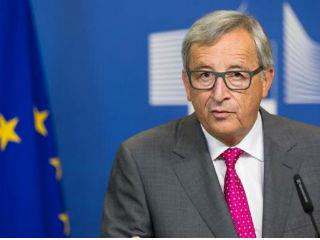
The March summit in the Italian capital will mark the 60th anniversary of the Treaty of Rome, which founded the European project. By then, member states were expected to have outlined their vision for the future of Europe.

Europe looks beyond March summit to forge vision

By: EBR | Friday, February 3, 2017

The 60th anniversary of the Rome Treaty next month is unlikely to be celebrated with a landmark roadmap for future EU integration, as diverging views continue to undermine efforts to forge a common vision
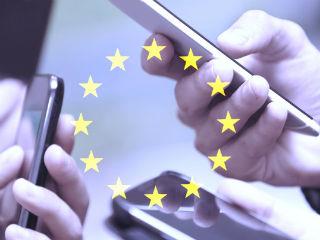
The battle against roaming charges took on an added significance after Britain voted to quit the bloc last year in a surge of anti-EU sentiment and Brussels has sought to show it works for ordinary citizens.

‘Goodbye roaming’: EU clears final hurdle to end mobile charges abroad

By: EBR | Wednesday, February 1, 2017

The European Union clinched a preliminary deal early on Wednesday (31 January) to cap wholesale charges telecom operators pay each other when their customers use their mobile phones abroad, paving the way for the abolition of roaming fees in June.
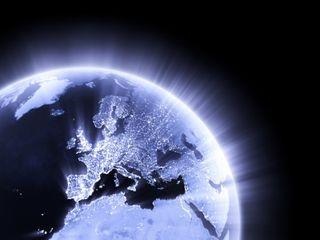
Significantly, as President Trump moves to make the his country more insular, transactional, and narrowly interest-driven – saying the US will buy American and hire American – China has set up stall as the defender of economic globalisation and free world trade. As Chinese President Xi Jinping warned at the Davos World Economic Forum last month, “No one will emerge as a winner in a trade war”.

As Trump disengages from the world, Europe and others can take the lead

By: EBR | Wednesday, February 1, 2017

The new President of the United States, Donald Trump, is upending liberal democracy, spreading ‘alternative facts’ and smashing civilised values
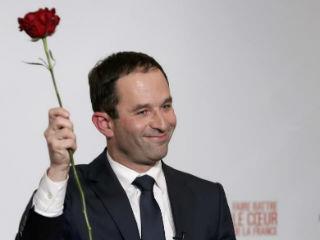
This is not the only issue along which party lines are divided. Since he was ousted two and a half years ago, along with fellow left-wing rebels Montebourg and Aurélie Filippetti, Hamon has been one of the Valls government’s most vocal opponents. He even went so far as to call for a vote of no confidence in the government over last spring’s labour reforms.

Hamon’s victory confirms ‘Corbynisation’ of French left

By: EBR | Monday, January 30, 2017

The clear victor in France’s Socialist primary, Benoît Hamon represents the left fringe of his divided party. Fearing a decline into eternal opposition and irrelevance, some Socialist MPs will instead back Emmanuel Macron
Malta’s aim for its six months at the heart of Europe is to act in the interests of its citizens, make a better life for them, and bring a greater appreciation of the EU to its people. Through small acts by a small country, we can achieve these bigger goals for the whole of Europe.

Maltese presidency aims to make the ordinary extraordinary

By: EBR | Monday, January 30, 2017

On 1 January Malta, the smallest member of the European Union, took on the giant task of the presidency of the EU Council

Pages: Previous Next

EU Actually

Only President Antonio Costa believes in a deal in his EU Council before Christmas

N. Peter KramerBy: N. Peter Kramer

In his weekly column N. Peter Kramer writes that EU member states are deeply divided over the EU’s next seven-year budget. Do we know more after the EU Council on Thursday?

Europe

The EU’s Middle-Power Puzzle

The EU’s Middle-Power Puzzle

While the EU and European governments are embracing the much-lauded middle-power moment, this entails three difficult conundrums

Business

Businesscraft: Japan’s Quiet Discipline for a Fractured World

Businesscraft: Japan’s Quiet Discipline for a Fractured World

For almost thirty years after the end of the Cold War, geopolitics stayed away from the corporate boardroom. Geopolitical considerations belonged to the foreign ministry or to a dedicated risk committee back at headquarters, and rarely crossed a CEO’s desk.

MARKET INDICES

Powered by Investing.com
All contents © Copyright EMG Strategic Consulting Ltd. 1997-2026. All Rights Reserved   |   Home Page  |   Disclaimer  |   Website by Theratron