Edition: International | Greek
MENU

Home » Europe

One positive to emerge from the UK referendum is the spotlight it has shone on the interdependence of EU member states and the reality that membership is embedded in every single aspect of our lives, communities and economy. And that for a member state to try and extract itself from that deep relationship is extremely difficult. ”The exit process is legally challenging, as the UK has discovered, politically divisive and hugely disruptive,” she said.

MEP McGuiness: need for stronger links between the European and National parliaments

By: EBR | Tuesday, November 8, 2016

The EU needs to be careful that Brexit does not become the tail that wags the dog and results in the EU 27 losing focus on the major challenges and opportunities facing it, Mairead McGuinness Fine Gael MEP and Vice-President of the European Parliament warned
While heavily criticized by internet platforms like Facebook and Google, the introduction of publishers rights is about cooperation, and acknowledging the role of the publishers in this value-chain. While they have grown valuable businesses using publishers’ content, without investing in the content itself, the European Commission’s proposal now introduces a better balance in the asymmetric relationship between publishers and internet platforms to negotiate a fair remuneration for the use of publishers’ content.

Copyright: Guaranteeing the sustainability of news media in Europe

By: EBR | Monday, November 7, 2016

The press publishing industry is often seen as an old-fashioned, analogue industry

The leveraging of competitiveness by the euro accounts to a considerable degree for the widely varying performance between north and south. The German and other northern economies’ superior competitiveness is further boosted, while the competitiveness of the Greek and other mostly southern economies is negatively leveraged.

Correcting the Euro’s flawed architecture demands a focus on competitiveness rather than productivity

By: EBR | Thursday, November 3, 2016

On September 20, the European Council adopted a recommendation calling on the Eurozone member states to establish national productivity boards
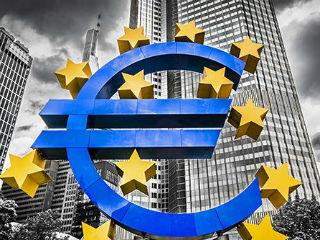
The converge criteria were that countries had to keep their deficits and debts relative to their GDP down. That was viewed as the necessary and almost sufficient conditions for making the euro work. Several of the countries that went into crisis, Spain and Portugal for instance, actually had a surplus before the crisis and a very low debt-to-GDP ratio. But they still had a crisis. That tells us an important lesson: what the people who were behind the creation of the euro thought was going to be a critical condition was not!

How a common currency threatens the future of Europe

By: N. Peter Kramer | Thursday, November 3, 2016

The Euro started 17 years ago, and was supposed to enhance commercial ties, erode borders and foster a spirit of collective interest, furthering the evolution of former wartime combatants into fellow nations of a united Europe, the European Union
The constellation of power on Brussels is still that of the old establishment, drawing the anger of new forces. Indeed, there is a time lag between national and EU-level political change. New parties gain power at the EU level only once they enter national government while more establish the power basis first at the regional or local level or online. As a result, that may be very influential in setting a new political agenda in national politics but it is the old parties that still represent their countries in Brussels.

The EU and its ancient enemies

By: Athanase Papandropoulos | Wednesday, October 26, 2016

Seventy years after the famous speech of W. Churchill in Zurich the specter of nationalism is once again present in Europe. On September 18, remind us the Foreign Affairs Magazine, the Alternative for Germany, the Islam and anti-immigrant party won 14.2 % of the vote for the Berlin’s regional parliament
Europe must regain control of its frontiers; its citizens must believe that their union can prevent an unending flow of migrants across the sea and over land. This means more naval power in the Mediterranean and expanded surveillance of Europe’s frontiers. It also means building up European hard-power capacities (including intelligence and military options) to better manage events in North Africa and the Middle East that affect vital European interests.

Europe needs its realist past

By: EBR | Monday, October 24, 2016

The founders of the European Union were hard headed pragmatists—and their wisdom could help today’s leaders handle Putin, migration and Brexit
The GEAR tool gathers the good practices of universities and research organisations and bases itself on the findings of EU funded projects in the field of Gender Equality Plans and institutional change.

European research needs both women and men

By: EBR | Friday, October 21, 2016

The European Institute for Gender Equality (EIGE) and the European Commission today addressed the challenge of making research organisations and the higher education sector equal for both women and men by launching a new tool to support the research community

More than ever, Europe is a vibrant mix of people, cultures and religions. The EU is an important part of peoples’ lives, often taken for granted, often criticised and much too often under-estimated and under-sold by self-seeking politicians.

The curious contours of a new European conversation

By: EBR | Wednesday, October 19, 2016

As the European Union gears up for its 60th anniversary next March, there’s good news and bad news.
The days are long gone when Europeans’ national cultures were part of their colonialist armoury. Today the flow is if anything reversed, with Europe absorbing strong cultural influences from Asia, Africa and the Arab world. But the EU’s growing focus on the cultural affinities of its member countries is becoming vitally important.

Making the most of Europe’s ”saving graces”

By: EBR | Wednesday, October 12, 2016

No one would deny that these are difficult times for the European Union
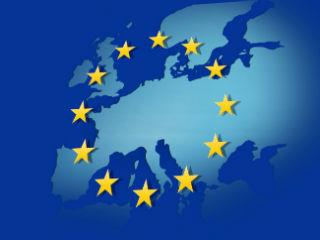
Reinforced integration among a smaller group of member states may indeed make sense; it has worked it in the past. It can be a reasonable means of accommodating different interests and appetites for integration. The EU treaties allow for “Enhanced Cooperation” among groups of member states. Many aspects of the EU either began this way, or to this day are still limited to subsets of member states: Schengen, the euro or the Fiscal Compact. At the same time, proposals for ‘Core Europe’ seem to imply something qualitatively different – perhaps a more tiered model for the Union, with inner and outer layers of participation.

Europe’s reboot: from Bismarck to ‘Core Europe’?

By: EBR | Friday, September 30, 2016

Political integration projects have often been shaped by debates about their ultimate territorial limits, as these imply different visions of the values behind the project. For more than 40 years, Europe – and Britain – have debated whether and how the European project should include the UK

The EU’s current crisis is more menacing than any previous impasse because these factors no longer apply to the same degree as in the past. The ‘established’ parties of the centre and the moderate left and right are losing support to anti-European parties of the radical left or, more so, especially in northern European countries, of the radical right. Their growth increasingly limits the ‘old’ parties from making the necessary compromises to solve the EU’s critical issues.

EU faces another year of living dangerously

By: EBR | Tuesday, September 27, 2016

Beware - the European Union is not set in stone. It can disintegrate. The U.K.’s vote to leave the EU is the biggest blow in the union’s history. However, the withdrawal of the U.K. or any member is by no means its only existential threat
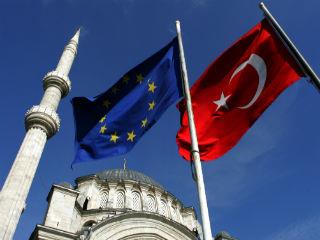
The European Union would be a better global power, and Turkey would be a stronger European democracy showing greater convergence with European values and interests. The results of the EU’s failed Turkey policy are clear.

EU and Turkey: Time to act

By: EBR | Monday, September 19, 2016

The failure of the coup attempt in Turkey is celebrated as a victory for democracy by Turks. However, after rapidly condemning the coup, the EU’s weak solidarity has become a source of resentment for Ankara

More than 10.000 online shops are already certified by Ecommerce Europe and the National Associations, and carry the Ecommerce Europe Trustmark. These shops received the Trustmark  for free via one of the National Associations that has joined Ecommerce Europe. Shops that carry the Ecommerce Europe Trustmark link directly to the Ecommerce Europe Trustmark Certificate.

Ecommerce Europe Trustmark

By: EBR | Friday, September 16, 2016

Cross-border E-commerce protection for consumers
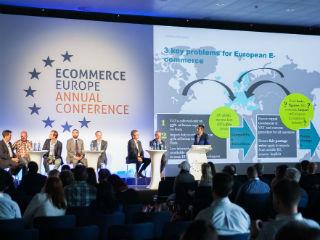
Ecommerce Europe is pleased that the Commission further clarified this point in the text, even though it might need further fine tuning. Only in this way, online merchants can be sure that they are allowed to apply their national laws, without being forced to deal with laws of countries that they are not actively targeting. Besides that, EU policy makers should be aware that one of the consequences of this proposal might be that consumers end up disappointed with a product that they could buy from a website not directing its sales activities to the country of the consumer and which thus might not have been fit for this market.

Upcoming priorities and challenges for the e-commerce sector in Europe Brexit and the Slovak Presidency

By: EBR | Friday, September 16, 2016

The EU is facing crucial challenges that will impact its policies at all levels but also its nature itself. In this context, a wide range of dossiers linked to the European Commission’s Digital Single Market (DSM) Strategy will be affected
The EU’s general nondiscrimination policy allows for members to compete for new business by offering an attractive tax environment. Indeed, the EC only demanded that Ireland impose its generally low 12.5 percent corporate tax rate on the revenues that escaped taxation elsewhere in the EU or, indeed, even in the United States. There was no effort to require Ireland to raise its overall tax rates so as to reduce its competitive advantage.

Europe Gets Apple Right

By: EBR | Thursday, September 15, 2016

On August 30, the European Commission issued a blockbuster ruling that required Ireland to recoup, with interest, the €13 billion in tax benefits that it has granted Apple since 1991

It is clear that the acceleration / deepening are the most coherent and complete rapprochement. However, the implementation of that rapprochement demands wider consent which is not easy to happen. But this does not mean that the Union should be let muddling through. A strategy with two stages could be able to overcome the obstacles.

Europe’s future under high uncertainty

By: EBR | Thursday, September 15, 2016

This very week, might be proved crucial for European Union’s future

 A solution for Strasbourg could be to establish an undergraduate European University there, modelled on the EUI. It would fill the Parliament premises with students, professors and researchers from all over Europe and would be financed by the EU budget. The money saved by the centralisation of the European Parliament operations in Brussels would be, for instance, sufficient to cover almost entirely the annual budget of a university such as Paris Sorbonne, which has more than 20,000 students and 1300 professors and researchers.

Now is the time to open Strasbourg’s ‘Bronislaw Geremek’ European University

By: EBR | Friday, September 9, 2016

It is the right time to revive the proposal made 10 years ago by Bronislaw Geremek and Jean-Didier Vincent to create a truly European University in the European Parliament buildings in Strasbourg
The great political parties which built a state of prosperity, peace and law the last 70 years, never showed the willingness to emphasize the universality and the great background of their effort. And the question is, why did they neglect this dimension of the European mainstream, during its most important period? The answer is simple though: for political reasons.

The enemies of Europe

By: Athanase Papandropoulos | Friday, September 9, 2016

The political powers which set up the most impressive prosperity system of the last 70 years, are now paying their huge communication incapability and their political mediocrity

European funds play a big role in the investments Romania needs in agriculture, health, infrastructure and education. However, the Ciolos Government – the first entirely technocrat administration in Romanian history - admitted in a controversial memorandum in July that it will be able to attract close to 0% in European funds in 2016, for the 2014-2020 spending period.

Governing a dysfunctional state: Romania

By: EBR | Thursday, September 8, 2016

Amid growing disenchantment in Romania about the nation’s year-old non-partisan government of “technocrats”, questions are being raised in Brussels about the regime’s ability to meet EU standards. The country’s troubles are highlighted by what is seen as a crisis in Romania’s justice system

While political leaders and decision-makers can inspire through principled discourse and actions, ignoring the active and positive role citizens can play in correcting the situation is plainly wrong. Instead of treating the voters of anti-immigration parties like their leaders, their concerns have to be openly debated in society-wide conversations, not ignored. Indeed outward-looking citizens have to be offered the opportunity to reshape the national narrative.

One key thing the EU can learn from the Canadian refugee policy

By: EBR | Monday, August 22, 2016

At a time of sorrow and despair for the EU, and with the refugee issue a core fault line in the Old Continent's politics, the Canadian policy of privately sponsored refugees could offer a solution to building bridges of understanding among diverse communities

Pages: Previous Next

EU Actually

Only President Antonio Costa believes in a deal in his EU Council before Christmas

N. Peter KramerBy: N. Peter Kramer

In his weekly column N. Peter Kramer writes that EU member states are deeply divided over the EU’s next seven-year budget. Do we know more after the EU Council on Thursday?

Europe

The EU’s Middle-Power Puzzle

The EU’s Middle-Power Puzzle

While the EU and European governments are embracing the much-lauded middle-power moment, this entails three difficult conundrums

Business

Businesscraft: Japan’s Quiet Discipline for a Fractured World

Businesscraft: Japan’s Quiet Discipline for a Fractured World

For almost thirty years after the end of the Cold War, geopolitics stayed away from the corporate boardroom. Geopolitical considerations belonged to the foreign ministry or to a dedicated risk committee back at headquarters, and rarely crossed a CEO’s desk.

MARKET INDICES

Powered by Investing.com
All contents © Copyright EMG Strategic Consulting Ltd. 1997-2026. All Rights Reserved   |   Home Page  |   Disclaimer  |   Website by Theratron