A coup that failed...
By: Athanase Papandropoulos | Wednesday, July 15, 2015
At the eleventh hour, Alexis Tsipras prevented the worst for Greece and managed to annul the plans of some cynical political speculators.
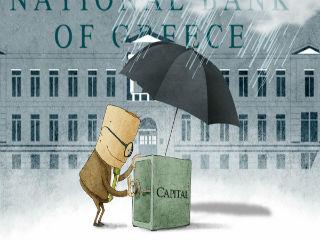
The how, what, when and why of Greek capital controls
By: EBR | Wednesday, June 17, 2015
We present what would happen if the government enters the road of gradual exit from the eurozone; an exit which technically would be very difficult to happen instantly, but it would be very probable in the long run of the next two or three years.
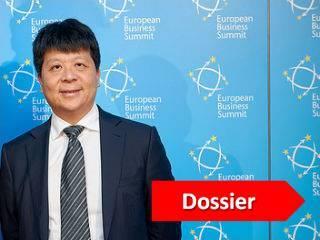
Building a Broader Industry Ecosystem for Europe 4.0
By: EBR | Monday, June 15, 2015
Over the last ten years, the focus of digitisation has been on the service sector. Indeed, Internet has reshaped banking, retail, and many other sectors.

Innovation as a stimulus for Regional Growth
By: EBR | Friday, June 12, 2015
It is a fact that Cohesion policy for 2014-2020 adopts a new approach towards the necessity to address the needs that the economic crisis emerged. The new agenda aims at bridging the gap between public infrastructures and private investments [...].
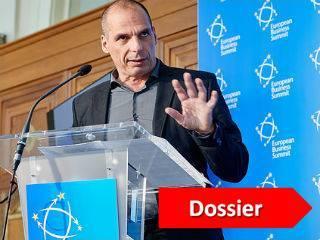
What is needed for Greece’s recovery
By: EBR | Friday, June 12, 2015
There is the need to restore investments and faith, both decimated by seven years of debt’s deflation (2008-2015). But how can this be done? How can we restore investments and faith in line with disengagement speed?
Backroom political developments
By: Athanase Papandropoulos | Tuesday, May 19, 2015
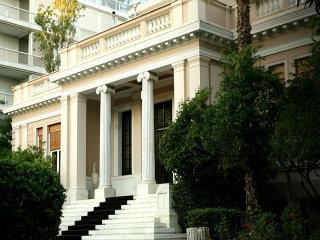
While both New Democracy (ND) and SYRIZA are facing internal conflicts, high-ranking members of both parties are under informal negotiations regarding the formation of a possible Coalition Government, most probably in the forthcoming June.

Greece’s Far Left Against the World
By: EBR | Monday, May 4, 2015
In a recent interview to an Athens newspaper, Greek Minister of Energy and Development Panagiotis Lafazanis declared that Greece faces a life or death struggle against “neocolonial foreign centers.”

Designing policies that support growth
By: EBR | Friday, March 6, 2015
Productivity growth is necessary but not sufficient to support broad-based well-being, which also depends on quality of life, health, and environment.

Ankara is testing Athens…
By: Athanase Papandropoulos | Wednesday, March 4, 2015
In this current phase, therefore, due to the overall developments in our region, Europe is tired with Greece and Turkey knows it very well.

Is the “honeymoon” for SYRIZA over?
By: EBR | Monday, March 2, 2015
Any embroilment would be a mortal danger for the European course of the country with devastating economic, geopolitical and social impacts. Therefore, the first difficult steps of the government towards more realistic directions are absolutely welcome.

Where is Tsipras heading the country?
By: Athanase Papandropoulos | Thursday, February 5, 2015
Why Mr. Alexis Tsipras ordered his party members not to harshly attack against Mr. Antonis Samaras? What is in the mind of the Minister of Finance, Mr. Yianis Varoufakis, when he talks about a "simple life"?Which is the purpose behind the flirt with Russia?

Migration Commissioner to be Greece’s next President?
By: EBR | Tuesday, January 27, 2015
Intense rumours are being circulated in Athens that the current Greek Commissioner, Dimitris Avramopoulos, is intending to quit from the European Commission and run for the Presidency of Greece.

Syriza’s victory opens Pandora’s Box in EU politics
By: EBR | Monday, January 26, 2015
Syriza will form a coalition government with the right-wing anti-austerity Independent Greeks, sending this way multidimensional messages to Brussels.

Greek elections: Athens plays with fire
By: Athanase Papandropoulos | Wednesday, January 21, 2015
This is what a leading member of the group of financial forecasts of The Economist notes, predicting at the same time that a non-continuation of the economic policy of the Greek coalition government will only lead the debt-ridden country to new adventures.
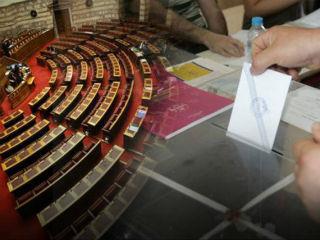
Greek elections: The electoral law determines either self-reliance or coalition!
By: EBR | Tuesday, January 20, 2015
The critical answer to the crucial question which all address, that is if self-reliance is possible and under which conditions, is completely unclear because it depends on many conundrums and unknown parameters which will finally determine the winner of the elections.

The crucial year for Islamism
By: Athanase Papandropoulos | Tuesday, January 13, 2015
The confrontation between the West and Islamism will be one of the most crucial points in 2015. As modern observers argue, large dimensions will be given over this dispute and it seems that blind terrorism would dominate in countries with numerous Islamic followers.
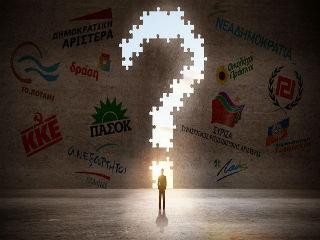
Greek elections: The ones who decide are the “undecided”
By: Athanase Papandropoulos | Monday, January 12, 2015
The climate is extremely heavy for Greeks in the European Union and the worst case scenarios have already been foreseen. Thus, on January 25th the ones who have not decided yet which party to support will actually determine the future of the country.
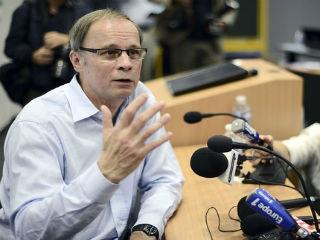
Four principles for an effective state
By: EBR | Tuesday, December 30, 2014
Reforms are urgent, but difficult. To achieve them, a four-pronged approach is required: restructuring, competition, evaluation and accountability.
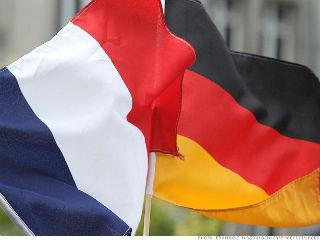
France and Germany: a moment of truth
By: EBR | Tuesday, December 30, 2014
France and Germany, which together account for half of euro-area GDP, are rightly considered the key to the euro area’s exit from the current impasse of low growth, falling inflation and increasingly dangerous debt trajectories.

The Eerie Silence Before the EU Reform Storm
By: EBR | Tuesday, December 30, 2014
The current combination of challenges facing the EU is extreme, even by the union’s crisis-ridden standards. That calls for an equally momentous reform effort.
 By: N. Peter Kramer