by
N. Peter Kramer
With growth across much of Europe at a standstill, France and Italy, the 2nd and 3rd biggest economies of the Eurozone, have coalesced together with the European Central Bank (ECB) against Chancellor Angela Merkel of Germany and her insistence on austerity. Divisions between European leaders, at a moment when unity would seem critical, let the markets rattle.
France, always Germany’s indispensable partner in crisis management, is now in near revolt and threatens to violate budget restrictions and increase debt levels in order to stimulate growth. In Italy, Prime-Minister Renzi has promised to meet the debt targets, but now he has allied with French President Hollande to push for a pro-growth agenda. ECB President Draghi has pressed Germany to temper its insistence on budget discipline and to spend more on public works to stimulate the Eurozone economy. But German leaders have resisted whilst at the same time the German economy shows signs of weakening. That means that the three big Eurozone economies are stuck, each in their own way.
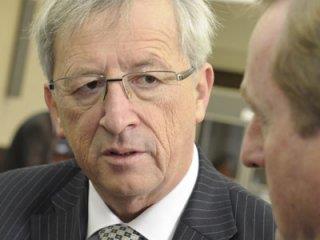
The end of October, EU leaders will gather in Brussels for another summit. It seems that it is too early to expect solutions. EU memberstates have to deliver first their draft-budgets to the Commission and it takes time (and massage) before the final report can be at the table. The next summit, in December, can be expected as the moment for decisions. An interesting question is who has the authority and position in the EU to break the impasse in December. Draghi could play a useful role but is not popular in Germany. Donald Tusk, the incoming President of the Council who coordinates the positions of the European leaders, does not suited to play the same role as his predecessor Van Rompuy. Tusk doesn’t speak English and his country, Poland, does not use the Euro. It looks that it leaves the burden of cutting a difficult deal to the new President of the European Commission, Jean Claude Juncker!