by Rajnish Singh
Although Sudan’s civil war erupted in April 2023, only a few months before the Gaza War began on 7 October, the disparity in how the EU and domestic European politics have responded to each crisis is striking. The Middle East conflict dominated headlines, sparked mass protests across Europe, and drew sustained diplomatic engagement. Meanwhile, the war in Sudan unfolded in relative obscurity, with limited media coverage and little political urgency.
Now that the news cycle has moved on from Gaza, in part thanks to President Trump’s intervention. The true scale of Sudan’s humanitarian catastrophe is beginning to surface. Social media has been flooded with images and videos of mass killings, while the UN, as recently as late October, reported “horrendous accounts of summary executions, mass killings, rapes, attacks against humanitarian workers, looting, abductions and forced displacement.”
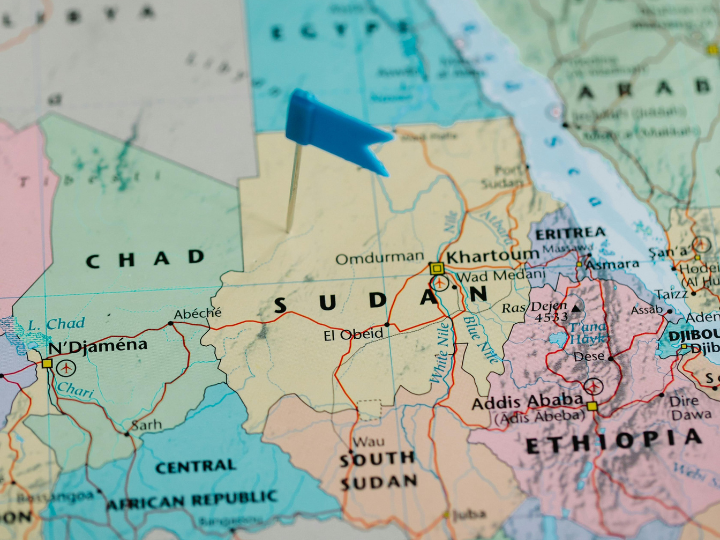
The war pits the Sudanese Armed Forces (SAF) against the paramilitary Rapid Support Forces (RSF), led by General Mohamed Hamdan Dagalo, known as Hemedti. Before the conflict erupted, he served as deputy head of Sudan’s Transitional Sovereignty Council—a role that gave him significant influence over the country’s fragile political transition and has its origins going back to the 2003 Darfur genocide.
Tragically, the brutal conflict has turned Sudan into the world’s largest humanitarian and displacement crisis on record, according to the UN, with around 14 million people displaced from a population of 51 million. Famine is widespread, and outbreaks of cholera and other deadly diseases are surging.
Additional reports describe the killing of sick and wounded individuals in areas captured by the RSF, including hospitals and temporary medical centres. The WHO estimates that 460 patients and their companions were killed during an alleged massacre. Humanitarian groups have also documented alarming levels of sexual violence and gang rapes.
Yet despite the scale of suffering, the EU’s response has been comparatively subdued—especially when contrasted with its vocal and active engagement in the Gaza conflict. Although the Commission and member states pledged €522 million in aid earlier in 2025 at the High-Level Conference for Sudan, this came after two years of escalating violence and mass displacement. The delay in mobilising significant aid, coupled with the lack of sustained diplomatic pressure on Sudanese factions, reflects a broader pattern of neglect.
By contrast, the EU’s response to the Gaza War was markedly more active. Throughout the conflict, it issued repeated statements condemning violence, dispatched envoys, and coordinated with international partners to push for ceasefires and humanitarian corridors. Media coverage, parliamentary debates, and civil society mobilisation kept Gaza in the spotlight, even though the EU had limited influence over either the Israelis or Hamas.
Meanwhile, the people of Sudan have suffered in silence. The civil war has received limited media coverage, and EU institutions have not shown the same diplomatic urgency for Sudan as they did for Gaza. There have been few high-profile visits, minimal mediation efforts, and a lack of steady public messaging. This gap raises uncomfortable questions about geopolitical priorities and the visibility of African crises in EU policymaking—especially since Europe’s potential influence in Sudan, through the African Union and other international partners, could be far more effective.
If the EU cannot help bring peace to Sudan, the values it claims to uphold—human rights and global justice—will ring hollow. The time for silent concern is over. Sudan needs bold, sustained assistance. Brussels must step up—or move aside and let Trump take the lead, accepting its own geostrategic irrelevance.
 By: N. Peter Kramer