by James Waterhouse
Despite his towering frame, you might not always have spotted him. Yet, wherever President Volodymyr Zelensky was, Yermak was often not far away.
As his chief of staff, Yermak wielded enormous power at the top of government and was even trusted to negotiate on Ukraine’s behalf at peace talks with the US.
But as his influence grew, so did public resentment of the power this unelected official held. His political career came to an abrupt end on Friday, hours after anti-corruption investigators raided his home in Kyiv.
Yermak and Zelensky first met in 2011 when the former was an intellectual property lawyer and the latter a TV producer.
After working together during the successful presidential campaign of 2019, Yermak became Zelensky’s chief of staff. He stood next to the president as he gave his now famous "we are still here" speech as the Russians descended on Kyiv at the start of their full-scale invasion in February 2022.
As Zelensky concentrated his power over time, Yermak was widely viewed as the second most powerful person in Ukraine. He reportedly helped shape foreign policy, ousted political rivals and even made battlefield decisions.
Ukrainian politics is shaped by big characters, and Zelensky’s administration had not one, but two of them.
Despite the favourable conditions Yermak enjoyed within the sprawling Presidential Office, the same couldn’t be said outside its steep walls.
His popularity was nosediving.
A widening scandal
Zelensky had successfully grappled with corruption scandals in the past, but in July a chain of events began that has shaken the current government to its core, weakening him politically and costing him his right-hand man.
That month, the president convinced parliament to formally remove the independence of Ukraine’s two anti-corruption bodies and bring them under direct government control.
At the time, Zelensky said it was to limit Russian interference.
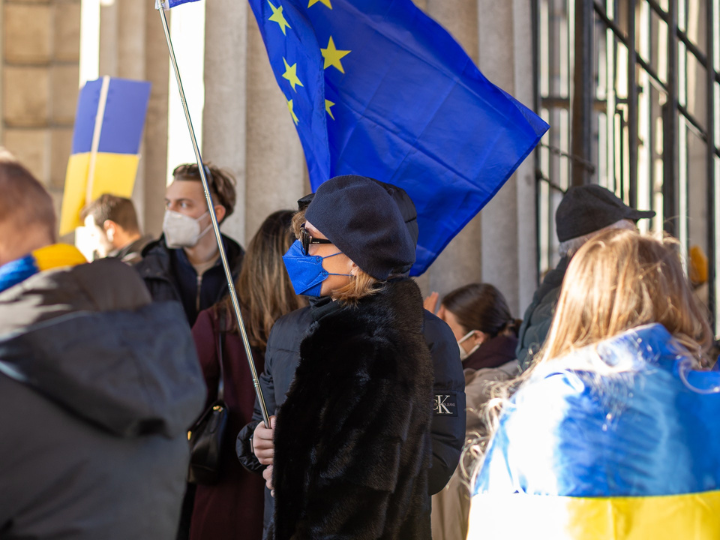
But the public - as well as the European Union - disagreed, and he was forced to U-turn after mass demonstrations.
By the autumn, those same agencies, the National Anti-Corruption Bureau (Nabu) and the Special Anti-Corruption Prosecutor’s Office (Sapo), released the findings of a lengthy investigation that implicated members of Zelensky’s inner circles.
Senior figures - including two ministers, a former deputy prime minister and a one-time business partner of Zelensky’s - were accused of syphoning $100m (£75m) from public projects in the energy sector.
At a time when Russia is pummelling Ukraine’s energy grid with missiles and drones ahead of a fourth winter of war - forcing the entire country to endure daily power cuts - public anger at these corruption allegations has soared.
Just on Friday night alone, Kyiv endured a nearly 11-hour-long Russian air raid, which left more than half a million people without power.
"We’re going through one of the most difficult times in our history," Iryna, a Kyiv resident, told the BBC this week. "Unfortunately, lots of families will not see their loved ones, their men, brothers or husbands, because of the war."
Despite not being named as a suspect and denying any involvement in the scheme, Andriy Yermak couldn’t distance himself.
There was a suspicion he may have known something.
Local media reported on Saturday that investigators were combing through several laptops and mobile phones they had seized from his flat during their search.
Yermak led last week’s talks with US Secretary of State Marco Rubio in Geneva, apparently securing some concessions for his country in a US-drafted peace proposal which many feared heavily favoured Russia.
*Published first on BBC.com
 By: N. Peter Kramer