Edition: International | Greek
MENU

Home » Events

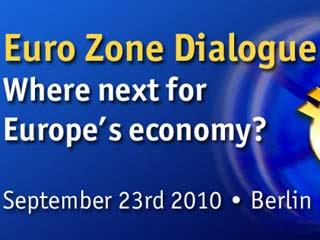
Euro Zone Dialogue: Where next for Europe’s economy?

A decade after the euro’s introduction, crisis has hit Europe and exposed weaknesses in the single currency. With the Greek debt crisis spreading, and confidence shaken, corporate leaders are struggling to make sense of the maelstrom, and asking how the euro’s future will impact their business.

By: EBR - Posted: Friday, July 2, 2010

Chaired by John O’Sullivan, The Economist′s European economics correspondent, Euro Zone Dialogue boasts an unrivalled agenda featuring senior policy makers, leading executives and economists.

Chaired by John O’Sullivan, The Economist's European economics correspondent, Euro Zone Dialogue boasts an unrivalled agenda featuring senior policy makers, leading executives and economists. Together, they will deliver insight into the various scenarios that could play out around the single currency, and offer guidance on how to mitigate the risks.

September 23rd 2010, Berlin

Confirmed speakers include:

Fernando Teixeira dos Santos, Minister of Finance, Portugal
Olli Rehn, European Commissioner for Economic and Financial Affairs
Michael Heise, Chief Economist, Allianz SE
Otmar Issing, President, Centre for Financial Studies and Former Member of the Board, European Central Bank
Thomas Mayer, Chief Economist, Deutsche Bank

Don’t miss your chance—join us as we tackle the issues behind the headlines, and learn how the euro zone’s and your company’s future are interlinked.

For further information or to register visit www.economistconferences.com/eurozone or email [email protected]

READ ALSO

EU Actually

Is the world entering a new nuclear arms race?

N. Peter KramerBy: N. Peter Kramer

The latest agreement, New Start, between Russia and the US on limiting nuclear arms expires. The US (3700) and Russia (4300) together have about 8.000 nuclear warheads. China stood around 600 last year, but according to the Stockholm International Peace Research Institute (SIPRI), China could have nearly as many intercontinental ballistic missiles as Russia and the US by 2030.

Europe

Trump’s ‘Armada’ to Iran and the Return of Gunboat Diplomacy

Trump’s ‘Armada’ to Iran and the Return of Gunboat Diplomacy

US naval buildup in the Persian Gulf is putting pressure on the Ayatollahs, but it also raises the risk of military escalation, regional conflict, and dangerous miscalculation.

Business

EU waters down plans to end new petrol and diesel car sales by 2035

EU waters down plans to end new petrol and diesel car sales by 2035

Current rules state that new vehicles sold from that date should be "zero emission", but carmakers, particularly in Germany, have lobbied heavily for concessions.

MARKET INDICES

Powered by Investing.com
All contents © Copyright EMG Strategic Consulting Ltd. 1997-2026. All Rights Reserved   |   Home Page  |   Disclaimer  |   Website by Theratron