by Radu Magdin
Write this date down: 27 January 2026. That is the day the EU and India concluded negotiations for what both sides correctly described as the largest free trade agreement ever sealed by either party. A combined market of nearly two billion people. Close to 25 percent of global GDP. Twenty years of intermittent, often exasperating negotiations, ended at the 16th India–EU Summit in New Delhi, with European Commission President Ursula von der Leyen and Prime Minister Narendra Modi announcing what von der Leyen called “the mother of all deals.”
Now write down this week: 16 to 20 February 2026. India is hosting the AI Impact Summit at Bharat Mandapam in New Delhi — the first global AI gathering ever convened in the Global South. Over 20 heads of state are in Delhi. Eight of them are European. French President Emmanuel Macron, who had bilateral talks with Modi in Mumbai on 17 February before travelling together to Delhi, is the headline. But also present: the presidents of Estonia and Slovakia and the prime ministers of Croatia, Finland, Greece, Spain, and the Netherlands — a remarkable concentration of European political weight on Indian soil.
These two events, taken together, represent a structural inflection point in EU–India relations. For those of us who have argued for years that Europe was systematically undervaluing India, this is not a moment for satisfaction. It is a moment for urgency. The window is open. The question is whether Europe — and particularly Central and Eastern Europe (CEE) — has the strategic clarity and the institutional courage to walk through it.
The FTA: A Deal, Not a Destination
The India–EU FTA is a genuine achievement. Let that be said clearly. Tariffs on over 96 percent of EU goods exports to India will be eliminated or reduced. Indian automotive tariffs — previously as high as 110 percent — will fall to 10 percent over time. Indian duties on machinery, chemicals, and pharmaceuticals will largely disappear. European wines, olive oil, and agricultural products gain access to a market of 1.45 billion consumers at dramatically lower tariff walls. On the Indian side, labour-intensive exports — textiles, leather, marine products, gems and jewellery — gain preferential access to 27 European markets, an estimated €33 billion in exports moving to zero tariffs on entry into force. The ambition to double EU goods exports to India by 2032 is stated and, for once, plausibly backed by the architecture of the agreement.
Commerce Minister Piyush Goyal’s prediction that the deal could enter into force by the end of 2026 reflects genuine political momentum on both sides.
But a deal concluded is not a deal delivered. The FTA still requires legal scrubbing, translation into 24 official EU languages, Council adoption, and European Parliament consent. It will be tested by lobbying pressures — EU automobile manufacturers who fear Indian competition, Indian farmers anxious about European agricultural goods, and the persistent tension over the EU’s Carbon Border Adjustment Mechanism, which remains intact despite Indian objections and will impose new carbon costs on Indian steel and aluminium exporters from 2026.
Negotiations on an Investment Protection Agreement and a Geographical Indications Agreement also remain ongoing. The architecture is not complete.
And critically: the FTA’s transformative potential depends entirely on what business communities, investors, and governments build on top of it. Trade architecture without private-sector activation is a bridge with no traffic.
This is where Europe’s homework begins, not ends.
The AI Summit and What It Signals
The India AI Impact Summit is not a diplomatic ceremony. It is a signal — about where global technology governance is being shaped, and who gets to be in the room.
The summit follows Bletchley Park in 2023, Seoul in 2024, and Paris in February 2025. Each event has subtly shifted the centre of gravity of global AI discourse.
The Paris summit, co-chaired by Macron and Modi, was partly hijacked by US Vice President JD Vance’s aggressive rebuke of European AI regulation. New Delhi’s summit — the first in the Global South, anchored in the three sutras of People, Planet, and Progress — is a deliberate reframing. India is positioning itself not merely as a market for AI products or a source of AI engineering talent, but as a shaper of AI norms for the world’s majority.
The attendance of Jeet Adani, Mukesh Ambani, Nandan Nilekani, Sam Altman, Sundar Pichai, Dario Amodei, Yoshua Bengio and Yann LeCun alongside 20 heads of government is not incidental. It reflects India’s growing capacity to convene the conversations that matter — to set agendas rather than respond to them.
For Europe, the lesson is pointed. Eight European leaders in New Delhi this week is more than optics. It is recognition that India’s AI ecosystem — its engineering depth, its digital public infrastructure, its billion-plus user base, its IndiaAI Mission — is significantly more than a supporting character in the global AI story.
Macron’s visit crystallises this. His bilateral talks with Modi on 17 February elevated the India–France relationship to a "Special Global Strategic Partnership," announced the Year of Innovation 2026, launched the Indo-French Centre for AI in Health and the Indo-French Centre for Digital Science and Technology, and put a long-pending Rafale deal for 114 fighter jets — worth between €31 and €35 billion — firmly back on the agenda. France has been the most consistent European practitioner of deep India engagement for two decades. The rest of Europe is watching, and some of it is finally learning.
Slovakia’s President Pellegrini and Estonia’s President Karis at the AI summit are particularly noteworthy from a CEE perspective. Their presence is not accidental. Both countries have built genuine digital governance credibility — Estonia as the world’s most advanced digital state, Slovakia as a growing player in defence and technology manufacturing. Their participation signals that CEE is beginning to find its voice in the India conversation. That voice needs to become much louder.
The Geopolitical Context: Trump, Russia, and the Logic of Diversification
No honest analysis of the EU–India FTA can ignore the geopolitical accelerant behind it. The conclusion of the deal in January 2026, after nearly two decades of negotiations, was not driven purely by commercial logic. It was driven by mutual recognition that the global trading system is fracturing — and that neither India nor the EU can afford to be left exposed.
For the EU, the shock has been threefold. Donald Trump’s return to the White House brought 50 percent tariffs on Indian goods and 25 percent tariffs on European exports, combined with a posture toward the transatlantic alliance that Brussels experienced with unease. Russian energy dependence exploded into catastrophe after February 2022. And Chinese economic coercion — targeting Lithuania, Australia, South Korea in sequence — demonstrated that overdependence on any single partner carries existential strategic risk. Von der Leyen’s "strategic autonomy" agenda, once dismissed as French-inspired statism, has become the EU’s operational reality.
For India, the calculus is similarly multi-vector. Washington’s tariff aggression — partly driven by frustration that India continues purchasing Russian oil — has pushed New Delhi to accelerate its trade diversification. The EU–India FTA, concluded just days before India and the US reached a preliminary tariff de-escalation agreement, was not merely a trade deal. It was a negotiating asset and a statement of independence.
India’s non-alignment tradition, which Western commentators persistently misread as moral ambiguity, is in fact a sophisticated strategy of optionality. New Delhi does not intend to choose between Washington, Brussels, Moscow, and Beijing. It intends to remain relevant to all of them — and increasingly, to set the terms of engagement rather than accept them. The AI summit, hosted in the Global South for the first time, at a moment when 20 world leaders have made the journey to Bharat Mandapam, is the clearest recent demonstration of that strategy in action.
Europe that understands this — that reads Indian strategic culture accurately rather than through a Western liberal template — will be a far more effective partner.
The CEE Opportunity: From Periphery to Bridge
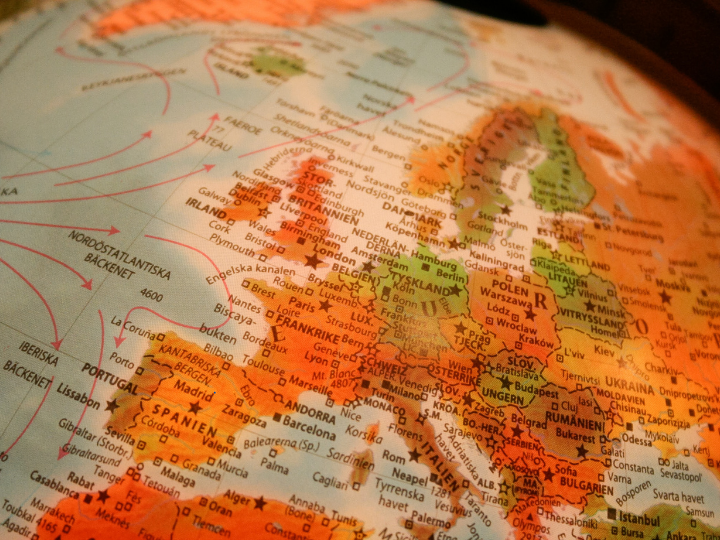
Within Europe, the standard narrative of EU–India engagement is written in Berlin, Paris, Brussels, and The Hague. Germany leads on automotive and industrial cooperation. France leads on defence, aerospace, and nuclear energy. The Netherlands dominates on logistics, trade facilitation, and financial services. These are the countries with the scale, the legacy relationships, and the institutional weight to define the terms of EU–India economic architecture.
Central and Eastern Europe is largely absent from that architecture. This is not an accident. It is the accumulated result of two decades of neglect, underinvestment in India-focused diplomatic capacity, and a tendency to leave India policy to "the big ones" within EU frameworks. It is also one of Europe’s most consequential strategic errors.
The CEE case for deep India engagement rests on three pillars that are genuinely distinct from what Western Europe offers.
The first is industrial complementarity at the right moment. India’s Production Linked Incentive scheme — which has catalysed serious manufacturing investment in electronics, pharmaceuticals, medical devices, automobiles, advanced components, and renewable energy equipment — is looking for supply chain partners with precision manufacturing capability, technology transfer willingness, and cost structures competitive with China. CEE countries, deeply integrated into European automotive, aerospace, and electronics value chains over three decades of EU membership, are precisely that. Poland’s machinery sector, Romania’s automotive components industry, Czech Republic’s precision engineering capacity, Slovakia’s automotive manufacturing base — these are not peripheral assets. They are exactly what India’s industrial ambition requires.
The second pillar is digital credibility. Estonia’s digital governance model has been studied and partially adopted by India. The parallels between Estonia’s X-Road digital infrastructure and India’s India Stack are not superficial and they reflect shared commitments to digital public infrastructure, interoperability, and citizen-centric service delivery. Romania’s IT sector, now among Europe’s fastest-growing, produces software engineering talent that Indian technology companies actively recruit. The Baltic states have built cybersecurity and digital defence capabilities that are world-class by any measure. A CEE–India digital partnership, structured around shared digital public infrastructure standards, cybersecurity cooperation, and joint innovation frameworks, would be genuinely differentiated from anything Western Europe currently offers.
The third pillar — and perhaps the most underappreciated — is geopolitical literacy. CEE countries understand strategic vulnerability as a lived experience, not an academic concept. Countries that absorbed Soviet occupation or domination for four decades, navigated the turbulence of post-Cold War transition, and now face direct Russian military pressure on their borders do not need theoretical frameworks to understand why strategic dependence is dangerous, why supply chain diversification is essential, or why relationships with major non-Western economies are a hedge worth building systematically. This resonates with Indian strategic culture more naturally than the Western European approach often does.
Modi’s India respects partners who speak plainly, demonstrate strategic seriousness, and engage without condescension. CEE countries, in my experience working across both regions, have more of that quality than they typically deploy in their India engagement.
For Romania specifically, the opportunity is significant and systematically underexploited. Romania’s geographic position — at the intersection of Black Sea security, European energy corridors, Danube logistics, and the EU’s eastern frontier — makes it a node of genuine strategic interest for any global power thinking about European architecture. Its growing IT and software sector, its substantial agricultural capacity, its increasing defence relevance within NATO’s eastern flank, and its position as a key US and NATO ally in a contested neighbourhood create multiple credible entry points for India engagement. Indian companies in IT services, infrastructure, renewable energy, and pharmaceuticals all have reasons to look at Romania. Romanian companies in automotive components, agribusiness, and digital services have reasons to look at India. The matchmaking infrastructure is almost entirely absent. That absence is a choice, and it is the wrong one.
The presence of Slovakia’s Pellegrini at the India AI summit this week is the kind of signal that, if followed by sustained engagement, could make Slovakia a genuine node in the CEE–India technology relationship. The same potential exists for the Baltic states, whose Estonia-led digital governance credibility opens doors in New Delhi that money alone cannot buy.
What Serious Architecture Requires
The FTA creates a framework. The AI summit creates a moment. Neither substitutes for the sustained work of building genuine bilateral architecture at multiple levels.
At the business level, the private-sector integration between the EU and India remains structurally thin relative to the scale of both economies. Indian conglomerates — infrastructure, energy, technology, pharmaceuticals — are looking for European partners with technical depth, regulatory literacy, and long-horizon commitment. The Adani Group’s infrastructure ambitions, the Tata Group’s advanced manufacturing expansion, Infosys and Wipro’s European deepening — these are not abstract. They are active searches for the right partners. European companies searching for India entry similarly need counterparts who understand the regulatory environment, the political dynamics, and the long timelines that India’s market requires. A dedicated CEE–India Business Council, operating with real institutional backing and sector focus, would do more for the relationship than three more summit communiqués.
At the technology governance level, the AI summit’s "Three Sutras" framing — People, Planet, Progress — represents India’s bid to set the normative agenda for AI in the Global South. Europe, with its GDPR-anchored regulatory tradition and its AI Act now entering implementation, has a genuine contribution to make to that conversation. But contribution requires presence. European voices, particularly from CEE, are largely absent from the think tanks, journals, and dialogues where India’s AI governance frameworks are actually being shaped. Institutions like the Observer Research Foundation, Gateway House, Chintan — the Adani Group’s policy institute — and the Indian Council of World Affairs are doing sophisticated analysis of digital governance, energy geopolitics, strategic technology, and economic architecture. These conversations are happening with American, Japanese, Gulf, and increasingly African interlocutors. European voices, especially from CEE, are mostly not in the room. That is a correctable problem. Correcting it requires showing up — with seriousness, with reciprocity, and with the recognition that India’s strategic think tanks are peers, not students.
At the political level, a regular CEE–India ministerial track — separate from but complementary to EU-level processes — would give smaller member states a structured mechanism to develop distinctive bilateral relationships without waiting for EU-level consensus. The first-mover advantage in EU–India relations is not Germany’s or France’s to claim exclusively. It belongs to whoever moves with clarity and commitment. Slovakia’s Pellegrini and Estonia’s Karis in New Delhi this week are exercising that option. Others should follow.
The Week’s Verdict
New Delhi in February 2026 is not a moment to observe from a distance. It is a moment to engage.
The FTA concluded in January creates the largest bilateral trade framework either side has ever signed. The AI Impact Summit this week establishes India as a convener of the global technology governance conversation at the highest level. Macron’s visit — bilateral talks in Mumbai, AI summit in Delhi, Rafale deal on the table, Year of Innovation launched — demonstrates what sustained, multi-decade European engagement with India actually looks like at full expression. Eight EU leaders in New Delhi simultaneously is a signal that even the most cautious European capitals can no longer pretend that India is a secondary priority.
For Europe, the strategic question has now changed. It is no longer whether to engage India seriously. That debate is settled, by the FTA if nothing else. The question is how — and specifically, which parts of Europe will position themselves as indispensable in the relationship that is now being built.
Central and Eastern Europe has the industrial base, the digital credibility, the geopolitical instinct, and the strategic flexibility to answer that question in ways that larger Western European capitals cannot. What it has lacked — until now — is the sustained attention, the institutional investment, and the political will to make India a genuine strategic priority.
The window is open. New Delhi has made its ambitions clear. The AI summit’s theme — Sarvajana Hitaya, Sarvajana Sukhaya, welfare and happiness for all — is not merely aspirational language. It is India’s articulation of what it wants AI, trade, and global partnerships to deliver for its 1.45 billion citizens.
Europe should hear that — and respond with the seriousness it deserves.
The week that changed EU–India relations is happening right now. The question is whether Europe, and especially Central and Eastern Europe, will be remembered as a participant — or merely as a spectator who read about it afterward.
*Radu is CEO, Smartlink Communications
 By: N. Peter Kramer