by Sarantis Michalopoulos
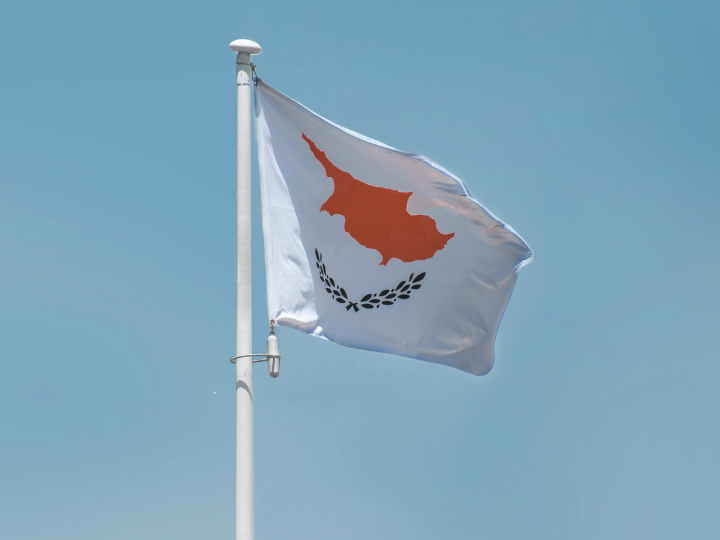
Cyprus has the full weight of the EU behind its demand for talks to end British sovereign control over key strategic military bases at Akrotiri and Dhekelia on the island.
Spelling trouble ahead for Sir Keir Starmer and risking the ire of Donald Trump, Nicosia’s legal game plan is modelled on the controversial deal handing back control of Chagos Islands, and the Diego Garcia military base, from Britain to Mauritius.
Chrisis Pantelides, a lawmaker from the Greek-Cypriot Democratic Party (DIKO) – which backs the island’s President Nikos Christodoulides – is close to the talks and told Euractiv that no one is “naïve” to call for a complete British withdrawal.
“We are calling for a reassessment of the relationship and a renegotiation of the status on the terms of 2026,” he said
The Cypriot government’s intention to discuss with London the future, of what Nicosia describes as “colonial” British military base, comes as the island faces numerous new geopolitical challenges, and as EU develops defence policy based on strategic autonomy form the US.
When Nicosia won independence from the British Empire in 1960, Britain maintained two sovereign base areas on the island – Akrotiri and Dhekelia – which have played a key role in the Middle East, both during and after the Cold War.
The Sovereign Base Areas (SBA) are just 200 miles from Gaza and, according to British intelligence leaks, host “a wide range of UK and US intelligence facilities” regarded as important national security assets.
Cyprus at the crossroads
Cyprus’s location is regarded by the islanders as both a blessing and a curse. Throughout history, empires and major civilisations such as the ancient Egyptians and Phoenicians recognised the strategic value of the tiny island, which sits at the crossroads of three continents – Europe, Asia and Africa.
Nowadays, Cyprus is a member of the EU but not of NATO, due to Turkish occupation of the north of the island. The recent Hezbollah drone attack against Cyprus-based UK sovereign military bases resurfaced discussions on the matter.
While European allies intervened to protect Cyprus, Britain had failed to notify the Cypriot authorities in advance about the use of the bases in the US–Israel war against Iran, triggering a strong reaction from the Cypriot government.
After the incident, President Christodoulides said he wants a “frank discussion” with London, while EU leaders stated that they “stand ready to provide assistance as needed,” according to the summit conclusions.
Pantelides said Nicosia is looking into the Mauritius legal precedent, under which the island country in the Indian Ocean regained control of the Chagos Archipelago, where the strategically important British–American base on the island of Diego Garcia is located.
The deal has angered the American president and mired the British prime minister in controversy indicating that negotiations will be difficult, particularly given the importance of the SBAs in the latest conflict with Iran.
EU ready to ‘provide assistance’
Cyprus now has the EU’s support for a complete review of the current SBA agreement with Britain including the vexed issues of sovereignty, jurisdiction, powers and even the territorial extent of the base areas.
“The European Council acknowledges the intention of Cyprus to initiate a discussion with the UK on the UK bases in Cyprus and stands ready to provide assistance as needed,” noted a summit of EU leaders on March 19.
Pantelides noted that with technological developments, the British bases may no longer need so much space for infrastructure such as satellite dishes and antennas. The British sovereign bases represent roughly 2.7–3 % of the island’s surface, and approximately 10,000 people – both Cypriot and British – reside there.
Additionally, the Cypriot lawmaker said that whereas Cyprus once relied on these bases for services such as search and rescue, it has since developed its own capabilities.
Coordination, not permission
Speaking on condition of anonymity due to the sensitivity of the matter, a former British Army general who served at the military bases in Cyprus highlighted the island’s geopolitical value, particularly for projecting capability across three continents and monitoring key shipping lanes.
“There is also intelligence gathering. Cyprus is perfectly positioned for just that – whether you’re looking north into Russia, east across the Middle East and beyond, or south,” the former general said.
He explained that better coordination with Cyprus is needed.
“Not seeking permission, because there is no need for that. However, I absolutely believe there should be a channel between the sovereign base area administration and the Cypriot government to inform them of any military activity that is going to result in engagement with a hostile force,” he said.
Similarly, foreign policy professor Panayotis Tsakonas commented that the presence of the British bases in Cyprus provides the island with indirect NATO protection, even though Cyprus is not a NATO member.
“At the same time, it can – under certain conditions – create momentum for Nicosia’s medium- to long-term ambitions for closer ties with, and possible future accession to, NATO,” he said.
A NATO membership is in Nicosia’s plans but is currently impossible due to Turkey’s opposition.
From UK to EU bases
Politically, not all member states are convinced about Europe’s defence architecture. Since the Ukraine war, southern European countries have pressed for a focus on the need to defend all EU borders, rather than focusing solely on the eastern flank with Russia.
While France, Greece, Italy and the Netherlands sent naval forces to protect Cyprus, it never became clear why the EU’s Article 42.7 (mutual defence clause) was not activated.
Some attribute this to Nicosia’s reluctance to be considered part of the war and risk damage to its tourism economy, while others insisted that Europe was not ready to act.
Athens and Nicosia should have activated Article 42.7, according to Professor Tsakonas. “The deployment of specific military forces to Cyprus by key EU member states presents an opportunity to establish automaticity, as well as to acquire a genuinely ‘European’ and operational character,” he said – but noted that without actual activation, there will be no clear picture of the defensive clause’s application.
Costas Mavrides, a Cypriot MEP, argues that there should be a permanent presence of European forces in Cyprus. “If they were to make use of Cypriot infrastructure, the British bases would no longer have a role,” the socialist EU lawmaker told Euractiv.
He added that while the legal status of the British bases is porous, this alone will not be enough. “It would also require geopolitical pressure from the EU within the framework of European defence,” he said.
But even with EU support, it remains unclear how far Nicosia can go, given the SBA’s value for both London and Washington at a critical time for the Middle East.
The European Commission declined to comment whether it shares Nicosia’s view that the British bases are a “colonial remnant.”
*Published first on Euractiv.com
 By: N. Peter Kramer