by Giles Merritt
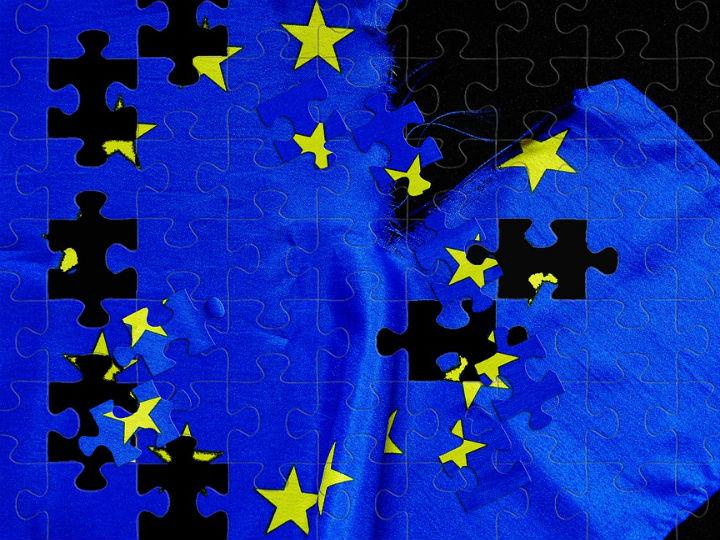
Will the ‘real’ European Union please stand up? Two very different EUs feature on the international stage, and they are startlingly different in character.
It is little wonder that opinion-formers around the world no longer know what to think. Europe’s widely admired feat of uniting cultures and countries has given way to perplexity as business and government decision-takers ask which of the two EUs they are dealing with?
There’s the weak, muddled and dangerously divided Europe, the version that invites Washington’s contempt, Moscow’s disdain and the pity of even the most sympathetic friends.
The other EU is still the powerful magnet attracting a lengthening queue of would-be members. As well as the half-dozen Balkan countries, there’s Ukraine and Georgia. And to prove the EU’s indisputable worth, British public opinion’s U-turn on Brexit may yet see a UK reapplication.
Another measure of the EU’s importance is that – thanks to Trump – it has become the standard-bearer of the fight against ‘might is right’. Political analysts report that three-quarters of humanity now lives under an autocratic government, up from half 20 years ago. And the proportion of people in true democracies has dwindled to only 7%.
Europe is thus the cornerstone of multilateralism and the staunchest defender of the UN and its agencies, the WTO, the IMF and the World Bank. Its global weight may increasingly be questioned, but the EU nonetheless plays a vital role in defending the values of the international community.
Despite the rise of ‘strongmen’ in major countries and nationalists in many lesser ones, the Ukraine and Iran conflicts show how interdependent economies are. Instant chaos and distress are the consequences of disrupted energy sources that cripple industrial and agricultural supply chains.
Whatever right-wing extremists may preach, the reality is that globalisation will not be reversed. The world population is still headed towards 10 billion, and developing giants led by India, Brazil and Indonesia will insist on open trade routes. As the model for international cooperation, Brussels must seize its opportunity to reshape the outmoded post-World War II arrangements.
But there is an underlying problem; that of international perception. Instant communications can sap a reputation overnight, as Europe’s leaders have been learning. News largely shaped by TV lays bare the EU’s inability to reach common positions, currently on Trump’s illegal and ill-fated Iran war and also on an embarrassing list of longstanding failures.
Dealing with Trump on Ukraine, on tariffs and his interference in EU member states’ elections has been understandably difficult. Less forgivable are the internal EU reforms delayed if not blocked by national self-interests and longstanding rivalries. These are among the disagreements that should be quietly settled by officials behind closed doors instead of being played out before the world’s media at EU summits.
Three panicky European Councils brought EU heads of government together in the first quarter of 2026, even though the chances of unanimity were slim. Their idea must have been to convey urgency and determination, but instead signalled impotence.
Europe has two faces. To see its strengths, observers must read the small print of the EU’s messages and follow the reporting of those serious newspapers that so far have survived the digital revolution. To look at the other face, that resembling a political has-been, simply turn on the television or scroll through social media.
Since Trump regained the White House, two images have dominated transatlantic news schedules. There’s the often humiliating charade of his Oval Office ‘press conferences’ with visiting premiers and presidents. And in Brussels the unconvincing ‘impromptu’ TV interviews as EU leaders head along the Europa building’s circular red carpet, followed by shots of them mingling cosily before taking their seats.
To avoid losing yet more ground in this information war, the EU must learn to fight fire with fire. Rather than rely on its over-staffed spokesmen’s group of 80 or so, whose priority is to brief EU-accredited specialist journalists on everything from major developments to technical minutiae, the European Commission must learn the tricks of mass media.
The aim should be a torrent of independently produced social media campaigns on issues that directly affect voters, and streamable audio-visual material in appropriate languages that can appeal to schools and special-interest groups. These are the techniques that brought Trump and his MAGA base to dominance of US policymaking, and are reshaping politics elsewhere. It’s no comfort to say the EU does a far better job than is generally appreciated. Rather, it is time to recall the 1960s American commentator Marshall McLuhan’s aphorism “the medium is the message”.
*Published first on Friends of Europe
 By: N. Peter Kramer