by Elisa Braun / Nicoletta Ionta
When Giorgia Meloni arrived at her first EU leaders’ summit as Italy’s prime minister in late 2022, many in Brussels expected trouble.
The leader of a party with post-fascist roots had campaigned against migration and what she portrayed as an overreaching European Union.
Diplomats wondered whether Italy, a founding member of the bloc and its third-largest economy, was about to become their next headache in European politics.
This Thursday, as Meloni meets with French President Emmanuel Macron for a closely watched bilateral summit on the French Riviera, the picture could hardly look more different.
Rather than being isolated, or treated as a pariah, the Italian leader is courted by fellow EU leaders, feared in negotiations and credited with shaping some of the bloc’s most sensitive debates, from migration policy to trade and support for Ukraine.
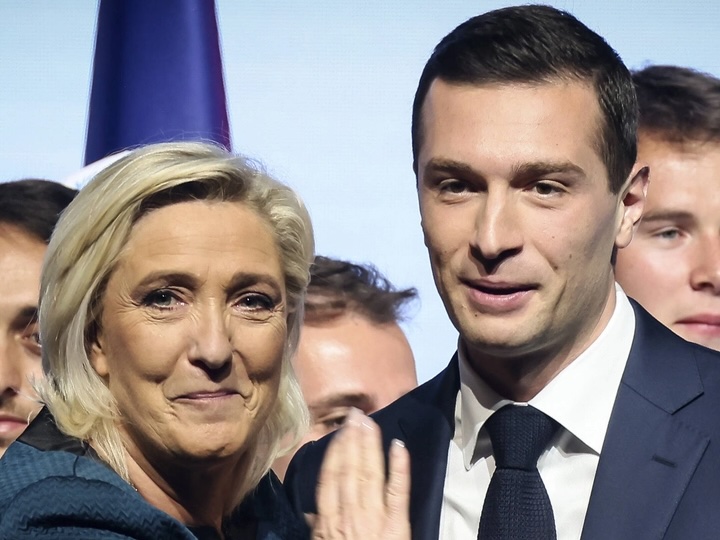
To admirers such as Rassemblement National’s (RN) president Jordan Bardella, she has demonstrated that nationalist leaders can win power and reassure markets while pulling the political centre of gravity further to the right.
While he might be tempted to imitate the Meloni formula, critics argue that her influence rests less on overturning the European system than on adapting to it through a series of trade-offs – something that may prove difficult for other populist, nationalist and far-right movements to accept, let alone replicate.
Especially in France, where a more majoritarian political system and a powerful presidency make for a far less forgiving environment than Italy’s coalition-based system, which has shaped governments for decades.
“In fact, Giorgia Meloni has often been misinterpreted,” said Lorenzo Castellani, a political scientist at Rome’s LUISS University.
People portrayed her as an anti-system populist, but she was already part of a longer process of institutionalisation,” he added, referring to her formative years in a traditional centre-right coalition led by Silvio Berlusconi.
In the case of the Rassemblement National, however, this process has been far less developed. The question, he argued, is whether the party can adapt as quickly.
A ‘masterclass of Italian diplomacy’ …
Soon after her first summit, Giorgia Meloni quickly learned to work the European system to her advantage, EU diplomats say, pointing to a series of tangible successes. These include influence over the bloc’s migration agenda and final stages of negotiations over the €90 billion Ukraine loan. One non-Italian diplomat described Rome’s handling of the Mercosur agreement as a “masterclass of Italian diplomacy” while another described her as a “stabilising figure”.
Carlo Fidanza, head of the Italian delegation of Fratelli d’Italia in the European Parliament, told Euractiv that Meloni built bridges with other right-wing leaders like Viktor Orbán and helped move the needle “by leveraging her personal and political relationships with leaders who were obstructing progress, with the aim of securing a common European outcome”.
Still, some diplomats argue these achievements appear less transformative on closer inspection, as her strength has been in extracting concessions to translate European compromises into domestic political wins rather than advancing a distinct hard-right vision for the bloc.
… or an “administration of decline”
What Brussels and the EU establishment first saw as pragmatism or opportunism, others in the far right saw as surrender.
The RN has traditionally criticised Meloni’s cooperation with Ursula von der Leyen, the president of the European commission, and her inability to dramatically reduce migration.
Yet Bardella now points to her as proof that right-wingers can govern and provide stability. He recently praised her as “a great leader” before promising to “change everything without destroying anything” – a strategy reminiscent of the famous dictum from Il Gattopardo: “if we want things to stay as they are, everything must change”.
“For all her flaws, Meloni is broadly succeeding,” a close ally to Marine Le Pen explained. “Economically, she is pulling Italy out of an uncomfortable situation.”
Here again, diplomats paint a more nuanced picture, pointing to Italy’s sluggish growth and structural problems related to low wages and a growing debt that Meloni will have to deal with before the end of her term.
She also failed to get electoral support to change the constitution and, according to the French-Italian director of Le Grand Continent Gilles Gressani, she under-delivered on campaign promises such as migration, fighting the country’s demographic decline and defending Christian values.
“The Meloni model seems hard to define,” he said. “Much of it remains at the level of rhetoric and political messaging. In practice, what she offers is an administration of decline – a kind of managed end of history.”
Some diplomats fear an RN victory in France would represent a far sharper break than a mere matter of narratives.
One senior EU diplomat said it risked turning the European project into something completely different, but others downplayed the prospect of a major shock if he follows the Meloni strategy.
Having weathered clashes with leaders such as Janez Janša, Viktor Orbán and Andrej Babiš, they argue that the EU has become much better at dealing with confrontation and absorbing it in the institution.
*Published first on Euractiv.com
 By: N. Peter Kramer