N. Peter Kramer’s Weekly Column
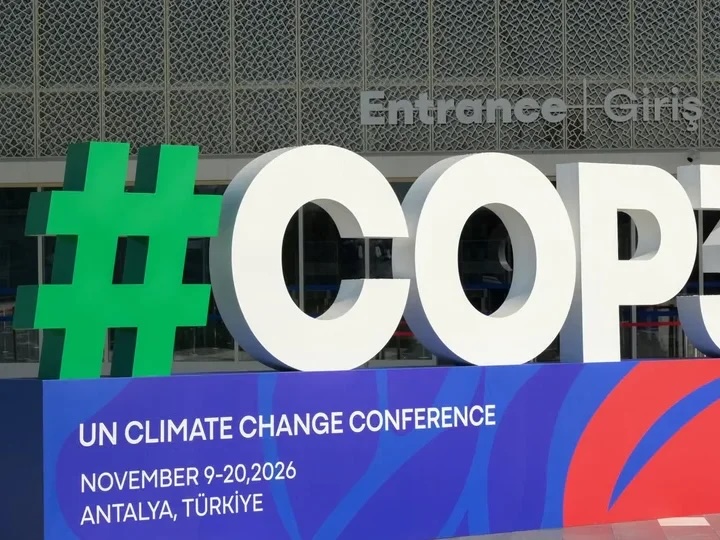
Global Climate Summit 31 in Antalya, Turkey, flopped completely on November 22. There was no final declaration, the European Union vetoed the final text. That the delegations failed to reach consensus on the usual joint final declaration never happened before.
The first version of the text still included a call to accelerate a phase-out of fossil fuels. That was on November 16. Three days later that call had disappeared, a second reference to fossil fuels has also been removed, as well as an amount of 120 billion dollars to help poor countries adept to climate change. The obstruction in the negotiation came from the oil-producing Arab Countries led by Saudi Arabia, and Russia. A group of developing countries, which also includes China and India, said the text went to far for them. The United States did not participate in the conference. President Trump has withdrawn from both the Paris Climate Agreement and the UN Climate Convention.
When fossil fuels disappeared from the text in Antalya, Trump, XI and Putin gathered in Shenzhen, China, for their first summit meeting with the three of them. In their joint final declaration, it is stated that these three countries want to produce and supply more refined oil products. The closure of the Strait of Hormuz and the resulting rice in fossil fuel prices have once again harshly reminded that the world economy will remain depended on fossil fuels for an unforeseeable time. Alternative energy cannot replace the need for fossil fuels for the time being. That is technically impossible alone, but also too expensive. Healthy economies and prosperity would have to be sacrificed in a force faced phase-out of fossil fuels. Many countries, as became clear in Antalya, are not willing to do so. In Antalya, only 9 EU member states (The Netherlands, France, Germany, Ireland, Finland, Denmark, Spain, Portugal and Luxemburg) announced a roadmap to phase out fossil fuels. The other 18 did not...
What are the consequences of the failed climate summit. Countries simply continue to use fossil fuels. It doesn’t mean that the development of alternative energy sources will come to a halt. China, for example, is accelerating it. It is visible in Shenzhen. Everything runs on electricity. There is also accelerated development in the nuclear industry. Large scale projects are being rolled out in the US and China. Solar energy can also look forward to a bright future. Energy transition, yes! But not too fast and not at the expense of industry and prosperity. Realism seems to prevail over alarmism.