Edition: International | Greek
MENU

Home » Europe

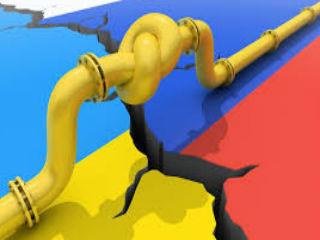
The Southern Gas Corridor, a 3,500 kilometers long chain of pipelines starting in Azerbaijan and ending in Italy, is the largest fossil fuels project the EU is currently pursuing in total disregard to Europe’s climate goals and while turning a blind eye to the Azerbaijani regime’s ongoing crackdown on civil society and journalists in the country. It is the same regime that has been found to be operating a slush fund, the so-called Azerbaijani Laundromat, to buy influence among European decision makers, including one member of the EBRD’s board of directors.

Europe’s murky Eastern energy deals

By: EBR | Monday, November 27, 2017

Millions of euros in public money are being invested in large infrastructure projects in the EU’s eastern neighbours in total disregard for Europe’s climate goals, and local communities, writes Manana Kochladze

Similarly, we need to judge how to best integrate the children and young people arriving in Europe, who are eager to build a new home, learn new languages and make new friends. Delivering a future for Europe must mean investing first in children. With Brexit discussions ongoing, the EU is reassessing and reorganising its policies and finances for the future.

Children must be at the heart of debate on Europe’s future

By: EBR | Tuesday, November 21, 2017

Most people debating the future of Europe think in economic terms. But today we must think about how children in Europe are experiencing their childhood, as that will be the biggest determining factor of our future, writes Jana Hainsworth.
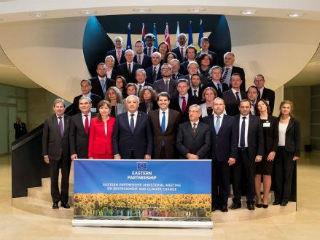
The EU should involve partners in strengthening democratic institutions and civil society. But one cannot artificially “speed up” this process. Such a process takes time. Teaching and preaching has proved to be less effective. Also from the geopolitical point of view, it is in EU/CoE interest to build a real partnership.

EU must continue active interaction with Eastern partners

By: EBR | Thursday, November 16, 2017

Beyond the successful efforts in multilateral projects of economic nature, the Eastern Partnership should also involve its partners in strengthening democratic institutions and civil society, argues René van der Linden

The EU’s popularity has been somewhat volatile, but the overall picture is worrying. There was a slight lift in support in the wake of the Brexit referendum, probably because people elsewhere in continental Europe recoiled from the idea of going down the same uncertain route. Since then, pollsters have identified disquieting trends.

Speak up Brussels! It’s time to emphasise the EU’s virtues

By: EBR | Tuesday, November 14, 2017

This has been a roller-coaster year for Europe. It opened amidst widespread despondency, chiefly over Brexit but also over the rising tide of populism, then perked up when euro-enthusiast Emmanuel Macron was elected to the French presidency, and now is drifting back towards the doldrums
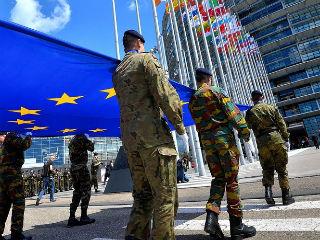
Countries that sign up to PESCO will be subject to an annual review to make sure they stick to their commitments – and could be thrown out if they do not. The pact has revealed strains between Paris and Berlin, with the French pushing for a smaller group of nations committed to ambitious projects including possible foreign interventions such as in Libya or Mali.

EU takes step towards closer defence cooperation

By: EBR | Monday, November 13, 2017

The EU will move towards closer defence ties Monday (13 November) with more than 20 states signing a landmark pact that aims to boost cooperation after Brexit and counteract Russian pressure

Founded in 1995, the European Medicines Agency (EMA) is responsible for the scientific evaluation, supervision and safety monitoring of medicines in the EU. The Agency is seen as being essential to the functioning of the single market for medicines in the EU.

Which city will host the European Medicines Agency?

By: EBR | Wednesday, November 8, 2017

The competition to host the prestigious European Medicines Agency (EMA) is hotting up with Bratislava emerging as a dark horse

One immediate issue for the new government was Estonia’s European Union Council Presidency, shifted forward six months due to Brexit. Suddenly the new government, and especially the Centre Party, out of power for a decade, had to actively participate in EU-level political processes.

Tallin: Estonia takes on EU Presidency amid national change

By: EBR | Tuesday, November 7, 2017

For Estonia, the first half of 2017 was unexpectedly dynamic
The project will add 1,000 MW of nuclear power to the existing export potential of Burshtinsky Island in Ukraine, which is currently supplied exclusively by thermal generation (550 MW). Energoatom produces up to 65% of Ukraine’s total power requirement, but in recent years total consumption of nuclear power in the country has declined from 88 million kWhs in 2015 to a forecast of 82 million kWh this year. This makes the export of power to neighbouring Poland an attractive commercial opportunity.

New step for EU-Ukraine Energy Cooperation

By: EBR | Friday, November 3, 2017

In terms of economic cooperation between the EU and Ukraine, the most significant sector is energy.

Europe, the US or China?

By: EBR | Monday, October 30, 2017

Which development model today among the Big Three – Europe, the US or China – best fosters economic and environmental sustainability?

The future of the EU: Putting things in perspective

By: EBR | Monday, October 30, 2017

The European Way has great potential to nudge the world forward

Going Dutch: Why Germany needs others besides France

By: EBR | Thursday, October 26, 2017

The Franco-German engine gets all the media attention, but it is Dutch-German cooperation that has done the important work in recent years. France and Germany can do a lot together, but Germany and France should remember that Berlin has – and needs – other options
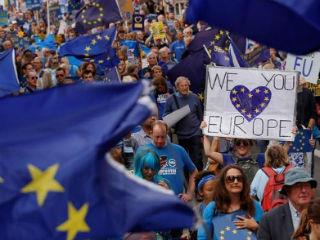
Many wonder whether this form of citizen deliberation will be a one-time, constituent opportunity or rather a more permanent exercise, often referred to as ‘mini-publics’ (or citizens’ assemblies). This would entail the participation of randomly selected and demographically representative citizens from various populations tasked with advising elected decision-makers. Given successful experiments in Canada and Australia, the EU would do well to consider how to integrate mini-publics into their decision-making process. A randomly selected group of lay EU citizens could meet in parallel to the EU legislative process and inform it by formulating a set of recommendations. This would have the merit of sparking a EU-wide public debate about the policies discussed, thus underpinning the legitimacy of the EU policy process.

5 big ideas to reboot democracy in the EU

By: EBR | Friday, October 20, 2017

There is a widespread, intensifying belief that without the greater involvement of its citizens, the European Union is condemned to fail. While this realization is far from new, recent events in Catalonia along with Brexit have lent it fresh force
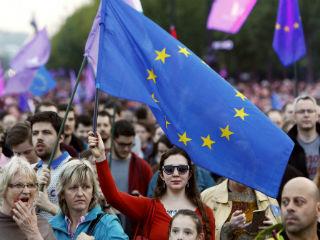
In terms of “Positive image” of the European Parliament, Ireland leads with 54%, followed by Bulgaria 49%, Malta 46%, Luxembourg 46%, Portugal 44%, Romania 43%, Germany 41%, Poland 38%, Netherlands 37%, Hungary 36%, Italy 36%, Sweden 35%, Belgium 34%, Austria 33%, Denmark 33%, Slovakia 32%, Lithuania 31%, Croatia 31%, Slovenia 28%, Cyprus 27%, UK 27%, Greece 27%, Finland 26%, Latvia 25%, France 20% and the Czech Republic is at the lowest with 18% of positive opinions. The EU average is 33%.

Parliament poll: Public confidence in the EU is growing

By: EBR | Wednesday, October 18, 2017

A clear majority of EU citizens now believe that EU membership is good for their country, according to a survey of how they view the EU and its institutions, released on Wednesday (18 October)
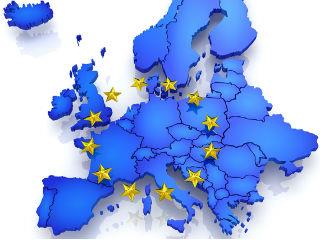
Under this title, different battles are ongoing: grants versus financial instruments, Brexit versus budget cuts, simplification of rules versus shortening of implementation deadlines, innovation and digitalization versus convergence and infrastructures, lagging behind regions versus advanced regions.

What do the regions really want?

By: EBR | Monday, October 16, 2017

A week full of debates and events about European regions and cities is over
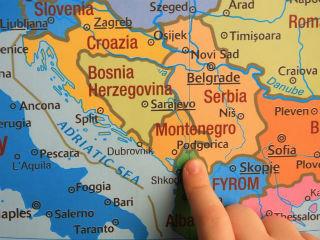
European Commission Deputy Director-General for Neighborhood Policy and Negotiations Maciej Popowski said that it was nonetheless encouraging that 42% of the region’s population supported the EU. It may not be a majority but it is still more than in 2016.

Balkan citizens doubt they will ever join EU

By: EBR | Thursday, October 12, 2017

Citizens of the Balkan region are highly sceptical that their countries will be joining the EU anytime soon, despite shows of support for European integration, while a quarter do not believe their country will ever join the EU, the Balkan Barometer 2017 survey has shown

At the end of the day, withstanding the tide of populism and the extreme nationalism means addressing the discontents that feed it. There are a number of explanations for rising populism in Europe. One is that nationalism is a form of self-defence in the environment of raising inequalities, as put by the French thinker Bernard Sordet. This, indeed, is a challenge we need to address in Europe and in the world, in general. Although European societies are among the most equal in the world, significant disparities still exist. On average, the wealthiest 20 per cent of households earn five times as much as the poorest 20 per cent, according to the European Commission.

Populism, the three-headed monster

By: EBR | Thursday, October 12, 2017

Europe’s economy is firmly on track and the President of the European Commission, Mr. Jean-Claude Juncker encourages us to leave the harbor and sail deep seas
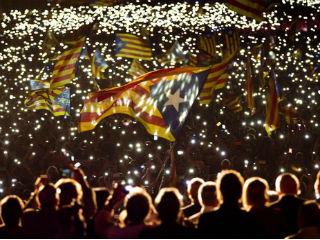
Public grandstanding and high-profile interventions and declarations are not the only tools at the EU’s disposal. Policymakers, including MEPs should be seeking ways to engage in creative third-party mediation, which could include turning to trusted non-politicians, including non-Europeans, who can persuade Madrid and Barcelona to abandon confrontation in favour of dialogue and negotiation.

In a world of belligerent nationalisms, it’s not just Catalonia that needs cool-headed mediation

By: EBR | Tuesday, October 10, 2017

With Spain and Catalonia still locked in confrontation, cool-headed mediators are desperately needed to take the heat out of the escalating Catalan crisis

Digital innovations have not been used sufficiently at European level either. The European Commission has funded some pilot projects targeting youth e-participation. Some MEPs communicate digitally with their constituencies. However digital democracy agenda is largely missing from both strategic policy documents, such as the Commission’s Digital Agenda for Europe, and practical measures.

Digital democracy could engage citizens in Europe

By: EBR | Thursday, October 5, 2017

Digital technology has become a part of daily life for shopping, work and media consumption – and it is rapidly advancing into the physical world with the development of the Internet of Things. Less well-known are digital initiatives in democracy
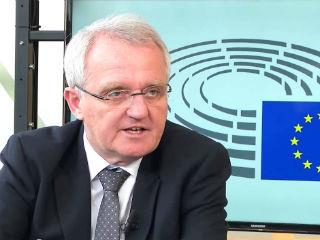
 The key lies in the phrase “solidarity against reliable solidity”. Here in Germany, it also had been a long road until we found a solution for handling regions with different levels of development. At European level, this is no different. We must accept that there are member states which will still not be rich in the medium-term, but that at the same time there are also things we as Europeans want to achieve together.

European Parliament VP: ‘We must use the window of opportunity’ to deepen EU integration

By: EBR | Thursday, October 5, 2017

Current conditions are ideal to push the EU towards becoming a European federal state, according to one of the vice-presidents of the European Parliament, Rainer Wieland

UK business will be taxed much more in a future Labor government. Little surprise then that even Corbyn’s finance spokesperson, John McDonnell, told the party conference that his team was doing scenario planning for a massive run on sterling in the event of Labour winning power.

Europe’s populist revolt: A close-up

By: EBR | Wednesday, October 4, 2017

From Germany to the UK and Italy, populism tries to get the upper hand. Can it be contained?

Pages: Previous Next

EU Actually

Only President Antonio Costa believes in a deal in his EU Council before Christmas

N. Peter KramerBy: N. Peter Kramer

In his weekly column N. Peter Kramer writes that EU member states are deeply divided over the EU’s next seven-year budget. Do we know more after the EU Council on Thursday?

Europe

The EU’s Middle-Power Puzzle

The EU’s Middle-Power Puzzle

While the EU and European governments are embracing the much-lauded middle-power moment, this entails three difficult conundrums

Business

Businesscraft: Japan’s Quiet Discipline for a Fractured World

Businesscraft: Japan’s Quiet Discipline for a Fractured World

For almost thirty years after the end of the Cold War, geopolitics stayed away from the corporate boardroom. Geopolitical considerations belonged to the foreign ministry or to a dedicated risk committee back at headquarters, and rarely crossed a CEO’s desk.

MARKET INDICES

Powered by Investing.com
All contents © Copyright EMG Strategic Consulting Ltd. 1997-2026. All Rights Reserved   |   Home Page  |   Disclaimer  |   Website by Theratron

