Edition: International | Greek
MENU

Home » Europe

Inequality is the number one concern for young Europeans. Europe is founded on values of equality and solidarity but these cannot be empty statements. We need preventive measures addressing the root causes of inequality to not only build a fairer and more inclusive Europe but also to empower young people to reach their full potential. A social Europe for all must become the new cement of what unites us.

Future of Europe: 10 tips for the old continent from its youth

By: EBR | Wednesday, September 13, 2017

Young Europeans do not need short-term, tokenistic initiatives but long-lasting and sustainable solutions that make a real impact, and these need to be developed with our input. We are the most pro-European generation and have the potential to be the driving force of its future

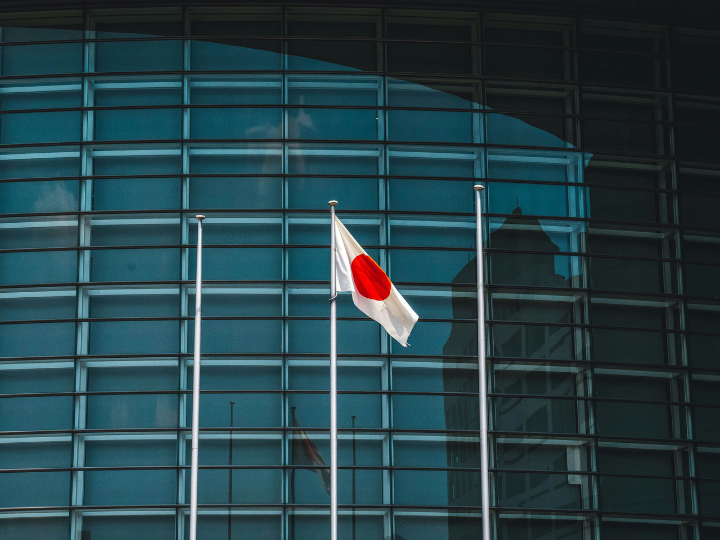
Keep Europe open for business. Interestingly, while the US withdraws from trade deals and contemplates new ways of protecting domestic producers, the EU has been seeking out new trade deals with an array of partners. The recent EU-Japan political deal on a free trade agreement has sent the right message on Europe’s desire to keep its markets open. The EU is right to demand better access to foreign markets. But it would be a pity if that message of openness was overshadowed by ill-thought, stringent new moves to keep out foreign investments.

As EU emerges from ”valley of tears”, there’s hope but also challenges

By: EBR | Tuesday, September 12, 2017

What a difference a year makes. This time last year, in his annual address on the “State of the Union”, European Commission President Jean-Claude Juncker warned the EU was “at least in part in an existential crisis” and that too many “unresolved problems” stared us in the face

”We need to redesign the future of Europe. It is a political obligation of our generation, Emmanuel,” he said addressing the French president.  It became apparent in his introduction  that the Greek PM has made a clear choice for the ideas recently set out by Macron on the future of the EU.

Greek PM Tsipras and French President Macron agree on fundamental changes in the EU

By: EBR | Monday, September 11, 2017

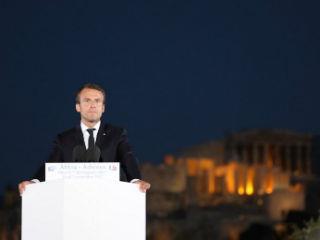
Before introducing French President Emmanuel Macron during his official visit to Greece last week, Greek Prime Minister Alexis Tsipras stressed the need to promote a dialog for "a new democratic contract in Europe" to bring back solidarity and equality between states and between citizens
The idea is seen with scepticism in Paris, however. “Relaunching investment, yes, but individualising decision making in a structure outside the European Commission, no,” sources close to the president have said before Macron’s departure for Athens.

In Athens, Macron outlines ‘roadmap’ for European democratic revival

By: EBR | Friday, September 8, 2017

French President Emmanuel Macron sketched a plan to “rebuild” the European Union through wider democracy and public accountability at the start of a two-day visit to Greece on Thursday (7 September)

The initiative, launched by the Fire Safe Europe group, is calling for strict EU legislation regulating materials used in new buildings, ranging from offices to tower blocks. An EU directive on the issue should, say the campaigners, also apply to “retrofit” buildings – properties which are being renovated or refurbished. With several EU policies impacting on fire safety, there are also calls for an EU-wide “fire safety strategy” so as to provide a more “coordinated” approach.

Firemen facing increased risk of cancer call for EU-wide action

By: EBR | Thursday, September 7, 2017

MEPs have thrown their weight behind calls for EU action to help tackle the “toxic time-bomb” facing firefighters across Europe

The Greek economy is showing timid signs of improvement. Last week, the Hellenic Statistical Authority announced that Greece’s gross domestic product grew by 0.5 percent in the second quarter of the year. Unemployment is at around 22 percent, still the highest in Europe but down from a peak of 28 percent in 2013. But Greece is not out of the woods yet. Representatives from Greece’s lenders will arrive in Athens next week to start preparations for a review of the country’s bailout program. The formal review will start in October, and the lenders could ask Greece for more economic reforms. Greece does not face any big debt repayments to its institutional lenders for the rest of the year, so a Greek default is unlikely in the short term. However, another round of unpopular economic reforms could reignite lingering resentment between the Greek electorate and the government. A prolonged review process could also reignite fears about Greece’s financial future and make it harder for Athens to

France’s Macron takes his EU reform plans to Athens

By: EBR | Thursday, September 7, 2017

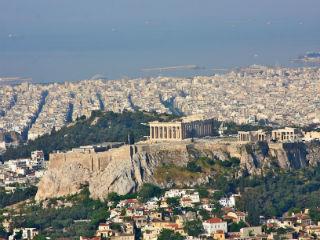
The Greek government hopes to make the most of French President Emmanuel Macron's visit on Sept. 7-8. On the agenda will be France's plans for EU reform and Greece's negotiations with its lenders
To counter the German position, Macron needs massive support from elsewhere in the EU. He is also counting on Greece and most of the other southern member states to back his proposal for a eurozone finance minister.

Macron to deliver vision for EU democracy in Athens

By: EBR | Wednesday, September 6, 2017

President Emmanuel Macron will this week unveil his vision for European reform in Athens. On the menu is the eurozone, transnational lists for 50 MEPs and democratic conventions, whose results are expected ahead of the next EU elections

The debate also has not altered the SPD’s fundamental problem: the party’s focus on issues of social justice does not resonate well with the vast majority of Germans who think that Germany is doing quite well. And the about 25% of Germans who are dissatisfied with the way things are tend to opt for the ultra-right (AfD) or the ultra-left (Die Linke), rather than for the center-left SPD which has been Merkel’s junior partner in government for two of her three terms so far. The SPD simply lacks a message that could attract enough voters to oust Merkel.

The German consensus machine

By: EBR | Tuesday, September 5, 2017

Don’t look for major policy changes in Germany after the September 24 federal elections

From the project ‘Chain of Trust’, it is quite clear that the human factor in healthcare delivery is crucial and still plays a central role. Patients need someone that they trust, someone that they feel comfortable reaching out to, be it a carer or a healthcare professional. eHealth services or self-care treatment can only be effective if patients feel confident about using them. Trust is a vital component of any successful home care or self-care implementation strategy.

Home-care across Europe: How can we build the trust of patients?

By: EBR | Monday, September 4, 2017

Nobody likes to be in a hospital. Driving long hours to the medical centre on a regular basis, or sitting around waiting for a therapy or a treatment can have a serious impact on the quality of life of many patients with serious long-term conditions in Europe
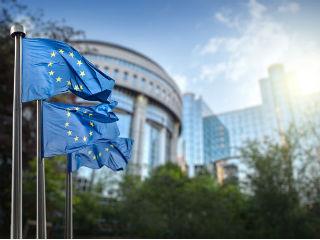
As the essence of the European Parliament is at stake in this statement, MEPs should use the debate about the State of the Union to correct the Commission. Each of them has been directly elected by the citizens of the Union and not through intermediary of any national government. During the debate MEPs could also point out that it will be impossible to restore the trust of the citizens in the Union without taking their perspective and interests into account.

The EU has two options: be democratic, or cease to exist

By: EBR | Monday, September 4, 2017

There is no point in governing an organisation of democratic states in an undemocratic manner

Some reasons for the early end of the honeymoon period are trivial such as the spats over the role of his wife and the expenses for his visagist (€26.000 within three months, albeit less than his predecessor Francois Hollande reportedly used to spend on it).

Crunch time in Paris

By: EBR | Friday, September 1, 2017

Will Macron deliver? And what will French economic reforms mean for all of Europe?

The biggest problem for the Eurozone is demographic. The population is ageing rapidly, and in several countries that issue is compounded by a shrinking number of inhabitants. Average age in the largest Eurozone countries ranges between 44 and 47. At the same time, the United Nations estimates that the European Union population will have peaked and start shrinking in less than two decades. Less people and older, too.

The Eurozone is recovering, but we cannot afford to be complacent. Here are 3 reasons why

By: EBR | Friday, September 1, 2017

If there is a term that can best describe the current climate in the Eurozone, it is “complacency”. Markets are rising, bond yields are at an all-time low, growth estimates have improved and the European Union has triumphantly declared the end of the crisis, thanks to its “decisive action”

 “We have put in place tangible measures upstream of the migratory flows,” Macron said, referring to the joint declaration that emerged from the summit and which complements the roadmap put on the table by the Commission in the summer. Brussels’ proposal involves extending the EU’s external border by setting up asylum and reception centres in Chad and Niger.

African and European leaders renew efforts to tackle migration

By: EBR | Tuesday, August 29, 2017

African and European leaders gathered in Paris on Monday (28 August) to broach the subject of migration, where support was expressed for moving the EU’s external border into Africa itself, so that asylum applications can be handled locally

While any further warming comes with dangerous impacts, there is a substantial difference between restraining temperatures to 1.5°C and to 2°C. The former would significantly reduce the damage to our life-support ecosystems. It would halve the risk of species extinction, reduce the risk of severe droughts in Europe and prevent the melting of large areas of permafrost.

Europe’s dramatic summer gives a foretaste of ‘super heatwaves’ to come

By: EBR | Tuesday, August 29, 2017

While Europe is recovering from an unusually warm summer, a new study warns that heatwaves with temperatures of above 40°C are expected to become more frequent, with some regions of Eastern Europe hit by new super heatwaves of above 55°C

Europe’s reliance on gas imports was highlighted on 17 August, when Russian gas giant Gazprom announced that deliveries to prospective consumers of the Turkish Stream pipeline project were scaled up in the first eight months of the year.

Europe’s reliance on gas imports in spotlight as coal’s decline continues

By: EBR | Wednesday, August 23, 2017

Electricity produced from natural gas has matched power generated from coal in OECD countries. But Europe’s gas self-sufficiency dropped below 50% for the very first time as well

Corporate governance defines how corporations are structured and managed, by whom and for what purpose. As corporations form the fabric of contemporary economies, corporate governance systems are central to the way economies function and are of paramount importance in addressing the complex challenges we face today.

How EU can end corporate short-termism and create sustainable financial system

By: EBR | Wednesday, August 23, 2017

The notion of corporate governance must be revised to protect us from short-term shareholder interests and ensure we make the long-term investments vital to our future

EU business groups point to the persistence of issues such as compulsory local content requirements in key sectors, unfair procurement tendering rules in the absence of China’s membership of the WTO’s Government Procurement Agreement, required disclosure of business-sensitive information to support collaborative projects, and enforced joint venture creation as a precursor to knowledge transfer to domestic Chinese firms who then become competitors.

The EU-China relationship characterised by ineffective political action and lack of trust

By: EBR | Wednesday, August 23, 2017

The EU-China economic relationship appears to be in troubled waters

Future of work and the survival of the welfare state

By: EBR | Thursday, August 17, 2017

More and more people are finding work in the digital economy, but more flexibility also means increased insecurity

Four tips from peacebuilders on working with young people to transform violent extremism

By: EBR | Tuesday, August 8, 2017

If violent extremist groups recognise the power and potential of young people, why don’t those combatting them? Fien De Baere from the organisation Search for Common Ground lays out four tips to help young people avoid violence

Time to bust a few myths about innovation in the Internet of things era

By: EBR | Tuesday, August 8, 2017

Small European tech companies might be about to lose out if the European Commission’s new patent guidelines favour giants like Qualcomm and Ericsson, writes Morgan Reed

Pages: Previous Next

EU Actually

Ukraine may buy for 6 billion euros Chinese drones with EU money

N. Peter KramerBy: N. Peter Kramer

In his weekly column, N. Peter Kramer writes about the Ukraine buying for 6 billion euros drones in China with EU money. Is it a threat for Taiwan?

Europe

Diplomacy intensifies over Cyprus

Diplomacy intensifies over Cyprus

United Nations secretary-general envoy Maria Angela Holguin will be in Brussels on Wednesday for meetings seen as important to European Union preparations for a possible revival of Cyprus reunification talks ahead of an expected visit by Secretary-General Antonio Guterres to Cyprus next week.

Business

How Much Pressure Can European CEOs Take?

How Much Pressure Can European CEOs Take?

There was a time when the job of the CEO was difficult but relatively clear: grow the business, beat the competition, manage costs, satisfy shareholders, inspire employees and avoid major reputational mistakes. That world has disappeared.

MARKET INDICES

Powered by Investing.com
All contents © Copyright EMG Strategic Consulting Ltd. 1997-2026. All Rights Reserved   |   Home Page  |   Disclaimer  |   Website by Theratron