
EP supports permanent crisis mechanism to shore up the euro
By: EC Press Room | Thursday, December 16, 2010
The permanent "bailout" mechanism for Member States in financial difficulty must clearly detail how the private sector would be brought in to help, how non-Eurozone countries would be involved, and how the EU budget would be affected, says a resolution adopted by Parliament on Thursday.
Who’s the real boss in the EU?
By: Niels Schreuder | Wednesday, December 15, 2010
Now a year ago, Herman Van Rompuy was designated to be the European Union’s first permanent president. For decades the European Commission president had been Europe’s chief executive and the boss in town.
Gas Supply diversification corridor for Europe - ITGI a step ahead
By: Athanase Papandropoulos | Wednesday, December 8, 2010
The Memorandum of Understanding (MoU) accelerates the completion of the ITGI Project (Interconnection Turkey-Greece-Italy) as a first phase of the Southern Gas Corridor, a strategic infrastructure for Europe’s energy security.
Editor′s Column: Real life and EU bureaucracy - a tale of two worlds
By: N. Peter Kramer | Monday, November 15, 2010
It would be laughable if it wasn’t so serious. Six bewildering examples of wasteful EU spending, taken from a long list by Open Europe, an independent thinktank

We need new rules for a Multipolar Europe
By: The Financial Times | Wednesday, October 27, 2010
The security summit between Nicolas Sarkozy, Angela Merkel and Dmitry Medvedev was always likely to be a non-event. France wanted something spectacular, Germany something reasonable, Russia something it could trade. So, the chances of a meeting of minds were slim.

EU Intelligence Cooperation: A Greek Approach
By: Dr. John M. Nomikos | Wednesday, October 20, 2010
During the 1990s, the European Union has kept a relative low profile in the world and European arena. As with the United States in the post-World War II era, the European Union has had little to no experience in dealing with these new problems.

Can I trust the government? New evidence on democracies and financial development
By: EBR | Monday, October 11, 2010
What do countries need for sustainable financial development? This column argues that protection of property rights is necessary but not sufficient. Using a sample of 160 countries from 1960 to 2005, it finds that checks and balances on power and political stability are the vital ingredients.
Editor′s Column: Jose Mourinho for Commission President!
By: N. Peter Kramer | Monday, September 20, 2010
As President of the European Commission, Barroso has the chance to be the most famous Portuguese of the European Union. But unfortunately for him, there is always that other Portuguese, the “Special One” as he calls himself, Jose Mourinho.

How to stop anti-crisis policies from becoming protectionist
By: Europe′s World | Thursday, July 29, 2010
“Industrial policy” has long been a euphemism in most parts of Europe for economic nationalism, and the problem is getting worse. Elie Cohen looks at the policy aftermath of the financial crisis and sets out a framework for EU-level industrial policymaking.

The future of Europe: Staring into the abyss
By: The Economist | Wednesday, July 21, 2010
Will the European Union make it? The question would have sounded outlandish not long ago. Now even the project’s greatest cheerleaders talk of a continent facing a 'Bermuda triangle' of debt, demographic decline and lower growth.
Why the EU newcomers still don′t make the best of membership
By: Europe′s World | Tuesday, June 22, 2010
Many of the EU’s newest member states are no longer the euro-enthusiasts of yesteryear, and they also complain they have less influence on policymaking than they had hoped. Pavel Telicka assesses the newcomers' track record so far.
Europe 2020 finalised
By: EC Press Room | Friday, June 18, 2010
European leaders meeting in Brussels on 17 June adopted Europe 2020, a new 10-year strategy for jobs and growth which will promote the delivery of structural reforms.

Guy Verhofstadt: the Saviour of the European Commission?
By: N. Peter Kramer | Friday, June 11, 2010
Former long standing Belgian Prime-Minister Guy Verhofstadt is using his current position as President of the Liberal Group in the European Parliament, to play patron to the EC, which has lost power since the Lisbon Treaty came into force and also due to its lack of ambition and sufficient quality
Turkey and Europe: a shifting access
By: EBR | Thursday, June 10, 2010
Turkey’s new regional confidence appears to make the problems in its accession to the European Union less significant. But the linkage is more complicated, says Katinka Barysch, deputy director of the Centre for European Reform.
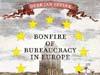
Bonfire of Bureaucracy in Europe
By: N. Peter Kramer | Wednesday, June 9, 2010
Derk-Jan Eppink (1958) wrote ‘Bonfire of Bureaucracy in Europe’ sitting in the plane above the Atlantic Ocean. Since he was elected as a member of the European Parliament in 2009, he has been commuting between Brussels and New York City, where he used to live and where his family is still living.
′The European Union Needs More Honesty′
By: EBR | Tuesday, May 25, 2010
The sovereign debt crisis has led to at times bitter disagreement within the European Union. But it has also resulted in a debate about the need for further integration of the 27-member bloc. It's about time, argues European parliamentarian Manfred Weber. The EU, he says, needs to renew itself.
Brussels role seen as irreversible
By: EBR | Friday, May 21, 2010
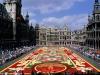
'Brussels has become the de facto capital of the European Union without any real decision being made,' a new research argues, going on to suggest that leaders are 'extremely unlikely' to ever attempt to move the EU institutions elsewhere.
Europe, Nationalism and Shared Fate
By: Stratfor - Strategic Forecasting | Friday, May 14, 2010
The European financial crisis is moving to a new level. The Germans have finally consented to lead a bailout effort for Greece. The effort has angered the German public, which has acceded with sullen reluctance. It does not accept the idea that it is Germans’ responsibility to save Greeks.
Cameron leads Britain into new coalition era
By: Reuters | Wednesday, May 12, 2010
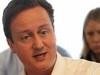
Britain's first coalition government since 1945 will set out its main policy goals on Wednesday with a core task being to tackle the country's record budget deficit. A deal between two usually ideologically opposed parties that critics say will lead to future instability.
The end of something 'special'?
By: Reuters | Wednesday, May 5, 2010
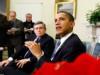
Britain's role as a bridge between the United States and European Union has diminished and that trend will accelerate if the May 6 vote is inconclusive, with Washington looking more and more to the European Union as a whole as a global partner.
 By: N. Peter Kramer