The end of something 'special'?
By: Reuters | Wednesday, May 5, 2010
Britain's role as a bridge between the United States and European Union has diminished and that trend will accelerate if the May 6 vote is inconclusive, with Washington looking more and more to the European Union as a whole as a global partner.

Is Portugal next?
By: Reuters | Thursday, April 29, 2010
Portugal should be able to avoid being the next country after Greece to need an EU bailout as there is a strong likelihood that an austerity plan announced last month will gain parliamentary approval and then be accepted by the population without violent protests.
Strauss - Kahn: The Road Ahead for Europe
By: Dominique Strauss-Kahn, IMF Managing Director | Tuesday, April 27, 2010
The integration of Europe’s goods, capital, and labor markets has brought tremendous benefits to all its members—with the economies of the new member states in particular enjoying a rapid catch-up.
Greece: New measures before it receives any financial aid
By: Euractiv | Monday, April 26, 2010
Greece must agree to tough new austerity measures before it receives any financial aid from the European Union and failure to do so would endanger such support, German Finance Minister Wolfgang Schaeuble told a newspaper.

Even Pipelines give the Blues
By: N. Peter Kramer | Tuesday, April 13, 2010
The day before the Polish President, his wife and dozens of top Polish political and military leaders died in a plane crash, Russian and EU officials marked the start of the construction of Nord Stream gas pipeline: a first chunk of 48-inch-diameter steel pipe was laid on the Baltic Sea bed.
Euro zone readies giant rescue package for Greece
By: Reuters | Monday, April 12, 2010
(Reuters) - Euro zone finance ministers approved a giant 30-billion-euro ($40 billion) emergency aid mechanism for debt-plagued Greece on Sunday, but stressed Athens had not requested the plan be activated yet.

Growth seen easing back slightly in US, Europe and Japan in first half of 2010
By: EBR | Wednesday, April 7, 2010
The pickup in activity seen in the G7 countries in the last quarter of 2009 is expected to ease back in the first half of this year, according to the OECD’s latest Interim Economic Assessment. Consumer and business demand is likely to suffer from sluggish credit growth.

EU - US summits ‘only when necessary’ …
By: N. Peter Kramer | Tuesday, March 30, 2010
After cancellation of the planned EU-US May summit in Madrid, a policy-director within the US State Department said, during a forum in Brussels last Friday, that EU-US summits will no longer be organised automatically. A second blow by Obama for his European friends?

Deal reached over Greece's debts
By: BBC News | Thursday, March 25, 2010
All 16 eurozone countries have backed a financing plan to help debt-laden Greece, which will include IMF money. The safety net would total up to 22bn euros (£20bn), but would only be used if market lending to Greece dried up.

Merkel plays it tough and … makes a U-turn
By: N. Peter Kramer | Friday, March 19, 2010
Mrs Merkel placed the burden on Greece, to implement an austerity program designed to slash the budget deficit equal to 12,7 percent of its GDP. An aid package, as proposed by some finance ministers of eurozone, is for her not the right answer: "the turnaround must come from Greece".

Renewable energy: forecasts show EU on track to meet 20% target
By: EC Press Room | Friday, March 12, 2010
The EU will surpass its target to consume 20 per cent of its energy from renewable energy by 2020, according to national forecasts submitted to the European Commission. In its summary, the Commission finds that the EU will reach an overall share of 20,3 per cent renewables.
EU memberstates and Commission mangle Lady Ashton
By: N. Peter Kramer | Thursday, March 11, 2010
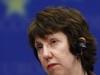
Life as the first EU’s Foreign Policy Chief under the Lisbon Treaty is not easy for Lady Catherine Ashton, a former leader of UK’s unelected House of Lords who then, as successor of Peter Mandelson and till the appointment for her current position served as European Commissioner for Trade.

Climate change: European Commission sets out strategy to reinvigorate global action after Copenhagen
By: EC Press Room | Wednesday, March 10, 2010
The European Commission today set out a strategy to help maintain the momentum of global efforts to tackle climate change. The Communication proposes that the EU swiftly begin implementing last December's Copenhagen Accord, in particular 'fast start' financial assistance to developing countries.

Europe 2020: Commission proposes new economic strategy in Europe
By: EBR | Wednesday, March 3, 2010
The European Commission has launched today the Europe 2020 Strategy to go out of the crisis and prepare EU economy for the next decade. The Commission identifies three key drivers for growth, to be implemented through concrete actions at EU and national levels.
Impact of the crisis: don't lump all new Member States together
By: EC Press Room | Tuesday, March 2, 2010
Initially the new EU Member States were thought to have been hit harder by the crisis than the old ones. In fact, there is considerable variation within both groups, agreed experts at a workshop on the impact of the crisis on the new Member States.
EU interim forecast: recovery is in progress but remains fragile
By: EC Press Room | Friday, February 26, 2010
The EU economy is gradually recovering, whilst still facing headwinds. Real GDP started to grow again in the third quarter of 2009, ending the longest and deepest recession in the EU's history. The exceptional crisis measures put in place in the EU played a major role in turning the economy around.
No Obama in Madrid, no Swift agreement with the US
By: N. Peter Kramer | Wednesday, February 24, 2010
Relations between EU and US have known better times. In January President Barack Obama cancelled his presence at the EU-US Summit scheduled for May in Madrid; in its February plenary session, a majority in the European Parliament rejected an agreement on banking data transfers to the US.

European Parliament shows its new muscles!
By: N. Peter Kramer | Friday, February 12, 2010
It was a hard job for Jerzy Buzek President of the European Parliament! Usually he is busy with lecturing Russia and shaking hands with former winners of the Sakharov Prize.
EU holding top-level discussion on economic situation
By: EBR | Thursday, February 11, 2010
In Brussels today European leaders are seeking commitment to the aim of implementing a renewed economic strategy for employment and growth in the EU and at the same time will debate how to help Greece resolve its budgetary crisis.
Parliament set to gain new powers in its relations with the Commission
By: EBR | Tuesday, February 9, 2010
The European Parliament approved on Tuesday a set of key principles to be implemented in the cooperation agreement governing relations between the EP and the Commission. Commission President Barroso endorsed MEPs' demands, reflecting the new position of Parliament under the Lisbon Treaty.
 By: N. Peter Kramer