Edition: International | Greek
MENU

Home » World

The destruction of an economy: What went wrong in Venezuela

By: EBR | Tuesday, August 8, 2017

Venezuela was once South America’s richest country. Here's what went wrong

To live long and happily, the Japanese ask four questions

By: EBR | Tuesday, August 8, 2017

What’s your reason for getting up in the morning? Just trying to answer such a big question might make you want to crawl back into bed. If it does, the Japanese concept of ikigai could help
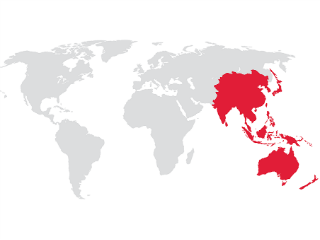
When ASEAN was formed 50 years ago, there were two driving forces. One was to make economic gains through better trade among member states, and the second was to form an alliance against the spread of communism in the region, led by the then Soviet Union and Mao’s China. Today the Soviet Union has ceased to exist, and communism is dead. China is not interested in exporting ideology, but in expanding trade in the region. The inevitable question is, “Will economic gains create sticky-enough glue to hold countries in the bloc together as they tread unchartered territories, and respond to a surging China and a waning and unsure US?”

The geopolitical landscape of Asia Pacific is changing dramatically. Here’s how

By: EBR | Friday, August 4, 2017

Two important events are having a significant influence on existing security arrangements in Asia Pacific

The main emerging challenge here is that as China becomes so deeply involved financially in other countries it risks being entangled in local politics. It will be increasingly unable to remain neutral, especially in countries with relatively weak states and strong sectarian differences. This could produce problems. Controversy has already emerged in countries ranging from Zambia to Pakistan and Sri Lanka over China’s investments, and we can expect this to intensify as the country builds its own global financial architecture.

What does the future of Europe-Asia cooperation look like?

By: EBR | Friday, August 4, 2017

For the first time in centuries, Eurasia is again becoming the most dynamic region in the world

Let’s say no town is nearby and no innocent civilians are affected in this scenario. There’s still a prior question of whether that enemy building is a legal target in the first place. If it’s only a propaganda machine and a bank for terrorists, yes, it certainly plays a crucial role in enabling militants. But being crucial doesn’t make something a legal target. The Laws of Armed Conflict prohibit the targeting of media and financiers, allowing only people and objects directly participating in hostilities as targets.

Why cyberattacks could be war crimes

By: EBR | Thursday, July 20, 2017

Cyberattacks are the new normal, but, when they come from abroad, they can raise panic about an invisible cyberwar. If international conflicts are unavoidable, isn’t a cyberwar better than a physical war with bombs and bullets?

In Europe, amid the turmoil of Brexit, the EU and the United Kingdom are both seen as having a positive influence by 57% of respondents. While that’s the same result as last year for the EU, the UK’s rating has dropped by 10 points.

These countries have the most positive influence on the world

By: EBR | Monday, July 17, 2017

The idea of the United States as a “shining city upon a hill” is most closely associated with President Ronald Reagan but has been used by politicians since the country’s earliest days
Financial institutions need to improve their understanding of climate-related risks and opportunities, in order to be able to scale up their sustainable investment and to help financing the transition to a low carbon economy.

UN to partner with 11 global banks to encourage climate transparency in financial markets

By: EBR | Monday, July 17, 2017

UN Environment announced yesterday in a press release its new joint initiative to strengthen financial institutions’ assessment and disclosure of climate-related risks and opportunities, with eleven major banks
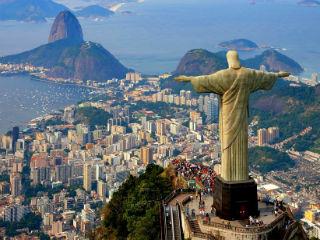
Lula’s protégé and successor as president, Dilma Rousseff, was impeached last August on allegations of misrepresenting the national budget numbers. No corruption charges have been filed against her. Her successor, current president Michel Temer, has been formally charged with corruption, which he denies.

Brazil: A fallen hero and the start of a new era?

By: EBR | Friday, July 14, 2017

Lula’s sentence is a signal to all of Latin America that justice can prevail. From Mexico to the tip of Argentina, corruption has pervaded politics for decades. Now is the time to fix it for good

And last but not least, context: preparing the exit strategy for the next possible conflict now is the best guarantor of future success. Understanding the context in which we are operating, committing to close cooperation with those also engaged, and collaborating effectively with partners to ‘de-conflict’, coordinate and integrate everyone’s efforts, are essential elements of the military’s realisation of a tenable exit strategy.

Peace is the ultimate goal of conflict – and cooperation is the key

By: EBR | Friday, July 14, 2017

It’s time we think about peace. By doing so in the context of war, we might win both the war and the peace

While a world leader in clean energy, China’s rapid industrialization has caused serious problems. Alongside air pollution, one of China’s most critical environmental challenges is water security. According to some estimates, 80% of all groundwater is unfit for human consumption – and 70% is so polluted it’s dangerous to touch. One response has been to invest $80 billion in three mega canal projects transporting the vital resource from the relatively water-rich south to major conurbations in the north, east and west.

10 astounding facts to help you understand China today

By: EBR | Friday, July 7, 2017

China is building a brand new city twice the size of Manhattan
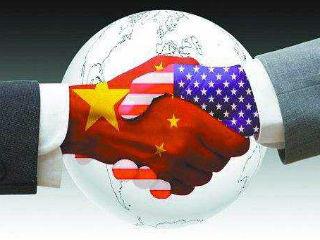
China is now the biggest producer of solar power after doubling its capacity in 2016. It has the world’s biggest solar farm on the Tibetan plateau where an array of four million panels nestles beneath the mountains.

How the US and China compare on action against climate change

By: EBR | Friday, June 30, 2017

When G7 leaders failed to convince President Trump to keep the US in the Paris Climate Accord back in May, French President Emmanuel Macron turned to the others and said, “China leads”
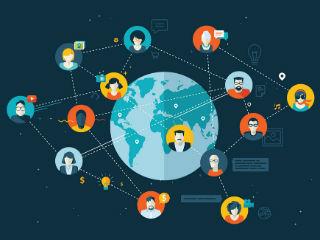
The sharing economy has many benefits for consumers, entrepreneurs and the environment. For example, a World Economic Forum study found that during the 2016 Olympic Games in Rio de Janeiro, Airbnb created the equivalent of 257 hotels for guests of the games, saving the city in terms of materials use and carbon emissions, while also spreading tourist dollars to a diverse range of neighbourhoods.

The numbers that make China the world’s largest sharing economy

By: EBR | Friday, June 30, 2017

In the last decade, the sharing economy has grown from a fringe concept to an economic powerhouse, reshaping various industries like tourism and mobility at a lightning pace
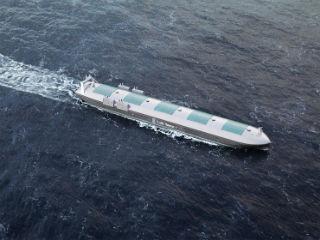
Rolls Royce is also working on making autonomous ships a reality by the end of the decade, in conjunction with ship builders and researchers in Finland. Meanwhile, research body MUNIN - or Maritime Unmanned Navigation through Intelligence in Networks - has been part funded by the European Commission to develop the technology needed to make robotic ships.

Forget driverless cars: sailorless ships are about to make waves

By: EBR | Friday, June 23, 2017

Sea change ... unmanned electric cargo ships could be with us in three years

But the game has changed after President Tsai Ing-wen of the DPP took office in May 2016. She doesn’t accept the ‘1992 Consensus’ and now it looks like Beijing is punishing Taiwan. Taiwanese President Tsai visited El Salvador, Honduras, Guatemala and Nicaragua in January to bolster her alliances after then President-elect Trump caused outcry in Beijing by accepting a congratulatory phone call from her early December.

China’s poaching of Taiwan’s diplomatic allies

By: N. Peter Kramer | Monday, June 19, 2017

The Republic of China (ROC), the official name of the island of Taiwan, has long used development aid and assistance to keep its handful of diplomatic partners onside but (People’s Republic of) China, has become an economic superpower

The UN is currently hosting its first ocean conference to support the implementation of Sustainable Development Goal 14: conserve and sustainably use the oceans, seas and marine resources for sustainable development.

Our oceans are in crisis – here are 5 things we can do to save them

By: EBR | Monday, June 12, 2017

Three billion people rely on seafood as their primary source of protein, according to the Marine Stewardship Council

Responding to the rupture in diplomatic relations and the military suspension, sources close to the Malaysian foreign ministry said that the government was advising its agencies to remain neutral in the dispute with Qatar. Some sources cautioned however that the defence and interior ministries may adopt a more independent approach.

The global dimensions of the Qatar crisis

By: EBR | Tuesday, June 6, 2017

The policy of side-stepping the proxy war between Saudi Arabia and Iran is becoming increasingly untenable for non-Arab Muslim nations and China

It is critical that we do not waste time on old business models in the face of scientific evidence of the risks they are associated with and their impact on the environment. Global decarbonization is essential in the longer term, and moreover it is good business. Renewables are simple to build, quick to bring to market, flexible in scale, and their costs are coming down quickly because of a huge technology boom, making them able to work around the world without subsidies. By comparison, with legacy technologies having a much longer time to market, and with an amortization profile of 20 years or more, we tie ourselves to the lose/lose choice of stranded assets, increasingly high environmental risk profiles, and dependence from volatile commodities.

Climate action: how can we revive the ’Spirit of Paris’?

By: EBR | Friday, June 2, 2017

Under this Italian Presidency, the G7 has a unique opportunity: to revive the ‘Spirit of Paris’ by taking decisive action to mitigate climate risk and the negative environmental impact of our actions

Technology is already moving at a pace that makes “climate-smart” decisions inevitable even if climate change is not a consideration for investment choices. The energy transition is already underway in many nations. Renewable energy options are out-competing incumbent supplies. Fossil fuel rich nations are not blind to this trend – Saudi Arabia, one of the world’s biggest oil producers, is aiming for “renewable energy installations, primarily of solar and wind, of 9.5 GW by 2023.” It is not just the power sector that is shifting. Transport technology changes are opening up the market for electrification of vehicles, changing the landscape for the future of travel. These new realities are politically relevant and are fundamental to the economic success of countries and the wellbeing of their citizens.

The US has ditched the Paris climate agreement - what does this mean for the rest of the world?

By: EBR | Friday, June 2, 2017

After just five months in power, the new President of the US has done it. He has ripped up the most powerful demonstration of collective and responsible global citizenship that the world has experienced in this century

It is one thing for Mr. Trump to lower the standards of what goes for American propriety. It is quite another for an all too compliant U.S. media to ape the man.

Trump’s new world order

By: EBR | Friday, June 2, 2017

Life in the age of Trump

 For individuals, language can be a tool for success, and the index provides a guide. The range of benefits depends, inter alia, on the person’s country of origin and native tongue. In mature markets such as English-speaking Canada and United States, studies have shown that learning a second language can yield economic benefits. However, on a macro level, these benefits were mild, considering the time and energy costs. A much better case could be made for people born in developing markets or whose native tongue is less powerful who pick up English or another powerful language. Moreover, the true reward of learning a language is often not economic, but rather cultural and personal.

The world’s most powerful languages

By: EBR | Thursday, June 1, 2017

What leaders should know about English and other languages competing for global influence

Pages: Previous Next

EU Actually

Ukraine may buy for 6 billion euros Chinese drones with EU money

N. Peter KramerBy: N. Peter Kramer

In his weekly column, N. Peter Kramer writes about the Ukraine buying for 6 billion euros drones in China with EU money. Is it a threat for Taiwan?

Europe

Diplomacy intensifies over Cyprus

Diplomacy intensifies over Cyprus

United Nations secretary-general envoy Maria Angela Holguin will be in Brussels on Wednesday for meetings seen as important to European Union preparations for a possible revival of Cyprus reunification talks ahead of an expected visit by Secretary-General Antonio Guterres to Cyprus next week.

Business

How Much Pressure Can European CEOs Take?

How Much Pressure Can European CEOs Take?

There was a time when the job of the CEO was difficult but relatively clear: grow the business, beat the competition, manage costs, satisfy shareholders, inspire employees and avoid major reputational mistakes. That world has disappeared.

MARKET INDICES

Powered by Investing.com
All contents © Copyright EMG Strategic Consulting Ltd. 1997-2026. All Rights Reserved   |   Home Page  |   Disclaimer  |   Website by Theratron