by Holger Schmieding*
Crises of such a scale can make or break leaders. Here are some tentative conclusions about potential global consequences and the political outlook in key countries of the advanced world.
Peak populism?
The pandemic is taking a particularly heavy toll on countries whose overconfident leaders trusted their own personal and political instincts more than sound scientific advice, at least initially.
Their countries often suffered starker consequences in terms of loss of life than other countries that are not governed by populists.
This may make it more difficult for populists to peddle their fact-defying slogans in the future.
However, the costs of the recession fall heavily on less skilled service workers and new entrants to the labor market, whether they live in countries governed by populists or not. This may cause new problems.
A leaderless world
All of the major global players, the United States, China and the European Union, got their initial response to the crisis partly wrong.
So did many second-league players, such as the UK and, much more badly, Russia and Brazil.
An even more fragmented world could be a more dangerous place, especially if the current U.S. government continues on its path to weaken global institutions, as well as its own soft power.
Advantage Biden?
In the United States, President Donald Trump is no longer the favorite to win the presidential election on November 3.
If Joe Biden makes it into the White House instead, he may pursue a more centrist policy agenda. He may actually have some political leeway, as the Democrats have a good chance to win a majority in both houses of Congress.
The resulting mix of more domestic regulation with a calmer foreign and trade policy may sour the economic mood among some corporate titans in the United States.
But it could perhaps help pacify a very unruly social situation inside the United States and would certainly come as a relief to other parts of the world.
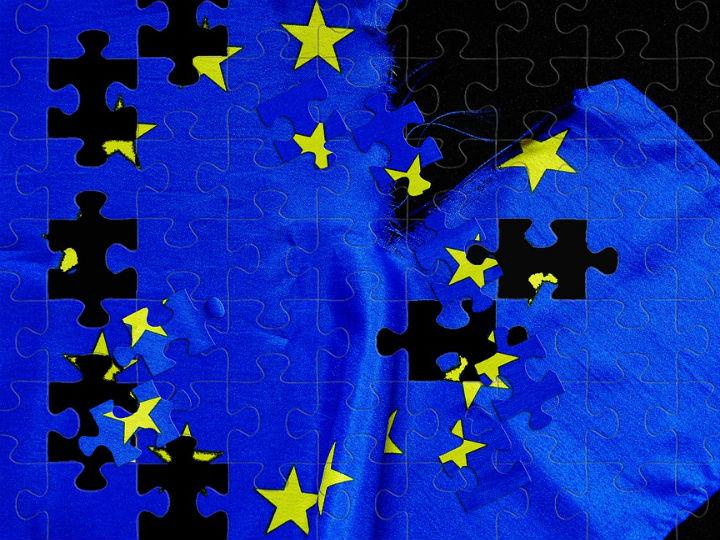
Risks to the cohesion of Europe
With a belated decision to promote a generous €750 billion recovery fund, Germany may be helping to rein in the surge in anti-EU sentiment in parts of southern Europe.
However, the future cohesion of the EU looks a little less secure now as the initial impression of insufficient solidarity in the critical months of March and April may linger.
After Merkel
Thanks to luck and a deft policy response by Germany’s centrist coalition, the risk that a Green-left-left coalition could take over in Berlin in late 2021 has receded a little. But it has not vanished.
The weakness of the small liberal FDP, which may struggle to stay in parliament, could be a bigger factor in the national power equation than the rise of the right-wing AfD, which has stalled.
Political risks in France
It remains true that Macron’s earlier economic reforms have strengthened the French economy significantly. But his reform momentum has stalled.
There is an appreciable risk now that the reforms may not suffice to deliver a golden decade for France in the 2020s. Meanwhile, political risks remain elevated in Italy and Spain.
*chief economist at Berenberg Bank in London
**first published in: www.theglobalist.com
 By: N. Peter Kramer