by Björn Stritzel
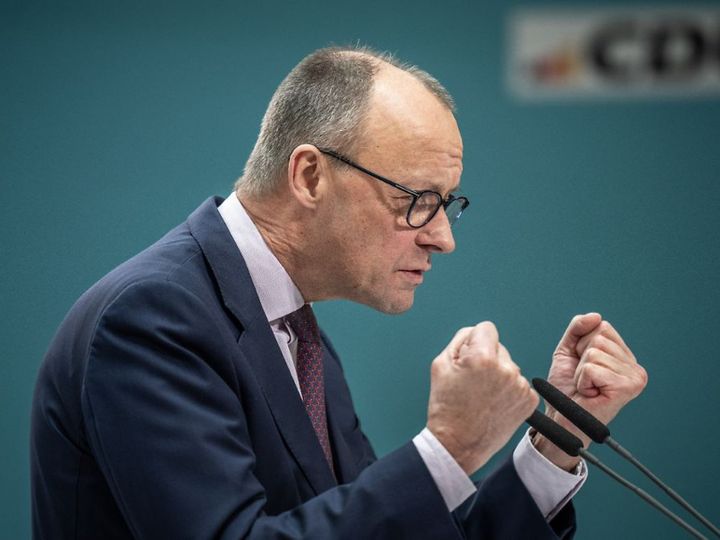
Chancellor Friedrich Merz signalled in unusually blunt terms on Sunday that legal debates will not determine Berlin’s response to the escalating confrontation with Iran – a striking shift for a country long wedded to a rules-based foreign policy and the primacy of international law.
“International law classifications will have little effect on this – especially if they remain largely without consequence,” Merz said at a press conference, indicating that Germany would draw “sober conclusions” from unfolding events rather than allow abstract legal arguments to constrain its actions.
The remark represents a notable departure for Berlin. For decades, Germany has framed its global role as that of a civilian power anchored in multilateralism and legal legitimacy. Merz’s formulation suggests a harder-edged calculus – and perhaps an acceptance that, in an emerging geopolitical order, enforcement and power politics increasingly outweigh formal legal doctrine.
At the same time, the chancellor acknowledged the uncertainty surrounding Western efforts to weaken Tehran through external pressure.
“We do not know whether the plan to bring about political change from within through military strikes from outside will work,” he said. “The internal dynamics in Iran are difficult to understand.”
Yet Merz coupled that caution with unusually explicit political positioning.
“The federal Government shares the relief felt by many Iranians that this mullah regime is now coming to an end,” he said, adding that Germany shared the US and Israeli interest in “seeing an end to this regime’s terror and its dangerous nuclear and ballistic armament”.
On the eve of a trip to Washington, where he is due to meet with President Donald Trump, the chancellor aligned Berlin squarely with American and Israeli objectives while conceding that the outcome of increased military pressure remains unpredictable. He argued that Europe’s long reliance on condemnations and sanctions had yielded few tangible results.
“Appeals from Europe, including Germany, condemning Iran’s violations of the law, and even extensive packages of sanctions, have had little effect over the years and decades,” he said, attributing that in part to an unwillingness to enforce interests with credible force if necessary.
Germany’s ties with Iran have not been solely political.
For more than a century, German companies enjoyed close commercial ties to Tehran and the country remains one of Iran’s most significant European trading partners, despite sanctions. Should the regime fall, Berlin is likely keen to be part of whatever economic and reconstruction opportunities emerge in a post-regime Iran.
*Publsihed first on Euractiv.com
 By: N. Peter Kramer