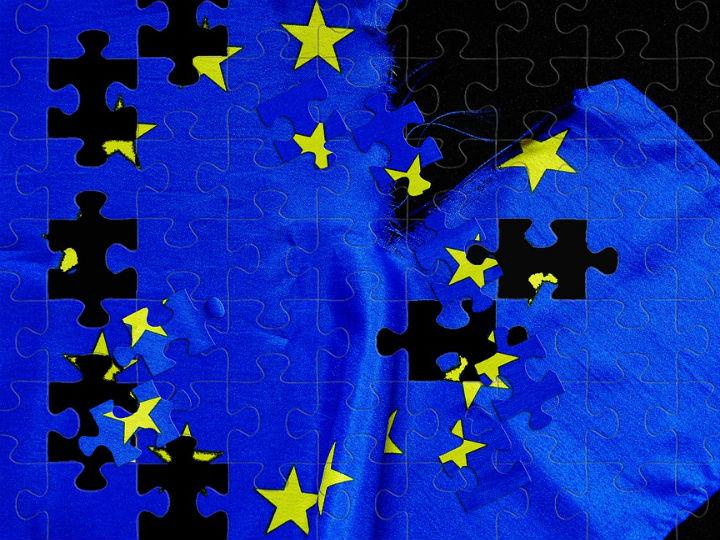
Short Story of Converting People into Digits
By: EBR | Tuesday, May 15, 2012
Many people complain about the lack of presence of the European Union in the life of ordinary citizens. Many complain that they are actually not aware of what this huge structure of supranational or intergovernmental organisations is doing...

EU moving towards a European Energy Community
By: EBR | Friday, February 17, 2012
The European energy community is Jacques Delors’ visionary response to challenges that, if not addressed, have the potential of putting the European countries and the EU at risk. And so far, the main energy challenges have not been adequately addressed.
Greece: Why Not Go Back to the Drachma?
By: EBR | Monday, February 13, 2012
In the international debate about Greece's future options, it is often argued that the only way out for Greece is to abandon the euro and return to its national currency.

Europe′s salvation lies within itself
By: EBR | Thursday, January 5, 2012
Red alert, passengers. We are not joking anymore. We are not talking about the possible “restructuring” of the sovereign debt of a single peripheral country.

New Greek Government Runs Out of Steam
By: EBR | Friday, December 30, 2011
Six weeks after forming a transitional government to overcome its crisis, Greece is still failing to deliver its promised reforms. The cabinet of Prime Minister Lucas Papademos is deeply divided and has lost the public's confidence.
The power of living in truth
By: EBR | Thursday, December 22, 2011
The world’s greatest shortage is not of oil, clean water, or food, but of moral leadership. With a commitment to truth – scientific, ethical, and personal – a society can overcome the many crises of poverty, disease, hunger, and instability that confront us.
AEJ finds press freedom crumbling across eastern Europe
By: EBR | Wednesday, November 16, 2011
Romania’s foreign minister, Teodor Baconschi, told journalists who gathered in Bucharest from all over Europe last weekend at the annual Congress of the Association of European Journalists that “there is a lot of corruption in politics and the press” in Romania.

Why we need a Europe of Culture
By: Athanase Papandropoulos | Monday, October 31, 2011
Since the moment the European Union (EU) was sketched out, in 1957, people have contently stressed the economic and political need for it. Goes without saying that these needs are important and it is very easy to understand why efforts in those two difficult directions are strained.

The Strengths of Europe
By: The Globalist | Monday, October 3, 2011
In the midst of the current eurozone crisis, many economic commentators claim Europe’s internal divisions are too deep to mend. But alarmism aside, are Europe’s internal divides really any bigger — and therefore harder to overcome — than India’s or China’s or the United States'?

Happy Birthday Italy, a multicultural youth event
By: EBR | Thursday, September 1, 2011
The Risorgimento (‘Resurgence’) showed the way to Italy’s unification with the proclamation of the Italian Kingdom on March 17, 1861. This movement has been led by young people, willing to create a strong and united country as the only condition to free the Italian people from the foreign invaders
EU leaders face crossroads in European integration
By: Stratfor - Strategic Forecasting | Tuesday, August 23, 2011
Why would Europe's top leaders choose to introduce measures that will require a new treaty, while the European project is already struggling so badly on its current terms?
The Eurozone enters adulthood
By: Europe′s World | Friday, June 17, 2011
The euro area's 13-year history is a success story, says Jean-Claude Juncker. It's a strong currency that is also more stable than any of the national ones it replaced. He sets out the advances in governance that are now needed.

Can Greek tragedy be rewritten?
By: BBC News | Thursday, June 16, 2011
The indignant crowds occupying the Syntagma central square in Athens are not the only people desperate for a new solution to their very own Greek tragedy of looming insolvency.
A Capital of Europe? Strasbourg versus Brussels
By: Niels Schreuder | Monday, April 18, 2011
“Capital of Europe: how the EU is shaping Brussels – and vice versa?” That was the question raised at a recent conference organized by weekly newspaper European Voice debating the place, infrastructure and architecture for the European scene in Brussels.
What future for Europe and the Euro?
By: EBR | Tuesday, March 22, 2011
The Euro zone is facing its deepest crisis to date. The credit crunch and economic downturn have exacerbated unsustainable public debt, and brought about uncertain prospects of growth and a huge rise in unemployment to 23 million in Europe as a whole.
From the Heart of Europe …
By: N. Peter Kramer | Tuesday, March 1, 2011
A recent survey conducted by multinational lobby firm Burson-Marsteller rated the European Commission’s overall performance as average or below! Individual commissioners were rated according to their ‘overall performance’ and ‘achievement of commitments’.

′Europe 2020′ towards Energy Efficiency
By: Niels Schreuder | Thursday, February 24, 2011
You remember the Lisbon Agenda 2000? Well today we have the Europe 2020 Strategy. Focusing on five ambitious objectives; employment, innovation, education, social inclusion and climate/energy, the strategy will be addressing seven flagship initiatives.

The Visegrad Group: Central Europe′s Bloc
By: Stratfor - Strategic Forecasting | Monday, February 7, 2011
The heads of government of Poland, the Czech Republic, Slovakia and Hungary will come together for the Visegrad Group summit Feb. 15. The German and Austrian chancellors and Ukrainian Prime Minister Nikolai Azarov will also attend.
DEPA welcomes the signing of the Joint Declaration on Southern Corridor
By: EBR | Monday, January 24, 2011
DEPA welcomes the signing of the Joint Declaration on Southern Gas Corridor, between the European Commission President, Jose Manuel Barroso and the President of Azerbaijan, Ilham Aliyev.
Europe: The New Plan
By: Stratfor - Strategic Forecasting | Wednesday, December 22, 2010
An EU heads-of-state summit Dec. 16 launched a process aimed to save the common European currency. If successful, this process would be the most significant step toward creating a singular European power since the creation of the European Union — that is, if it doesn’t destroy the euro first.
 By: N. Peter Kramer