Edition: International | Greek
MENU

Home » Europe

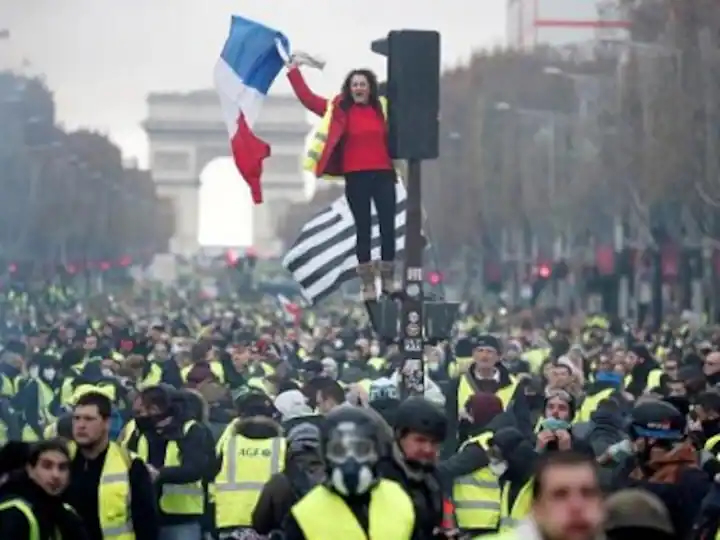
In this tough crisis time, youngsters are usually the first in line. There is no need to remind that on average 25% of them are jobless. Through the Indignados movement and other youth revolts, like the recent one in the United Kingdom, they want to express themselves and take their place in  society.

Happy Birthday Italy, a multicultural youth event

By: EBR | Thursday, September 1, 2011

The Risorgimento (‘Resurgence’) showed the way to Italy’s unification with the proclamation of the Italian Kingdom on March 17, 1861. This movement has been led by young people, willing to create a strong and united country as the only condition to free the Italian people from the foreign invaders
The European financial crisis is now in its twentieth month. As recently as a few days ago, many observers were expecting bailouts for Spain, defaults in Italy and downgrades in France. Why would Europe′s top leaders choose to introduce measures that will require a new treaty, while the European project is already struggling so badly on its current terms?
EU leaders face crossroads in European integration

By: Stratfor - Strategic Forecasting | Tuesday, August 23, 2011

Why would Europe's top leaders choose to introduce measures that will require a new treaty, while the European project is already struggling so badly on its current terms?

The “Greek tragedy” as it is now called is a perfect example of the shortcomings of economic and monetary union, as well as of the euro area’s ability to overcome unforeseeable events and use them to move towards closer integration.

The Eurozone enters adulthood

By: Europe′s World | Friday, June 17, 2011

The euro area's 13-year history is a success story, says Jean-Claude Juncker. It's a strong currency that is also more stable than any of the national ones it replaced. He sets out the advances in governance that are now needed.

Greece may not be able to devalue its euro currency to help exports. But it has cut imports. And it has already seen "internal devaluation" of between 20% and 40% in key costs such as wages and house rents

Can Greek tragedy be rewritten?

By: BBC News | Thursday, June 16, 2011

The indignant crowds occupying the Syntagma central square in Athens are not the only people desperate for a new solution to their very own Greek tragedy of looming insolvency.

But was Brussels ever meant to be the EU’s capital? The treaties or declarations of the EU have not declared any city as the "capital" of the EU. The Council of Europe was established in 1949 and chose Strasbourg as the symbolic meeting place. This post-war pan-European organisation was established to overcome rivalry and join forces for human rights, democracy and the rule of law on the whole European continent.

A Capital of Europe? Strasbourg versus Brussels

By: Niels Schreuder | Monday, April 18, 2011

“Capital of Europe: how the EU is shaping Brussels – and vice versa?” That was the question raised at a recent conference organized by weekly newspaper European Voice debating the place, infrastructure and architecture for the European scene in Brussels.
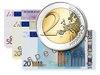
We must pool not only the benefits of a common currency, but also the risks. The creation of a European Stability Agency, which will be responsible for managing European debt, is a first step in the right direction. Eurobonds would have the benefit of protecting the Euro zone against financial market speculation and would cut the costs of financing debt for every member state.

What future for Europe and the Euro?

By: EBR | Tuesday, March 22, 2011

The Euro zone is facing its deepest crisis to date. The credit crunch and economic downturn have exacerbated unsustainable public debt, and brought about uncertain prospects of growth and a huge rise in unemployment to 23 million in Europe as a whole.

Despite painful austerity measures in many EU member states, often for their national civil service, all EU staff have been awarded a 3.7 % pay rise. Responding to criticism of this and the general pay and perks enjoyed by EU staff, Barroso said ‘the European civil service is often attacked for its apparent privileges when this is not the case and I am always defending this’.

From the Heart of Europe …

By: N. Peter Kramer | Tuesday, March 1, 2011

A recent survey conducted by multinational lobby firm Burson-Marsteller rated the European Commission’s overall performance as average or below! Individual commissioners were rated according to their ‘overall performance’ and ‘achievement of commitments’.

New financing instruments to boost innovation and entrepreneurship will be developed to enable business to play their role with the help of both the European Investment Bank and European Investment Fund.

′Europe 2020′ towards Energy Efficiency

By: Niels Schreuder | Thursday, February 24, 2011

You remember the Lisbon Agenda 2000? Well today we have the Europe 2020 Strategy. Focusing on five ambitious objectives; employment, innovation, education, social inclusion and climate/energy, the strategy will be addressing seven flagship initiatives.
(L-R) Slovak President Ivan Gasparovic, Hungarian President Pal Schmitt, Polish President Bronislaw Komorowski and Czech President Vaclav Klaus in November 2010

The Visegrad Group: Central Europe′s Bloc

By: Stratfor - Strategic Forecasting | Monday, February 7, 2011

The heads of government of Poland, the Czech Republic, Slovakia and Hungary will come together for the Visegrad Group summit Feb. 15. The German and Austrian chancellors and Ukrainian Prime Minister Nikolai Azarov will also attend.
DEPA is committed in fully developing the ITGI pipeline (Turkey-Greece-Italy Interconnection) and the IGB (Greece-Bulgaria) Interconnector. ITGI is sponsored by Italy’s Edison and Greece’s DEPA, while IGB is sponsored by Edison, DEPA and the Bulgaria’s BEH.

DEPA welcomes the signing of the Joint Declaration on Southern Corridor

By: EBR | Monday, January 24, 2011

DEPA welcomes the signing of the Joint Declaration on Southern Gas Corridor, between the European Commission President, Jose Manuel Barroso and the President of Azerbaijan, Ilham Aliyev.

The existing bailout mechanism probably can handle the first four states (just barely, and assuming it works as advertised), but beyond that, the rest of the eurozone will have to come up with a multitrillion-euro fund in an environment in which private investors are likely to balk. Undoubtedly, the euro needs a new mechanism to survive.

Europe: The New Plan

By: Stratfor - Strategic Forecasting | Wednesday, December 22, 2010

An EU heads-of-state summit Dec. 16 launched a process aimed to save the common European currency. If successful, this process would be the most significant step toward creating a singular European power since the creation of the European Union — that is, if it doesn’t destroy the euro first.

MEPs call for the creation of a European stability agency to ensure a unified and highly liquid European bond market and ask the Commission to look into and come forward with proposals on what other instruments could be devised to ensure appropriate access to finance for Member States.

EP supports permanent crisis mechanism to shore up the euro

By: EC Press Room | Thursday, December 16, 2010

The permanent "bailout" mechanism for Member States in financial difficulty must clearly detail how the private sector would be brought in to help, how non-Eurozone countries would be involved, and how the EU budget would be affected, says a resolution adopted by Parliament on Thursday.

Sure, the institutions all have their own competences and presidents but for the strategic political directions and priorities there are both the European Council conclusions decided by the leaders of the Member States and the European Commission strategy and programme decided by the Commissioners and its president.

Who’s the real boss in the EU?

By: Niels Schreuder | Wednesday, December 15, 2010

Now a year ago, Herman Van Rompuy was designated to be the European Union’s first permanent president. For decades the European Commission president had been Europe’s chief executive and the boss in town.

The ITG represents a new route of supply for the European energy system, able to enhance security and increase the competition on the EU’s gas market. The EU acknowledged the strategic relevance of the ITGI as a project of European interest and included it among the Southern Gas Corridor Projects of the announced European Recovery Plan with a proposal of 100 million euro of financing.

Gas Supply diversification corridor for Europe - ITGI a step ahead

By: Athanase Papandropoulos | Wednesday, December 8, 2010

The Memorandum of Understanding (MoU) accelerates the completion of the ITGI Project (Interconnection Turkey-Greece-Italy) as a first phase of the Southern Gas Corridor, a strategic infrastructure for Europe’s energy security.

By the way: the salaries of EU civil servants will increase by 0.4% next year, European Commission officials told journalists, retracting a previous announcement that EU employees were set for pay cuts. The Commission added that after the 2.4% increase in the cost of living in Brussels the new figures nevertheless represent a 2% reduction in EU officials′ purchasing power. Can you believe it?

Editor′s Column: Real life and EU bureaucracy - a tale of two worlds

By: N. Peter Kramer | Monday, November 15, 2010

It would be laughable if it wasn’t so serious. Six bewildering examples of wasteful EU spending, taken from a long list by Open Europe, an independent thinktank

The EU needs a new strategic approach that is not about preventing war between Europe’s powers but helping them live together in a world where they are more at the periphery and where a collapsing neighbor can be as scary as a powerful one.

We need new rules for a Multipolar Europe

By: The Financial Times | Wednesday, October 27, 2010

The security summit between Nicolas Sarkozy, Angela Merkel and Dmitry Medvedev was always likely to be a non-event. France wanted something spectacular, Germany something reasonable, Russia something it could trade. So, the chances of a meeting of minds were slim.

Since the Council of Ministers is the official decision-making body of the European Union, it should receive reports and analysis from the European Union Intelligence Service. However, the problem here is that a Minister of foreign affairs might have difficulties and conflicts in dealing with the foreign affairs of his own country and that of the European Union at the same time.

EU Intelligence Cooperation: A Greek Approach

By: Dr. John M. Nomikos | Wednesday, October 20, 2010

During the 1990s, the European Union has kept a relative low profile in the world and European arena. As with the United States in the post-World War II era, the European Union has had little to no experience in dealing with these new problems.

It is the quality of the political institutions and the stability (or durability) of such institutions that strongly increases the probability of sustained financial deepening.

Can I trust the government? New evidence on democracies and financial development

By: EBR | Monday, October 11, 2010

What do countries need for sustainable financial development? This column argues that protection of property rights is necessary but not sufficient. Using a sample of 160 countries from 1960 to 2005, it finds that checks and balances on power and political stability are the vital ingredients.

The Commission is evidently not able to spend the money it has, but the mindset in the Commission is as usual: ‘more and more and more’.

Editor′s Column: Jose Mourinho for Commission President!

By: N. Peter Kramer | Monday, September 20, 2010

As President of the European Commission, Barroso has the chance to be the most famous Portuguese of the European Union. But unfortunately for him, there is always that other Portuguese, the “Special One” as he calls himself, Jose Mourinho.

The EU also needs policies that will promote standardisation, normalisation and innovation, and member governments must learn to avoid micro-managing and instead work as part of a horizontal EU-wide approach.

How to stop anti-crisis policies from becoming protectionist

By: Europe′s World | Thursday, July 29, 2010

“Industrial policy” has long been a euphemism in most parts of Europe for economic nationalism, and the problem is getting worse. Elie Cohen looks at the policy aftermath of the financial crisis and sets out a framework for EU-level industrial policymaking.

Pages: Previous Next

EU Actually

Ukraine may buy for 6 billion euros Chinese drones with EU money

N. Peter KramerBy: N. Peter Kramer

In his weekly column, N. Peter Kramer writes about the Ukraine buying for 6 billion euros drones in China with EU money. Is it a threat for Taiwan?

Europe

Diplomacy intensifies over Cyprus

Diplomacy intensifies over Cyprus

United Nations secretary-general envoy Maria Angela Holguin will be in Brussels on Wednesday for meetings seen as important to European Union preparations for a possible revival of Cyprus reunification talks ahead of an expected visit by Secretary-General Antonio Guterres to Cyprus next week.

Business

How Much Pressure Can European CEOs Take?

How Much Pressure Can European CEOs Take?

There was a time when the job of the CEO was difficult but relatively clear: grow the business, beat the competition, manage costs, satisfy shareholders, inspire employees and avoid major reputational mistakes. That world has disappeared.

MARKET INDICES

Powered by Investing.com
All contents © Copyright EMG Strategic Consulting Ltd. 1997-2026. All Rights Reserved   |   Home Page  |   Disclaimer  |   Website by Theratron