Edition: International | Greek
MENU

Home » Analyses

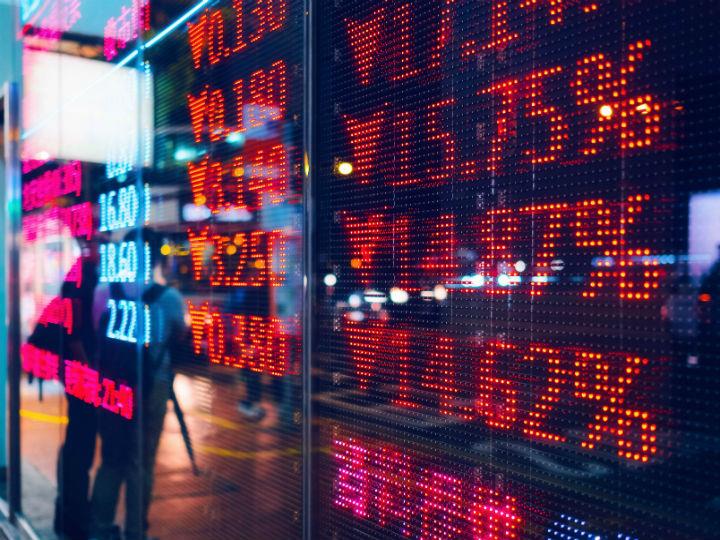
“The future of many small businesses is uncertain right now, with nearly a third in the US telling us that they’ve stopped operating completely. We have over 160 million businesses on our platforms across the globe and we are completely focused on getting those businesses the direct support they need during this crisis.”, Sheryl Sandberg, Chief Operating Officer, Facebook.

COVID-19 has upended the media industry: how it can come back stronger

By: EBR | Thursday, June 4, 2020

The fallout from the COVID-19 crisis is reaching every aspect of people’s lives and livelihoods. Global poverty is expected to increase for the first time since the 1998 Asian Financial Crisis, the US jobless rate is above 10%, and many nations are facing stark economic realities in light of the pandemic

“There are a lot of aquaculturists who don’t realize right now the power of real-time monitoring”.

’Water-forecasting’ and fish farms fed on waste: how innovation is driving the blue economy

By: EBR | Wednesday, June 3, 2020

Using waste food to farm insects as fish food; and high-tech real-time water quality monitoring: innovations that could help change global aquaculture, were showcased at the World Economic Forum’s Virtual Ocean Dialogues 2020

“Government funds need to be invested in people for long-term jobs. We have an opportunity to shift coal miners who have been working in those types of jobs into other ones over time. It can’t be an either/or. We need to be thinking about these things together.”

How the world can ‘reset’ itself after COVID-19 – according to these experts

By: EBR | Wednesday, June 3, 2020

There won’t be many among the 7.7 billion people on Earth who haven’t been affected in some way by COVID-19

"And in an interesting twist, not only is climate velocity moving at different speeds at different depths in the ocean, but also in different directions which poses huge challenges to the ways we design protected areas."

Ocean likely to heat up at 7 times its current rate, new study finds

By: EBR | Tuesday, June 2, 2020

The depths of the oceans are heating up more slowly than the surface and the air, but that will undergo a dramatic shift in the second half of the century, according to a new study

From a technology perspective, the crisis has forced companies to make massive changes - from meeting the needs served by suddenly shuttered workspaces, to scaling the tools required to connect entire workforces now isolated at home.

We must rethink and repurpose cybersecurity for the COVID-19 era

By: EBR | Tuesday, June 2, 2020

For businesses all over the world, adjusting to the new realities created by COVID-19 has been an incredible challenge

Ocean Action Hub reports on two ventures that are trying to turn this waste into something useful. California-based startup, Bureo – which has found a way to turn this waste into desirable products including skateboards and sunglasses – is literally closing the net on the problem.

5 inventions that could transform the health of our ocean

By: EBR | Friday, May 29, 2020

A garbage truckful – every minute. That’s how much plastic waste is being dumped in the ocean. And that’s just the plastics – chemicals and sewage are also major concerns

Distributed energy systems (DESs) – in which power is generated and stored at or near where it will be consumed – are enhancing efficiency and transparency and making energy infrastructure more robust.

COVID-19 will accelerate the revolution in energy systems

By: EBR | Friday, May 29, 2020

Around the world, healthcare capacity is being expanded rapidly to care for infected patients. Entire emergency hospitals – like the Westchester County Center Alternate Care Facility in White Plains, New York – are being built within days and weeks

The issue of under-reporting death from heat parallels cases of lightning strikes, in which the direct cause (eg, a falling tree branch or the collapse of a building on fire) is reported without any reference to the indirect cause (ie, the initial lightning strike that triggered events culminating in death).

We need to get better at recording heat-related deaths – it could be crucial for understanding climate change

By: EBR | Thursday, May 28, 2020

National mortality records in Australia suggest substantial under-reporting of heat-related mortality. Less than 0·1% of 1·7 million deaths between 2006 and 2017 were attributed directly or indirectly to excessive natural heat

This finding backs up an earlier report from the International Energy Agency (IEA) which found that CO? emissions from fossil fuel combustion – globally, the main source of greenhouse gas emissions – in the first three months of 2020 were 5% lower compared to the same period last year.

Why a 17% emissions drop does not mean we are addressing climate change

By: EBR | Thursday, May 28, 2020

The global COVID-19 quarantine has meant less air pollution in cities and clearer skies. Animals are strolling through public spaces, and sound pollution has diminished, allowing us to hear the birds sing

The tyranny of automation is less scary than the automation of tyranny.

Why the ‘Fourth Industrial Revolution’ Looks Much Like the First

By: EBR | Thursday, May 28, 2020

Seen from one angle, “The Fourth Industrial Revolution” is a marvel of enlightened scientific objectivity. It promises to replace obsolete habits and mind-sets with frictionless, data-driven solutions

The pandemic presents tremendous challenges in every country, and businesses must contribute to the recovery effort. This presents an opportunity for firms to show that they are not only committed to their shareholders, but also to their employees, clients and to the broader society.

Rising to the Challenges of COVID-19 Recovery

By: EBR | Wednesday, May 27, 2020

Which companies and industries seem to be getting it right, and which are floundering?

In terms of social costs, the education of 1.6 billion learners has been disrupted; that is 9 out of every 10 students in the world. Unsurprisingly, urban areas - which account for more than 90% of COVID-19 cases - are bearing the brunt of the pandemic.

The impacts of COVID-19 around the world, as told by statistics

By: EBR | Wednesday, May 27, 2020

We are living through unprecedented times. The impact of the novel coronavirus and the disease it causes, COVID-19, has reverberated through every corner of the globe

The long-term societal impacts, such as an exacerbation of inequality and changes in consumer behaviours, the nature of work and the role of technology - both at work and at home - will change our way of life forever, for us as individuals, as a workforce, and as a society.

What risks does COVID-19 pose to society in the long-term?

By: EBR | Wednesday, May 27, 2020

We are in the midst of an historic event that will change many aspects of our world. There will be major impacts on the global economy, geopolitics and our societies

«Europe is raising its game, but its increased ambitions will be useless unless it exerts pressure elsewhere for more responsible behaviour – notably on China. Chinese companies have financed and built a growing number of coal-fired power stations in Africa and around the world, and are planning hundreds more.»

Covid-19 aside, it’s coal-fired power that threatens us most

By: EBR | Tuesday, May 26, 2020

All eyes are on the corona crisis, and whether Xi Jinping’s China and Donald Trump’s America can join forces in a multilateral strategy to find scientific solutions to it and cooperative economic policies to combat a global depression

“I don’t want to draw a doomsday picture but I think we have to be realistic. That it’s not the time now to completely relax.”

‘Not if but when’: European health boss warns of virus second wave

By: EBR | Friday, May 22, 2020

The head of a European health advisory body on infections on Thursday (21 May) warned of a second wave of coronavirus cases, as countries across the continent ease tough lockdown measures

All policies, programmes and investments, including stimulus and recovery packages, must be designed with a gender lens, so they don’t overlook or have unintended consequences for girls, women and gender equality. This approach should include proven best practices such as gender-responsive analysis, budgeting and auditing processes, and a gender marker for tracking.

10 lessons from the COVID-19 frontline for a more gender-equal world

By: EBR | Friday, May 22, 2020

Evidence shows that disease outbreak affects women and men differently, that pandemics exacerbate inequalities for girls and women, who are also often the hardest hit, and that women play an outsize role responding to crises

«Over the years, we’ve seen utilities being targeted either for criminal purposes or other nefarious reasons with ever-increasing maturity and an increasing ability to exploit OT systems. The increase in cyber-threats to utilities has grown as attackers and adversaries have become more familiar with the technology that we use.»

Evolution of cybersecurity in the utility industry

By: EBR | Friday, May 22, 2020

The utility industry is undergoing a massive transformation. Everything from the digitalization of critical infrastructure to the relationship between utilities and their customers is in transition

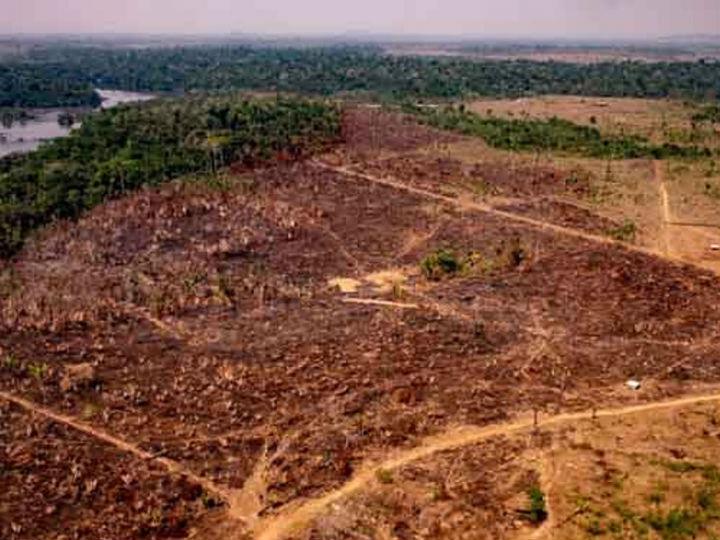
Greenhouse gas emissions are estimated using a variety of methods, often based on “activity data”. This might be the number of miles being driven, the amount of electricity generated or even – in the case of nitrous oxide, which is used as a propellant – via cream consumption.

Daily global CO2 emissions ‘cut to 2006 levels’ during height of coronavirus crisis

By: EBR | Thursday, May 21, 2020

The amount of CO2 being released by human activity each day fell by as much as 17% during the height of the coronavirus crisis in early April, a new study shows

“Whilst there are uncertainties around the optimal technology mix for heating in the future, it is clear that electrification will have to play a significant role”.

Heating electrification amplifies need for efficient buildings, experts say

By: EBR | Thursday, May 21, 2020

Electrification is key to decarbonising the residential heating sector, but it needs to be done smartly, by using heat pumps flexibly in houses that are efficient enough to act as “thermal batteries,” experts argue

The pandemic may disproportionately affect women around the world – but it need not imperil the hard-earned progress toward gender balance.

Disruption as a Force for Good? Gender Balance and COVID-19

By: EBR | Wednesday, May 20, 2020

The COVID-19 pandemic has disrupted lives and livelihoods for all of us. Current and aspiring leaders – when they have a moment to breathe – are reflecting on how to sustain those they lead and how to leverage this crisis to society’s benefit. How do we do this with respect to gender balance?

Pages: Previous Next

EU Actually

Europe is terrified by a single sentence from Trump

N. Peter KramerBy: N. Peter Kramer

The current NATO conflict surrounding the Iran war is fundamentally different from previous ones.

Europe

Schinas in the hot seat: Can he restore trust in Greek agriculture?

Schinas in the hot seat: Can he restore trust in Greek agriculture?

Former Commission vice-president is tasked with managing a sector ravaged by scandal

Business

Emerging market champions pioneering new business models

Emerging market champions pioneering new business models

The growth of the developing world, which often overlaps with the Global South, is a story that can be read not just in GDP statistics, productivity growth or infrastructure access, but also in the development of local champions.

MARKET INDICES

Powered by Investing.com
All contents © Copyright EMG Strategic Consulting Ltd. 1997-2026. All Rights Reserved   |   Home Page  |   Disclaimer  |   Website by Theratron