Edition: International | Greek
MENU

Home » World

At COP23, negotiations are likely to focus on how countries go about implementing the Paris Agreement in practice, as well as addressing the difficult subject of US President Donald Trump’s decision to pull his country out of the agreement. There is also likely to be a focus on helping those small island nations most at risk from the effects of climate change, owing to the fact that COP23 is being run under the presidency of Fiji.

What is the COP23 climate meeting?

By: EBR | Thursday, November 9, 2017

Over the next two weeks an estimated 25,000 people will descend on the small German city of Bonn. Politicians, corporate leaders, environmental campaigners and journalists are gathering in hotels and conference rooms by the Rhine to discuss how to protect the world against climate change

Simply put, where the United States acts, at best, in a very distracted manner, China is focused. While U.S. credibility in Asia is steadily diminishing, there continues to be an irrational belief in Washington that increased U.S. defense spending will alter or reverse this trend.

Reimagining China and Asia

By: EBR | Wednesday, November 8, 2017

How are Asian countries responding to the steady erosion of U.S. power in the region? And how is China playing its hand?

European officials have invested a lot of effort in the last year trying to get Donald Trump right. Now, they have another task ‒ getting Xi Jinping right. He is claiming with clarity and without precedence that “the time has come for China to take centre stage in the world”.

The dawn of the “Xi Jinping Era”

By: EBR | Tuesday, November 7, 2017

Get used to this name: Xi Jinping. He will be the most powerful person in one of the most powerful countries in the world for a long time

With the changing nature of work and working from a distance or increased mobility options making geography increasingly irrelevant, why live in an expensive city with little space for becoming self-sufficient? The Fourth Industrial Revolution provides solutions for proximity in terms of infrastructure, work and education – exactly the things to which urbanization seemed to be the answer – and allows for a decentralized or distributed world. A world of deurbanization.

Why I won’t buy a house in any major city – and neither should you

By: EBR | Friday, November 3, 2017

I was visiting business banks – the likes of Goldman Sachs, Morgan Stanley and Barclays – in The City of London one particular week in 2008

To complete the upbeat picture, the EU needs to step up its engagement with China. Much is being made of President Xi Jinping’s increased power, authority and status and his ambition to turn China into a leading global power by 2050. Xi’s three-hour speech last week to the 19th Party Congress outlined his vision of a country that would stand at the “centre of the world stage”, with a strong Communist Party and a military ready to take on any challenge. China, he said, had entered a “new era”.

As Trump embarks on Asia trip, it’s Europe that is really pivoting to Asia

By: EBR | Wednesday, October 25, 2017

Remember the excitement triggered by America’s much-publicised “pivot to Asia” almost six years ago?

For more than a decade, the EU and India partnership had been slow-moving and fragmented, struggling to maintain momentum. The relationship remained far too focused on set-piece summits rather than fostering dynamic everyday linkages. Meetings, including summits, would be ritually cancelled and the paucity of high-level bilateral visits revealed a lack of political will. Unfairly large emphasis was laid on foreign policy cooperation, but on many issues divisions far exceeded commonalities, leading to disappointment and an overall delusion in the potential of the partnership.

EU-India relations come full-circle

By: EBR | Wednesday, October 18, 2017

For more than a decade, the EU and India partnership had been slow-moving and fragmented, struggling to maintain momentum. The last EU-India summit however shows EU-India relations have come full circle

Consider the most extraordinary, and probably unrepeatable, feat of Chinese convergence. In 1977, the US–China gap in GDP per capita (and probably very similarly in wages) was almost 50 to 1, adjusted for the difference in price levels between the two counties. (This is based on World Bank data; according to Maddison’s data, the gap was less than half that size, but still a huge 21 to 1). It is now 4 to 1. And this is the result of an average growth rate of Chinese GDP per capita of 8.5 percent over four decades.

Ending inequality between countries: not by trade alone

By: EBR | Thursday, October 12, 2017

Is a world of approximately equal country incomes really possible to envisage any time soon?

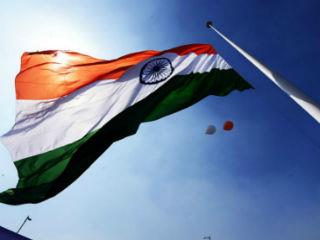
Each member of BRICS also has their own reason to sustain this plurilateral movement. Russia sees BRICS as a geopolitical counterweight to the eastward expansion of the Atlantic system. For South Africa, BRICS is a means to legitimize its role as a gateway to and powerhouse of the African continent. BRICS allows Brazil to collaborate in the shaping of the Asian century, despite its geographical location. China participates in the forum because it recognizes BRICS as an important vehicle for fashioning governance systems in which its political influence is commensurate to its growing economic heft. Finally, for India, BRICS is a useful bridge between its rising status as a leading power and its erstwhile identity as the leader of the developing world.

The next ten years of BRICS - will the relationship last?

By: EBR | Friday, October 6, 2017

Over the years, many observers have expressed skepticism about the BRICS (Brazil, Russia, India, China and South Africa) initiative - and skeptics within the BRICS member states perhaps outnumber those outside

India’s digital state, unfortunately, does not engender the trust needed for cashlessness to take hold in a meaningful way. Despite a billion mobile phone subscriptions, just about 30 per cent of Indian subscribers use smartphones. A little over a third of the population has internet access. India lacks the infrastructure to reliably expand access. Connections are patchy and there is great disparity in connectivity: Seventy per cent of those with mobile internet access are in cities; only 17 per cent of Indian women use the internet, according to the Pew Research Center. With women responsible for much of household purchases, this does not provide a strong foundation for the spread of digital payments.

Going cashless: is India ready for digital?

By: EBR | Monday, October 2, 2017

“Time has come for everyone, particularly my young friends, to embrace e-banking, mobile banking and more such technology”. So said Narendra Modi, doubling up as the nation’s digital evangelist-in-chief. Appropriately, he “said” this via a tweet

The morning of the Forum saw three panel sessions discussing the necessary leadership from the private sector and regional and city governments, as well as ways, to accelerate investment in low carbon innovation. The California State Controller Betty Yee took part in the opening plenary. As Board Member of CALPERS AND CALSTRS, she emphasized both of the pension funds’ interest in what the businesses they are investing in are doing to address climate risks, and more and more large US firms are taking climate change seriously.

Public and private finance leaders discussed low carbon investment in New York

By: EBR | Friday, September 22, 2017

On Tuesday 19 September, Climate Action, in official partnership with UNEP Finance Initiative, held the second Sustainable Investment Forum 2017 at the Crowne Plaza Hotel Times Square in New York during Climate Week NYC

The Wall Street Journal reported that during last  weekend’s meeting in Montreal, Trump administration officials had said that US will not pull out of the climate agreement, and that they were willing to re-engage with the deal.

Has President Trump changed his mind on the Paris Agreement?

By: EBR | Tuesday, September 19, 2017

During the past week, more and more media report that the US stance on the landmark climate agreement is softening, leaving wide room for interpretation that maybe the US is ready to re-negotiate its participation to the Agreement

 They were criticised for a lack of focus on social justice and inequality. The UN’s own assessment of progress towards the MDGs found that the needs of the most vulnerable - the poorest members of society, and those disadvantaged by gender, age, disability or ethnicity - were often overlooked. Another critique offered was that the goals had been drawn up without sufficient consultation of the very people they sought to help.

The UN has a 17-step plan to save the world

By: EBR | Friday, September 8, 2017

If you have too many things you need to do, it’s best to write them down. Saving the world, it seems, follows the same principle

A carbon price is a cost applied to carbon pollution to encourage polluters to reduce the amount of greenhouse gas they emit into the atmosphere. These can either be a carbon tax- a tax levied on the carbon content of fuels, or cap and trade- corporations or governments can trade emissions allowances under an overall cap on those emissions.

The role of carbon pricing, taxing & trading in emissions reduction

By: EBR | Friday, September 1, 2017

The latest infographic from Climate Action explores the role of Carbon Pricing, a methodology for reducing the global-warming emissions, through a market overview, a challenges and opportunities analysis as well as practical examples of leadership demonstrated by governments and the private sector

President Trump inherited an economy that would barely budge – but under his watch, American businesses small and large have already created more than 800,000 new jobs since January. Company after company is responding to the president’s agenda with optimism – investing billions of dollars in American jobs, American workers and America’s future. But Trump did much more. What about his foreign policy. In a speech announcing a new strategy for Afghanistan the president said: “Our troops will fight to win.” The 16-year war against the Taliban is at a stalemate, as the country’s security situation spirals out of control.

Trump and Twitter - what’s next?

By: EBR | Tuesday, August 29, 2017

A day without Donald Trump in the media or social media isn’t possible. Day in day out he’s busy running both a personal and an official Twitter account as leader of the United States

While Alexandria had the largest population, and the Chinese cities of Yinxu and Chengzhou also featured, this early period was dominated by the large populations of the ancient cities located in modern-day Iraq. Time and again from 1950 BC until 350 BC, the biblical cities of Babylon, Nimrud, Nineveh, Ur and Uruk charted as the largest cities on the planet. This included an uninterrupted 450-year period of domination starting with Nimrud’s population of 75,000 in 800 BC and peaking in Babylon’s population of 150,000 for 150 years between 500 BC and 350 BC.

Watch the world’s greatest cities rise and fall over the past 4,000 years

By: EBR | Friday, August 25, 2017

The rise and fall of civilizations over the past 4,000 years is reflected by the rise and fall of the number of people living in their great cities

CPI announces new design for investment in renewable energy

By: EBR | Wednesday, August 9, 2017

Climate Policy Initiative (CPI) Energy Finance just announced their new investment design aiming at facilitating cheaper long-term capital to finance wind and solar energy projects

The destruction of an economy: What went wrong in Venezuela

By: EBR | Tuesday, August 8, 2017

Venezuela was once South America’s richest country. Here's what went wrong

To live long and happily, the Japanese ask four questions

By: EBR | Tuesday, August 8, 2017

What’s your reason for getting up in the morning? Just trying to answer such a big question might make you want to crawl back into bed. If it does, the Japanese concept of ikigai could help

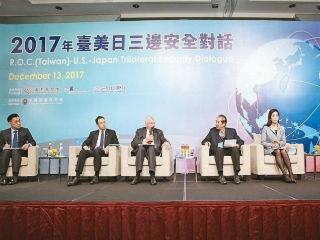
When ASEAN was formed 50 years ago, there were two driving forces. One was to make economic gains through better trade among member states, and the second was to form an alliance against the spread of communism in the region, led by the then Soviet Union and Mao’s China. Today the Soviet Union has ceased to exist, and communism is dead. China is not interested in exporting ideology, but in expanding trade in the region. The inevitable question is, “Will economic gains create sticky-enough glue to hold countries in the bloc together as they tread unchartered territories, and respond to a surging China and a waning and unsure US?”

The geopolitical landscape of Asia Pacific is changing dramatically. Here’s how

By: EBR | Friday, August 4, 2017

Two important events are having a significant influence on existing security arrangements in Asia Pacific

The main emerging challenge here is that as China becomes so deeply involved financially in other countries it risks being entangled in local politics. It will be increasingly unable to remain neutral, especially in countries with relatively weak states and strong sectarian differences. This could produce problems. Controversy has already emerged in countries ranging from Zambia to Pakistan and Sri Lanka over China’s investments, and we can expect this to intensify as the country builds its own global financial architecture.

What does the future of Europe-Asia cooperation look like?

By: EBR | Friday, August 4, 2017

For the first time in centuries, Eurasia is again becoming the most dynamic region in the world

Pages: Previous Next

EU Actually

President Ursula von der Leyen has seen better days

N. Peter KramerBy: N. Peter Kramer

EU leaders, member states, MEPs, EP political groups have had it with Commission President Ursula von der Leyen.

Europe

The EU Needs a Third Way in Iran

The EU Needs a Third Way in Iran

European reactions to the war in Iran have lost sight of wider political dynamics. The EU must position itself for the next phase of the crisis without giving up on its principles.

Business

The EU’s zig-zag road towards stronger financial markets

The EU’s zig-zag road towards stronger financial markets

Giles Merritt delves into the confusing welter of efforts to streamline Europe’s national financial players into a more dynamic single capital market

MARKET INDICES

Powered by Investing.com
All contents © Copyright EMG Strategic Consulting Ltd. 1997-2026. All Rights Reserved   |   Home Page  |   Disclaimer  |   Website by Theratron