Edition: International | Greek
MENU

Home » Analyses

In the annual study “Project SUN”, where it is estimated the scale and development of the illicit cigarette market in the EU, Norway and Switzerland, it is shown that overall, counterfeit and contraband (C&C) posing significant threats, although declined by 8.8%, to 48.3 billion cigarettes in 2016. Nevertheless, it is still accounted for over 9% of total consumption.

Tobacco illicit trade in Europe, Israel and Middle East: challenges and threats

By: EBR | Tuesday, February 27, 2018

In 2016, one in every 12 cigarettes lit up in the world was illicit valued collectively at around 40 billion dollars, with an equivalent tax loss to global governments
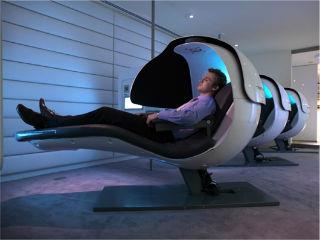
People whose bedtimes varied by two hours over the week, slept for half an hour less per night, on average, than those whose bedtimes changed by only 30 minutes. This is what Fitbit called “social jet lag”.

Fitbit analyzed data on 6 billion nights of sleep – with fascinating results

By: EBR | Friday, February 23, 2018

Getting a good night’s sleep is vital for health. But until recently, the only way you could actually monitor the quality of your sleep was to visit a sleep clinic

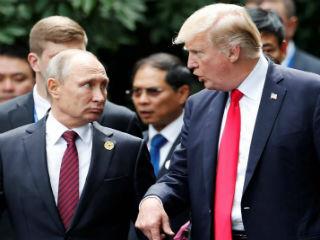
US President Donald Trump’s assault on non-discrimination and equal justice at home and his “bromance” with the world’s tough guys goes hand in hand with worldwide cutbacks in US support for human rights, the rule of law, and good governance.

They talk of war but it’s their own citizens these ’strong’ men fear most

By: EBR | Tuesday, February 20, 2018

They talked of war and conflict but most of the “strongmen” lashing out at each other at the recent security conference in Munich are more fearful of their own citizens than they are of each other
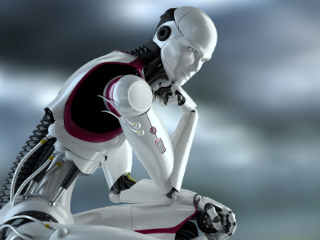
What is needed is a new era of agile governance – policymaking that is adaptive, human-centered, inclusive and sustainable, which acknowledges that policy development is no longer limited to governments but rather is an increasingly multi-stakeholder effort.

How can policy keep pace with the Fourth Industrial Revolution?

By: EBR | Friday, February 16, 2018

In today’s era of transformative scientific and technological advances, businesses are not only creating new products and services. They are reshaping industries, blurring geographical boundaries and challenging existing regulatory frameworks

For work-life balance, the Dutch scored 9.3 out of a possible 10, whereas the Danes, now ranked second, scored nine. Of the 35 OECD countries measured in the survey, Turkey’s work-life balance was the worst, rated as zero, while Mexico only scored slightly better with 0.8.

The Dutch have the best work-life balance. Here’s why

By: EBR | Friday, February 16, 2018

The Netherlands has overtaken Denmark as the country with the best work-life balance. That is according to the latest OECD Better Life Index, which ranks countries on how successfully households mix work, family commitments and personal life, among other factors

John McCarthy first coined the term artificial intelligence in 1956 when he invited a group of researchers from a variety of disciplines including language simulation, neuron nets, complexity theory and more to a summer workshop called the Dartmouth Summer Research Project on Artificial Intelligence to discuss what would ultimately become the field of AI.

The key definitions of Artificial Intelligence (AI) that explain its importance

By: EBR | Thursday, February 15, 2018

Discussions of artificial intelligence (AI) have created a certain amount of unease by those who fear it will quickly evolve from being a benefit to human society to taking over
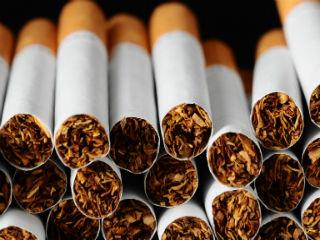
Why is it taking so long? The 40th ratification is expected to come around June 2018. Why does DG SANTE not wait until then? And why is it not adhering to the more restrictive provisions of the Protocol, given that according to an analysis by Professor Christian Mestre, former Dean of the Law faculty at Strasbourg University, the EU is under a pre-convention obligation to respect an international agreement even pending the latter’s entry into force.

To veto or not to veto the delegated act on tobacco traceability

By: EBR | Thursday, February 15, 2018

In 2012, the WHO adopted a Protocol to Eliminate Illicit Trade in Tobacco Products which totally excludes tobacco manufacturers from participating in tracking and tracing operations
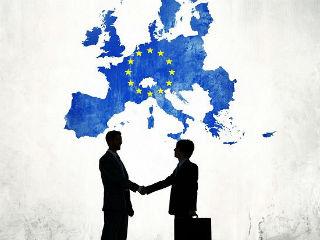
Europe’s ability to stand up to the geopolitical transformations will depend on whether it can practice what it preaches. The harsh, populist messages from Poland and Hungary, the presence of Far Right politicians in the Austrian government with their loud anti-immigrant rants and Muslim-bashing, the treatment of refugees and migrants in many member states, erode Europe’s global standing and moral authority.

Some sneer, but Europe’s soft power really is its strength

By: EBR | Tuesday, February 6, 2018

As the world lurches on, US President Donald Trump and many others talk tough: everyone has zero-sum games on their mind, while the European Union is the odd man out

This year in Davos, at the World Economic Forum’s 48th Annual Meeting, we gathered some of the world’s youth and social entrepreneurs who are committed to improving the state of the world. The Forum’s network of Global Shapers, Social Entrepreneurs and Young Global Leaders operate as a force for good to scale solutions to global and local challenges.

8 ways Davos inspired social change this year

By: EBR | Monday, February 5, 2018

The World Economic Forum Annual Meeting 2018 brought together over 3,000 leaders from business, government, international organizations, civil society, academia, media and the arts

According to a draft bill adopted by the lower house of Parliament earlier this month, abuse of office would no longer be considered a criminal offence if the sums involved were less than 200,000 Euros. In one of the European Union’s poorest and most corrupt countries, where the average monthly salary is below 500 Euros (net), this bill was the straw that broke the camel’s back.

Corruption – is there a cure?

By: EBR | Monday, February 5, 2018

Curbing corruption is not a quick-fix and there is no single universal cure for it. However, there is more hope than ever that the endemic spread of corruption can be contained and ultimately reduced

There are high-profile concerns about the rule of law across Europe. But there is also gentle erosion. We must keep a systematic focus on the rule of law, and take concerted action to defend it, even in Europe, if we care about the environment and participatory democracy.

Even beyond the headlines, the rule of law is being eroded in Europe

By: EBR | Monday, February 5, 2018

It is easy to be complacent about the rule of law in Europe. European democracies are well-founded and long-established, and the European Union has added an overarching legal regime to a growing family of member states

Cultural diplomacy consists of one of the communications and operational tools of the states when exercising foreign policy and interacting with other states with the final aim being to produce desired outcomes.  As an organizational concept, it is new. However, in practice, it is has been exercised for centuries. The means and the agents of applying cultural diplomacy have multiplied or boosted particularly in the western world, where further democratization and the firm belief in peacefully settling inter-state disputes acquired an institutional blueprint.

How Cultural Diplomacy and Radicalism Challenge the International Order

By: EBR | Friday, February 2, 2018

Cultural diplomacy falls within the wider spectrum of soft power used by states to advance their national interests, although it is not easily defined

Since 2014, under the SSM Framework Regulation, the ECB has direct supervisory jurisdiction in relation to the prudential and governance requirements over the four banks of Greece that are systemically important to the EU financial stability.  This action has an impact the absolute transformation of the supervisory banking system in Greece since the ECB through its Supervisory Board and Governing Council is exclusively competent for the supervision of the most crucial part of the Greek banking sector.

The effects of banking regulation and supervision on the banking system overall stability: the case of Greece

By: EBR | Friday, January 26, 2018

“I sincerely believe that banking establishments are more dangerous than standing armies” Thomas Jefferson 3rd president of the United States (1743-1826)

The debate among leaders, technologists, futurists, employees of all stripes is on the profound impact AI will have on our workplace, our societies, our lives. The scale of this impact is hotly debated. Could machines replace us? Could they actually take over?

Machines can’t dream

By: EBR | Monday, January 22, 2018

People are concerned about robots

The first lesson I have learnt is the importance of finding, and following, a passion. In this respect I was fortunate from the start. I discovered my love of music when I was three years old. The first time I heard Elvis Presley I knew that was what I wanted to do. My passion arrived fully-formed.

Sir Elton John: 5 leadership lessons from my darkest hours

By: EBR | Monday, January 22, 2018

There is a lot to be learned about leadership, especially when you come, as I did, from one field into another.

This year at the World Economic Forum the challenge of female empowerment is also firmly on the agenda, because giving women and girls the opportunity to succeed is not only the right thing to do but can also transform societies and economies.

Why 2018 must be the year for women to thrive

By: EBR | Monday, January 22, 2018

The need for greater respect and opportunities for women is becoming an ever more prominent feature of the public conversation

Deep-learning AI enables us to mine massive amounts of data in real-time and to use those insights to dramatically accelerate academic discovery and create entirely new business models. And the IoT connects the physical and digital worlds, bringing technology into every dimension of human progress. As these innovations quickly mature and build on one another, they are reshaping every aspect of society, from healthcare to education to transport and financial inclusion.

Four new ’superpowers’ you should know about

By: EBR | Friday, January 19, 2018

The term ‘superpowers’ conjures an image of major nations shaping the course of global history

In the wake of this changing landscape, countries must rethink their industrial strategies. And there are pockets of progress. With the launch of Industrie 4.0 in 2011, Germany was one of the first countries to increase digitization and the interconnection of products, value chains, and business models to drive digital manufacturing forward. Japan’s Society 5.0 – a strategy to use emerging technology to transform not only production, but all of society – followed in 2016.

Which countries are best prepared for the future of production?

By: EBR | Friday, January 19, 2018

As the Fourth Industrial Revolution (4IR) gathers momentum, spurring the development of new techniques and business models that will fundamentally transform production, decision-makers across government, industry and society are confronted by a new set of uncertainties

In fact, many of those predictions for the future in which we live weren’t far off, from the proliferation of automobiles and airplanes to the widespread transmission of information. Of course, the specifics of how those devices would work sometimes fell broad of the mark. Yet these predictions show us just how much our technology has progressed in just a century — and just how much further more innovation could take us.

Life in 2018, as predicted by people in 1918

By: EBR | Friday, January 12, 2018

People in the early 20th century were hopeful about the future innovation might bring

It is the ESM’s task to increase the euro area‘s stability and its ability to weather crises. This creates various problems that need to be weighed up against each other. Beefing up bail-out funds for crises can reduce the immediate cost of crises when they occur. At the same time, however, such funds undermine incentives to prevent crises from arising in the first place.

A three-step plan for a better European Monetary Fund

By: EBR | Monday, January 8, 2018

The European Commission’s ESM reform plans are so one-sided that they can only exacerbate the Eurozone’s existing problems and deepen the gulf between creditor and debtor states, writes Clemens Fuest

Pages: Previous Next

EU Actually

Ukraine may buy for 6 billion euros Chinese drones with EU money

N. Peter KramerBy: N. Peter Kramer

In his weekly column, N. Peter Kramer writes about the Ukraine buying for 6 billion euros drones in China with EU money. Is it a threat for Taiwan?

Europe

Diplomacy intensifies over Cyprus

Diplomacy intensifies over Cyprus

United Nations secretary-general envoy Maria Angela Holguin will be in Brussels on Wednesday for meetings seen as important to European Union preparations for a possible revival of Cyprus reunification talks ahead of an expected visit by Secretary-General Antonio Guterres to Cyprus next week.

Business

How Much Pressure Can European CEOs Take?

How Much Pressure Can European CEOs Take?

There was a time when the job of the CEO was difficult but relatively clear: grow the business, beat the competition, manage costs, satisfy shareholders, inspire employees and avoid major reputational mistakes. That world has disappeared.

MARKET INDICES

Powered by Investing.com
All contents © Copyright EMG Strategic Consulting Ltd. 1997-2026. All Rights Reserved   |   Home Page  |   Disclaimer  |   Website by Theratron