Edition: International | Greek
MENU

Home » Management

Many executives cite regulation as an obstacle to reinventing business models. Resilient leaders engage in dialogue with policymakers, individually and through business associations, proposing functional alternatives rather than merely complaining about inefficiencies.

CEO in a World of Pressure: Real Challenges, Real Lessons, Real Resilience

There comes a moment in every chief executive’s life when the tools that once brought success no longer work because the playing field has changed.

On the other hand, flexible work must not be associated with job insecurity, and the existence of mechanisms that ensure a decent guaranteed income and protect labor rights regardless of the type of employment lay the groundwork for secure conditions of resistance and integration in the face of the impending automation of labor. 

A new social contract in the age of social intelligence

By: EBR | Friday, April 17, 2026

When Rousseau spoke of the “Social Contract,” he was referring to labor, stating that it constitutes “a fundamental factor in the integration of individuals into society as well as a dynamic parameter for the redistribution of wealth.”

Taxation policy across the EU is another area which is in urgent need of reform to encourage investment into the EU, with only 15% of our members feeling that this has become more conducive to growth, competitiveness and investment over the past year.

The EU is falling behind its key competitors in R&D

By: Martin Banks | Monday, March 9, 2026

The EU is falling behind its key competitors in Research and Development (R&D), according to a report by Brussels-based BusinessEurope, which represents the business community at EU level.

From the perspective of business leadership, it is clear that companies bear significant responsibility for continuously studying the evolving environment and understanding the changes taking place within it. Their objective should not only be to identify specialized executives but also to ensure that these professionals possess the ability to work effectively in teams.

Skills and the new "knowledge economy"

By: EBR | Wednesday, March 4, 2026

The answer to the fundamental question that has been raised for several years regarding the gap between education and the real needs of the labor market is clearly affirmative, given the speed of change taking place in the business environment, driven by new technological applications, emerging and multiple specializations, and the increasing need for digitization.

Referring to a recent EU Barometer survey about a vast majority of EU citizens that want more support to social economy, President of Social Economy Europe Sarah de Heusch underlined that “social economy is not a care and repair economy but a fully-fledged economy that works”.

Ethical finance promotes peace, sustainability and solidarity not war

By: Martin Banks | Wednesday, December 10, 2025

The European Federation of Ethical and Alternative Banks and Financiers (FEBEA) has warned that “the future of Europe cannot be built on the "financialisation of war”.

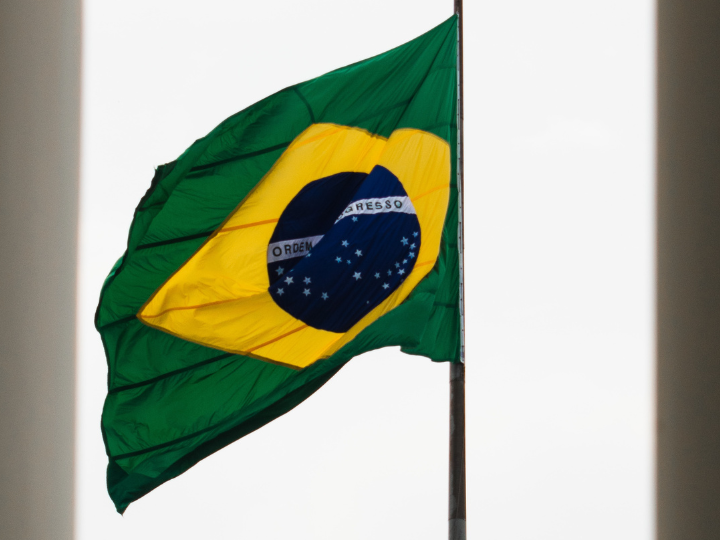
Brazil has quietly become one of the world’s most effective architects of South–South economic diplomacy, precisely because it has institutionalised its heritage.

Legacy Connection: How Brazil Is Advancing South–South Business

By: Radu Magdin | Monday, December 8, 2025

Brazil is often seen as a Western-facing democracy with Southern roots. In practice, this combination has turned it into one of the most sophisticated “bridges” in the Global South — and few institutions embody this better than the Arab Brazilian Chamber of Commerce.

MORE ARTICLES

Forecasting provides warnings, and preparedness ensures they translate to effective action. The role of the National Science and Technology Center for Disaster Reduction (NCDR) is to use meteorological, seismic and hydrological forecasts to create actionable strategies and transform past lessons into preparedness

Taiwan: Disaster Prevention and Advanced Warnings

By: EBR | Monday, November 24, 2025

Taiwan’s contingency model links real-time coordination, high-tech forecasting and local volunteers for swift action.

As wealth continues to concentrate in the hands of private financial entities—78% of global wealth is held by the top 10% of citizens—family offices are set to outpace hedge funds in assets under management.

The rise of family offices: A new economic powerhouse

By: EBR | Wednesday, October 29, 2025

A new article in the "Superclan Series" describing how the landscape of family offices worldwide is undergoing a transformation. Once quiet financial entities managing generational wealth, family offices are now stepping into the spotlight as influential players in investment and economic development.

This decision aligns with the national strategy to reinforce corporate governance and enhance the institution’s credibility. Under the supervision of Alternate Minister of Finance Mr. Nikos Papathanasis, HDB is advancing targeted initiatives to bolster transparency, accountability, and meritocracy in its operations.

Professor Nikolaos Georgikopoulos (Stern NYU) appointed New Chair of the Remuneration and Nominations Committee

By: EBR | Thursday, July 3, 2025

Professor Nikolaos Georgikopoulos (Stern NYU) appointed New Chair of the Remuneration and Nominations Committee at the Hellenic Development Bank

In times of rapid change and disruption, leaders must foster a culture of collaboration, encouraging diverse perspectives and shared learning to generate innovative solutions.

Leading into tomorrow: skills to navigate through change

By: EBR | Friday, October 20, 2023

As we navigate an era of rapid transformations, leading through change is essential

More than half are planning to conduct an audit of the AI already in use in their organizations to assess its safety, legality and “ethical soundness”, although some said senior management were unwilling to view AI as a business risk.

AI: These are the biggest risks to businesses and how to manage them

By: EBR | Monday, July 31, 2023

Artificial intelligence (AI) promises to deliver significant benefits to businesses and society – but it also has the potential to cause significant harm if we fail to understand the risks that the technology poses

SMBs face challenges in assimilating advanced security solutions in their business due to a lack of skilled staff in-house (more than 60% of SMBs lack these). Therefore, more SMBs rely on managed service providers (MSPs), which, until recently, were primarily focused on supplying IT infrastructure and cybersecurity services.

Generative AI for small-medium-sized business: cybersecurity chaos or empowerment?

By: EBR | Friday, July 21, 2023

The cybersecurity threat for small and medium-sized businesses (SMBs) is real: Ransomware attacks increased by almost 300%, with over 50% targeting small businesses

Any rethinking and focusing on long-term plans without taking micro management seriously in the logic of prioritising problems is likely to act as a deterrent and distraction, moving away from concrete goal achievement and from the strategy of addressing omissions and chronic deficiencies.

The great coexistence of long-term strategy and micro-management, success factor

By: EBR | Tuesday, June 20, 2023

A fundamental question hovers over the necessity of combining macro-planning and micro-management in order for the results the results to be maximizes and operate in a multiplicative and positive way for the management

Organizations are already using a range of frameworks and methodologies already exist to help manage complex risks that overlap with digital safety.

How effective risk management is paramount to fostering online safety

By: EBR | Monday, May 29, 2023

Digital services propel economic growth and innovation worldwide, and play a critical role empowering individuals to enjoy their human rights

Perhaps the most obvious tension when employees move to a remote setting is between the need for supervision, twinned with the opposing need to show trust and make sure employees aren’t feeling over-supervised.

Psychologists say remote work brings 3 tensions to bosses

By: EBR | Wednesday, April 26, 2023

Are online meetings just the same as in-person ones?

Gen Z (aged 18-25) and Millennials (aged 26-41) are driving this shift, with nearly 9 in 10 in Europe saying they would leave a job to work somewhere that better matches their values, compared to 7 in 10 Gen Xers (aged 42-57). Furthermore, 60% of Gen Zers and Millennials say values are a deal-breaker when considering job opportunities today.

Why strong company values is essential for attracting the next generation of professionals

By: EBR | Thursday, April 20, 2023

The world of work has seen huge disruption in the past few years – from the upheaval caused by the COVID-19 pandemic to the continued economic uncertainty facing businesses today

In its most basic form, optionality means building flexibility throughout the value chain. Optionality is especially important when a situation is uncertain or risky, such as during a recession, because options give you control.

What is optionality and how can it help companies during a recession?

By: EBR | Friday, April 7, 2023

2023 isn’t the first layoffs we’ve seen. We can point to plenty of times when cutting staff was the probable option, if not the popular one

Though change is inevitable, the speed with which the world is changing from multiple perspectives is fast and accelerating daily.

The quality every leader should have to succeed in today’s world, revealed

By: EBR | Tuesday, January 10, 2023

As the world changes at rapid speed, people and organisations must change with it in order to succeed in the new status quo

 Clarity about this helps them to navigate an increasingly complex global business environment in which managing business resilience has become essential.

3 ways to integrate human rights into business resilience

By: EBR | Monday, December 12, 2022

Human rights are in danger of being placed on a back burner by businesses, amid an array of seemingly more pressing concerns: warnings of a global recession, geopolitical shifts and a climate emergency

While hiring disabled talent is increasingly becoming a common practice, the disabled community remains underrepresented in leadership positions, both in the private and public sector.

4 ways businesses can support the rights and wellbeing of employees with disabilities

By: EBR | Tuesday, December 6, 2022

More than 1.3 billion people currently experience disability but only 4% of businesses are focused on making offerings inclusive of disabled people

Pages: Next

EU Actually

European Parliament challenges member-states with an additional budget increase of 10 percent

N. Peter KramerBy: N. Peter Kramer

In his weekly column, N. Peter Kramer writes how the EP opposes Commission’s proposal to cut back on traditional programmes such as agriculture and cohesion

Europe

The EU–India Deal Is Done. Africa Must Be Next

The EU–India Deal Is Done. Africa Must Be Next

The EU-India FTA deal showed Brussels can move when the stakes are high; Africa is the real test of whether Europe can protect its economic security in a more fractured world.

Business

Where Romania can build excellence: the sources of future competitiveness

Where Romania can build excellence: the sources of future competitiveness

Romania has been, for most of its recent history, a story of potential deferred. The standard account of Romanian competitiveness, to the extent one exists in international business literature, is a cost story: cheap labor, low corporate taxes, a large domestic market for Central and Eastern European standards.

MARKET INDICES

Powered by Investing.com
All contents © Copyright EMG Strategic Consulting Ltd. 1997-2026. All Rights Reserved   |   Home Page  |   Disclaimer  |   Website by Theratron