Edition: International | Greek
MENU

Home » Analyses

The Bondi Beach massacre and the Manchester attacks are stark reminders that antisemitism is not confined to online rhetoric or political debate. It manifests in real-world violence. Treating it as a fringe problem, or dismissing it as mere “political criticism”, is dangerously complacent. European governments must recognise antisemitism as a national security concern.

Bondi Beach shootings: Antisemitism the Canary in the Mine for Europe

Growing violence against Jews, chants of “global intifada”, bias at the BBC, and Eurovision boycotts all highlight a broader erosion of European liberal values.

As of the latest published results (Q2 2025), the euro area’s general government gross debt-to-GDP ratio reached 88.2%, up from 87.7% in the previous quarter. A similar movement was observed across the EU, where the ratio rose from 81.5% to 81.9%, indicating a continued, albeit modest, increase in sovereign debt levels.

Decoding Europe’s Debt Puzzle

By: EBR | Tuesday, December 16, 2025

As we approach the final days of 2025, we find ourselves closer to 2050 than to the year 2000 - a realisation that, from a time perspective, feels both unsettling and fascinating!

The NSS calls on Europe to take “primary responsibility for its own defense, without being dominated by any adversarial power.” That possible adversarial power is not stated.

Europe Needs to Hear What America is Saying

By: Carnegie - Strategic Europe | Wednesday, December 10, 2025

The Trump administration has slammed the EU’s political and social policies, which it claims are undermining Europe’s identity. The stark language of the new U.S. security strategy helps Europeans to recognize new realities and to devise their own response.

India is the world’s third largest consumer of crude oil and has been buying large volumes from Russia. That wasn’t always the case. Before the Kremlin’s full-scale invasion of Ukraine, only 2.5% of India’s oil imports were Russian.

Oil, defence and geopolitics: Why Putin is visiting Modi in Delhi

By: BBC News | Tuesday, December 9, 2025

Putin’s visit to Delhi is coming at a crucial time for Modi and India’s global ambitions.

While things look grim, there are alternatives. Europe can play a key role in building a new institutional framework for stability.

Can Europe Reassert Itself?

By: The Globalist | Wednesday, December 3, 2025

China and the United States increasingly act as imperial systems. Can Europe assert itself by shaping a better international monetary order?

At a time when Russia is pummelling Ukraine’s energy grid with missiles and drones ahead of a fourth winter of war - forcing the entire country to endure daily power cuts - public anger at these corruption allegations has soared.

Fall of Zelensky’s top aide - reboot for Kyiv or costly shake-up?

By: BBC News | Monday, December 1, 2025

Andriy Yermak was a constant, looming presence in Ukraine’s government - a seemingly immovable figure on the political stage.

MORE ARTICLES

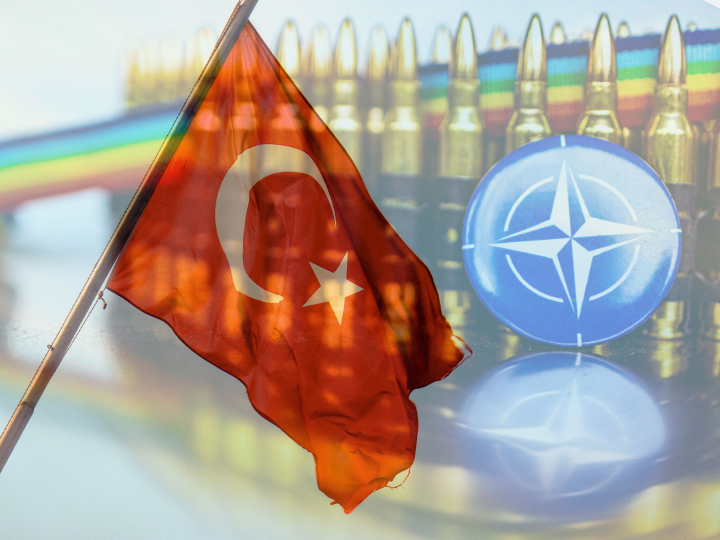
As European partners grapple with questions about future U.S. commitment to the continent’s defense and seek to build greater capacity of their own, Turkey sees involvement as a way of gaining a voice in these efforts.

Turkey Stakes its Claim in the Ukraine Peace Process

By: Carnegie - Strategic Europe | Friday, November 28, 2025

Turkey is positioning itself as a key player in a postwar reassurance force for Ukraine, especially in the Black Sea. But Ankara’s relationships with Moscow and Washington mean it faces a tough choice.

Brussels faces a choice: continue criticising from the sidelines, or work with Washington to shape a viable peace plan. Embracing common ground would send a powerful signal that the West is united, pragmatic, and determined to end the war.

Brussels Must Act: Back the Trump Ukraine Peace Plan

By: Rajnish Singh | Wednesday, November 26, 2025

Europe must move past its objections and recognise how closely its vision aligns with Washington.

As Russia is not legally entitled to the interest generated on the assets, Europe began transferring approximately $6 billion in windfall profits to Ukraine in 2024. The G7 devised a further $50 billion Extraordinary Revenue Acceleration (ERA) loan based on the expected future value of earned interest.

Time for Europe to Break the Bank on Ukraine

By: Carnegie - Strategic Europe | Tuesday, November 18, 2025

With U.S. aid largely discontinued, European leaders have no choice but to unlock Russia’s sovereign assets in order to keep Ukraine afloat. Only a long-term military and financial commitment can help Kyiv prevail.

Turkey’s willingness to open the border and normalize relations, is key to breaking Armenia free of its current geopolitical bonds. But Ankara still moves cautiously toward this, out of deference to its ally Azerbaijan—even though most analysts, inside and outside the country, argue that it is in Turkey’s strategic interests to act now, while the opportunity is there and Russia is still distracted in Ukraine.

Armenia’s Election Is a Foreign Affair

By: Carnegie - Strategic Europe | Thursday, November 13, 2025

As the 2026 Armenian election approaches, Prime Minister Nikol Pashinyan is facing fierce opposition from both Russia and the diaspora. He will need the help of Europe, the United States, and regional neighbours to advance his ambitious foreign policy.

Mamdani ran a formidable campaign, remaining relentlessly positive and using his communication skills and social-media reach to powerful effect

If progressives want to beat populists, Mamdani is not the answer

By: Rajnish Singh | Wednesday, November 12, 2025

Zohran Mamdani’s win in New York City may have made headlines, but victories in the Netherlands, New Jersey, and Virginia offer truer lessons.

If EU and U.S. leaders do not react decisively to these threats, Beijing’s economic and technological support will continue to undermine the Western sanctions regime on Russia and allow it to prolong its war in Ukraine.

China is the Weak Link in Europe’s Ukraine Strategy

By: Carnegie - Strategic Europe | Tuesday, November 11, 2025

China plays an increasingly active role in the Kremlin’s hybrid war against Europe. The EU must confront this growing China-Russia cooperation, as it poses grave threats to both European security and economic resilience.

Although the Commission and member states pledged €522 million in aid earlier in 2025 at the High-Level Conference for Sudan, this came after two years of escalating violence and mass displacement.

The Deafening Silence of the EU Over Sudan

By: Rajnish Singh | Wednesday, November 5, 2025

As the true horrors of the Sudanese Civil War emerge, Brussel’s response remains muted compared to its more vocal and active stance on Gaza.

According to the proposal for a “reparation bond,” the Russian funds would be used if Moscow refuses to pay compensation to Ukraine after the war ends, which Kiev could otherwise use to repay the European loans.

Yes to Russia Reparation Bonds for Ukraine

By: The Globalist | Wednesday, October 29, 2025

Unless oil prices unexpectedly surge bringing more revenues into the Kremlin’s coffers,, Putin will hardly be able to afford his war of annihilation against Ukraine for another two years.

As France’s political coordinates have been moving to the right, the key question for the future of France, not just from Macron’s point of view, is the ability to hedge against political extremes, whether on the hard left or the hard right.

France’s Sleepwalkers

By: The Globalist | Monday, October 27, 2025

Macron is correct: No matter how much France’s traditional parties want to avoid coalitions, that is the only way to fend off an RN government.

Understanding the emotionality as well as the rationality of states will help us unleash the best in cooperative human and state behavior

How States Act and (Feel) — and Why It Matters

By: The Globalist | Tuesday, October 21, 2025

Civilizational frontier risks, the role of human nature and humanity’s collective future.

And, no doubt, a vast part of Britain’s wealth in the 18th and 19th century was based in large part on enslaving men and women with black or brown skins or treating them as forced labor once slavery was abolished in the British Empire by an Act of Parliament in 1833. In that sense, the fascist impulse was simply “offshored.”

British History: As full of cruelty, racism and hate as any other nation in Europe

By: EBR | Thursday, October 16, 2025

Is it really true that Britain’s special path as a nation of tolerance, parliamentary debate and democracy is only coming to an end in the age of Nigel Farage and Tommy Robinson?

Property markets differ enormously within the EU, with rentals more popular in some countries. Their shared problem is the resentment of voters overburdened by rising costs and, in the case of younger people, excluded from getting a foot on the property ladder for the foreseeable future.

It’s time to tackle the housing crisis that is fuelling populism

By: EBR | Tuesday, October 14, 2025

Housing, which is to say the lack of it, is foremost among the factors fuelling populism. Addressing acute housing shortages is crucial to stemming support for right-wing extremists

If he succeeds, Trump could join the ranks of Egypt’s Anwar Sadat and Israel’s Yitzhak Rabin, leaders whose risks for peace reshaped history—an achievement that eluded even Biden and Obama, and one his most progressive critics might have to acknowledge.

Trump’s Gaza peace gamble

By: EBR | Wednesday, October 8, 2025

Trump’s 20-point Gaza peace plan has earned global backing—and with it, the real possibility of a Nobel Peace Prize.

Seemingly decisive terms like “deal,” “success,” and “security guarantees” aim to project a sense of certainty, resolve, and consensus where they do not exist. In the context of the Russian invasion of Ukraine, such language framing policy and public debates not only does not help formulate a proactive and sustainable policy agenda but actively prevents its development.

The power of language on war and peace

By: EBR | Tuesday, September 30, 2025

U.S. President Donald Trump’s dealmaking approach to foreign policy has reduced complex negotiations to business transactions. But the now widespread use of euphemistic terms in global politics actively prevents the development of coherent policy agendas

Pages: Next

EU Actually

Six EU countries demand revision of climate policy: ‘Ideological dogmatism harms our industry’

N. Peter KramerBy: N. Peter Kramer

Six European heads of government have called on Commission President Ursula von der Leyen to review the current EU climate policy.

Europe

EU agrees €90bn loan for Ukraine but without using Russian assets

EU agrees €90bn loan for Ukraine but without using Russian assets

European Union leaders have struck a late-night deal to lend Ukraine €90bn (£79bn; $105bn) over the next two years, after failing to agree on using frozen Russian assets.

Business

EU waters down plans to end new petrol and diesel car sales by 2035

EU waters down plans to end new petrol and diesel car sales by 2035

Current rules state that new vehicles sold from that date should be "zero emission", but carmakers, particularly in Germany, have lobbied heavily for concessions.

MARKET INDICES

Powered by Investing.com
All contents © Copyright EMG Strategic Consulting Ltd. 1997-2025. All Rights Reserved   |   Home Page  |   Disclaimer  |   Website by Theratron