Edition: International | Greek
MENU

Home » Europe

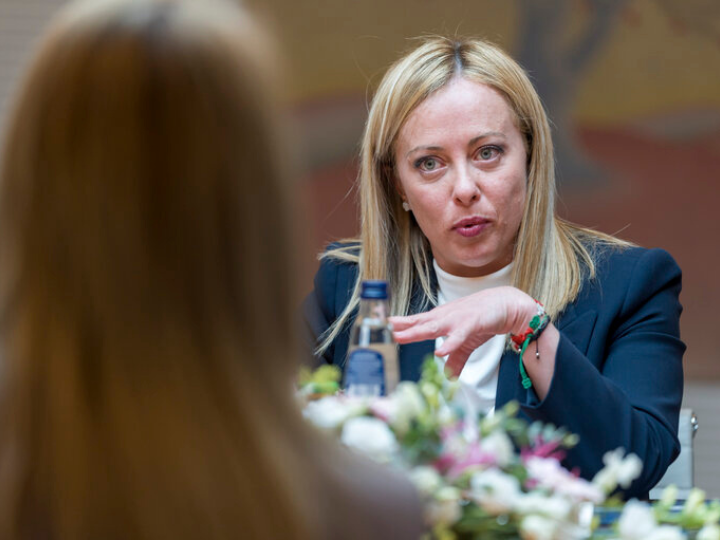
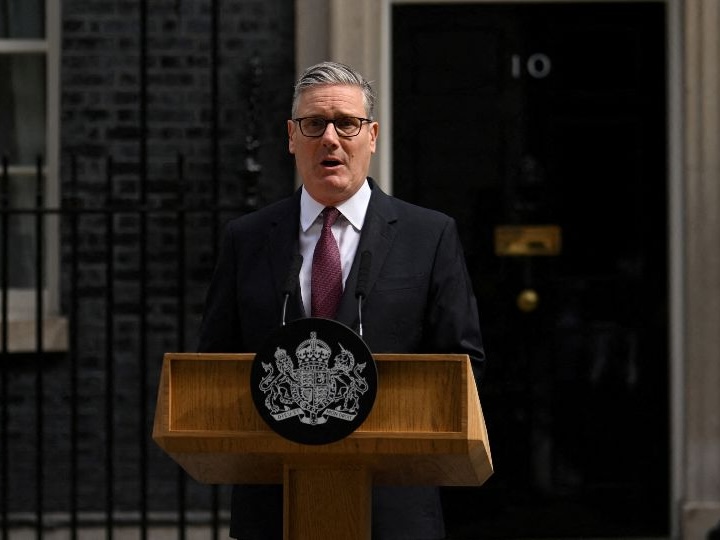
The Greens led by Hannah Spencer, a plumber and local councillor, did not simply edge ahead; they won on a message rooted in economic insecurity, housing pressures and local authenticity, coupled with targeted outreach to students and Muslim voters, particularly around Palestine.

Greens Shock Victory Undermines Starmer’s Leadership

The local by election result exposes the fragility of Labour’s mandate—and mirrors a wider European unravelling for centre parties.

The EU’s passivity is all the more confounding because one member state—Cyprus—has already suffered direct hits in this war, when drones struck the British air base at Akrotiri. And after the countries in the Arab Gulf and the Levant, it is the EU and its member states that will have to deal with the inevitable instability and uncontrollable security, economic, and societal fallout of this war when the United States declares the end of its operations, packs up, and goes home.

Europe on Iran: Gone with the Wind

By: Carnegie - Strategic Europe | Tuesday, March 3, 2026

Europe’s reaction to the war in Iran has been disunited and meek, a far cry from its previously leading role in diplomacy with Tehran. To avoid being condemned to the sidelines while escalation continues, Brussels needs to stand up for international law.

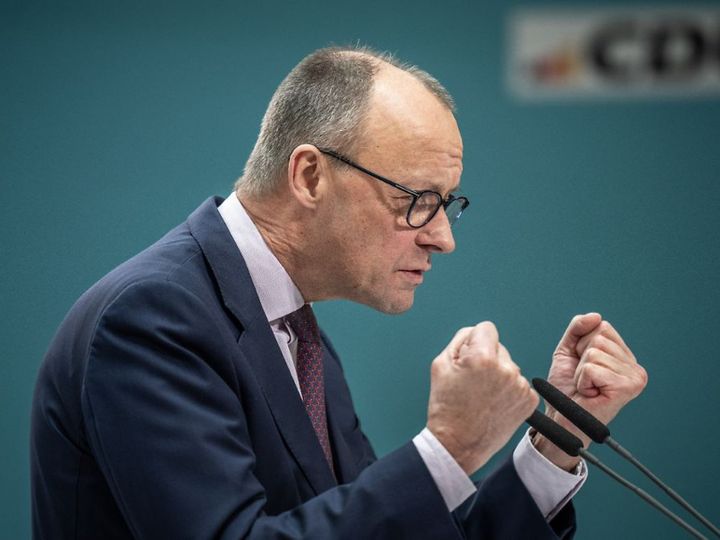
On the eve of a trip to Washington, where he is due to meet with President Donald Trump, the chancellor aligned Berlin squarely with American and Israeli objectives while conceding that the outcome of increased military pressure remains unpredictable. He argued that Europe’s long reliance on condemnations and sanctions had yielded few tangible results.

Merz accepts a harder world on Iran

By: Euractiv | Monday, March 2, 2026

Downplaying the weight of international law, the German chancellor signals that Berlin may be adjusting to a great-power order shaped by Washington rather than rules.

The saga of the Future Combat Air System between France and Germany shows that both of these middle powers still have a lot to learn in this regard. Germany continues to be torn between wanting to preserve whatever crumbs of its defense relationship with the United States are left, and a still-theoretical understanding that it must use its economic might to supercharge European defense. France, meanwhile, is wary that Berlin’s increasing assertiveness in strategic and defense matters is happening at Paris’s expense.

Macron Makes France a Great Middle Power

By: Carnegie - Strategic Europe | Tuesday, February 24, 2026

France has stopped clinging to notions of being a great power and is embracing the middle power moment. But Emmanuel Macron has his work cut out if he is to secure his country’s global standing before his term in office ends.

After 7 October, Albanese said that while Hamas ruled Gaza with “an iron fist”, it had also built schools and hospitals and provided the territory’s de facto administration – infrastructure Israel later destroyed. “When you think of Hamas,” she added, “you should not necessarily think of cut-throats, people armed to the teeth, or fighters.”

The Albanese around the UN’s neck

By: Euractiv | Tuesday, February 24, 2026

Everyone remembers the pupil at the back of the classroom, needling classmates – then flashing a wide-eyed “Who, me?” when the teacher turned around.

In 2027, two Austrian states – Tyrol and Upper Austria – will hold their next elections and votes there are typically influenced by national political trends. If public sentiment toward the government doesn’t improve significantly by then, the ruling parties could face serious internal turmoil.

Vienna calling: Austria far right gathers strength after near miss

By: Euractiv | Thursday, February 19, 2026

To thwart the FPÖ’s steady rise, the Austrian government tries to play the long game

MORE ARTICLES

The auditors found that the EU’s high-level specifications for member states’ anti-fraud systems, as set out in the RRF Regulation, were not sufficiently detailed.

EU auditors highlight "fraud" in COVID fund

By: Martin Banks | Thursday, February 12, 2026

The EU’s €650 billion COVID recovery fund, the Recovery and Resilience Facility (RRF), continues to show multiple weaknesses in fraud detection, reporting and correction, according to a new report by the European Court of Auditors (ECA).

Emmanuel Macron warned that "today Europe faces a massive challenge, in a world of disorder"

Macron urges EU to start acting like world power

By: BBC News | Tuesday, February 10, 2026

French President Emmanuel Macron has urged Europe to assert itself on the world stage, saying it is time to start acting like a "power".

Various US presidents, including Theodore Roosevelt, deliberately demonstrated their strength toward Japan. John F. Kennedy’s naval blockade during the Cuban Missile Crisis in the 1960s, which famously brought the world to the brink of nuclear war while pushing Moscow to negotiate. In the 1980s, Ronald Reagan used aircraft carriers in the Gulf of Sidra to bomb Libya, but not a formal declaration of war.

Trump’s ‘Armada’ to Iran and the Return of Gunboat Diplomacy

By: Rajnish Singh | Wednesday, February 4, 2026

US naval buildup in the Persian Gulf is putting pressure on the Ayatollahs, but it also raises the risk of military escalation, regional conflict, and dangerous miscalculation.

The CRM Act sets only non-binding targets by 2030, and these apply only to a small number of raw materials, regarded as ‘strategic’ due to their high economic importance and supply risks. It is also unclear how the levels to be reached by 2030 were determined.

EU "trapped in a vicious circle" on raw materials

By: Martin Banks | Tuesday, February 3, 2026

The EU is having difficulties securing the supply of the raw materials it needs to meet its energy and climate goals. This is the conclusion of a new report by the European Court of Auditors (ECA).

Apart from limited demining support, Baku has received little in the way of EU financial assistance for post-conflict recovery, including the rebuilding of its recovered territories, a process it has so far financed largely from its own budget at a cost of roughly €14 billion ($16.5 billion) since 2020.

EU Falls Behind in the South Caucasus Connectivity Race

By: Carnegie - Strategic Europe | Tuesday, February 3, 2026

The EU lacks leadership and strategic planning in the South Caucasus, while the United States is leading the charge. To secure its geopolitical interests, Brussels must invest in new connectivity for the region.

Fidesz is not merely a ruling party but a revolutionary political force that has used institutions and public resources to systematically reshape the Hungarian state. Over the past decade, Orbán has also invested tens of millions of euros in building a global illiberal network, with himself at the center.

New Tricks and AI Tools in Hungary’s High-Stakes Election

By: Carnegie - Strategic Europe | Tuesday, January 27, 2026

Hungarian Prime Minister Viktor Orbán faces his most serious challenge yet in the April 2026 parliamentary elections. All of Europe should monitor the Fidesz campaign: It will use unprecedented methods of electoral manipulation to secure victory and maintain power.

For European leaders and Brussels officials, the instinct is to panic. But they may want to look across the Atlantic to Canada, where Trump’s provocative suggestion that the country could become a 51st state was met not with outrage, but restraint. Ottawa’s response has been deliberate and understated: keep calm and carry on.

Keep Calm and Carry On: Why Europe Shouldn’t Panic Over Trump’s Threats

By: Rajnish Singh | Wednesday, January 21, 2026

As Brussels contemplates a trade clash over Greenland, Europe may want to study Mark Carney’s brand of Canadian-style “cold shoulder” diplomacy.

According to Costa, “Cyprus’ own history of occupation and division has given it a very concrete understanding of the crucial value of international law for peace and stability among nations.

Cyprus brings a “unique perspective” to its EU presidency

By: Martin Banks | Tuesday, January 20, 2026

EU Council President Antonio Costa was clear, Cyprus will bring a “unique perspective” to its EU presidency.

As minister of justice from 2015 to 2023, Ziobro was the author of judiciary reforms which provoked a major conflict with Brussels.

Hungary grants asylum to Polish ex-justice minister

By: BBC News | Tuesday, January 13, 2026

Hungary has granted political asylum to Poland’s former Justice Minister Zbigniew Ziobro who is facing charges of embezzlement.

Despite the fact that Russia is an economic midget and, as proven by the grave daily attacks on the civilian population all over Ukraine, a failed state in any civilized sense, Europe is far weaker at present than it should be.

Who Really Defends Europe — Ukraine or the U.S.?

By: The Globalist | Tuesday, January 13, 2026

Europeans still hesitate to understand that their defense will no longer be provided by the United States – but by Ukraine. That is true in a far more comprehensive sense than has been considered to date.

The failure by the European Council on December 18, 2025, to make a decision on Russian state assets has been depicted as a setback. Looked at another way, however, European solidarity held up well.

Solidarity Is a Must for Europe to Ensure its Own Security

By: Carnegie - Strategic Europe | Friday, January 9, 2026

Europe is designing a new model of collective security that no longer relies on the United States. For this effort to succeed, solidarity between member states that have different threat perceptions is vital.

The UK is already lining up with Brussels on some rules around food and agriculture to allow access to the economic European trading zone known as the single market.

Starmer ready for closer EU alignment ’in the national interest’

By: BBC News | Tuesday, January 6, 2026

Sir Keir Starmer has said the UK should move towards closer alignment with EU markets "if it’s in our national interest".

Romania hosts key command-and-control structures and has become a permanent pillar of the Alliance’s southeastern posture. In defense-industrial terms, that matters: long-term security relevance translates into long-term industrial confidence.

Why Romania Is the Next Defense Factory of Central and Eastern Europe

By: Radu Magdin | Monday, January 5, 2026

Step by step, Romania embedded itself into some of the most demanding industrial supply chains in the world, delivering at scale for German, French, American and Turkish manufacturers.

Ukraine needs an estimated €137bn over the next two years to cover both its military and its public services, and the EU plan is to cover two-thirds of that.

EU agrees €90bn loan for Ukraine but without using Russian assets

By: BBC News | Monday, December 22, 2025

European Union leaders have struck a late-night deal to lend Ukraine €90bn (£79bn; $105bn) over the next two years, after failing to agree on using frozen Russian assets.

Pages: Next

EU Actually

The EU struggles to find a united voice

N. Peter KramerBy: N. Peter Kramer

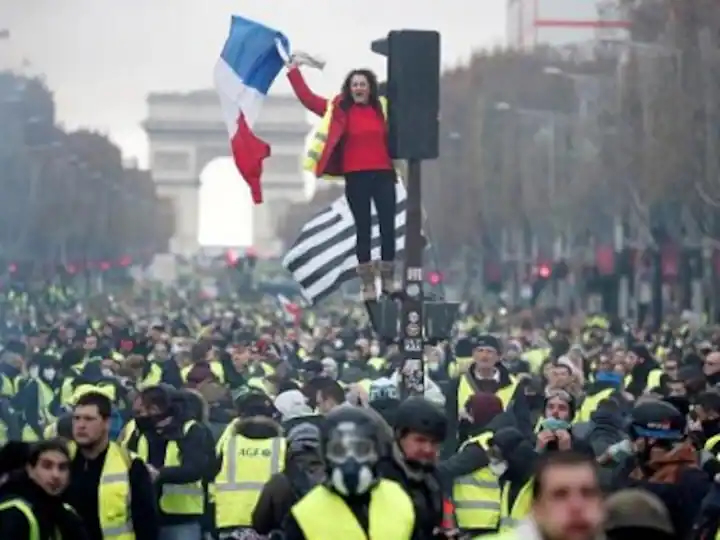
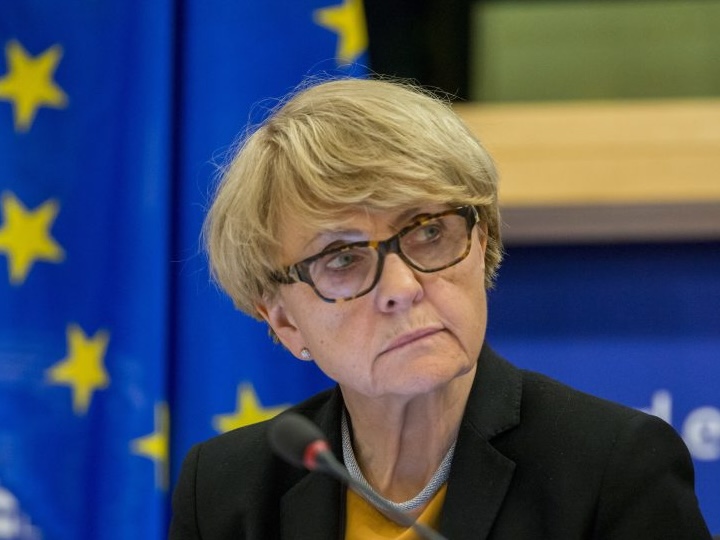
EU leaders knew this may coming. For weeks, they watched the US military build-up in the Middle East. But since the US-Israeli attack started on Iran, the EU looked fractured and decidedly without leverage, caught up in the maelstrom of what happens.

Europe

Greens Shock Victory Undermines Starmer’s Leadership

Greens Shock Victory Undermines Starmer’s Leadership

The local by election result exposes the fragility of Labour’s mandate—and mirrors a wider European unravelling for centre parties.

Business

The EU’s zig-zag road towards stronger financial markets

The EU’s zig-zag road towards stronger financial markets

Giles Merritt delves into the confusing welter of efforts to streamline Europe’s national financial players into a more dynamic single capital market

MARKET INDICES

Powered by Investing.com
All contents © Copyright EMG Strategic Consulting Ltd. 1997-2026. All Rights Reserved   |   Home Page  |   Disclaimer  |   Website by Theratron